Table of Contents
Overview
This guide explains an intranet in clear, practical terms. It covers the key concepts, recommended steps, common limitations, and useful checks so you can make a better-informed decision.
1. What is an intranet?
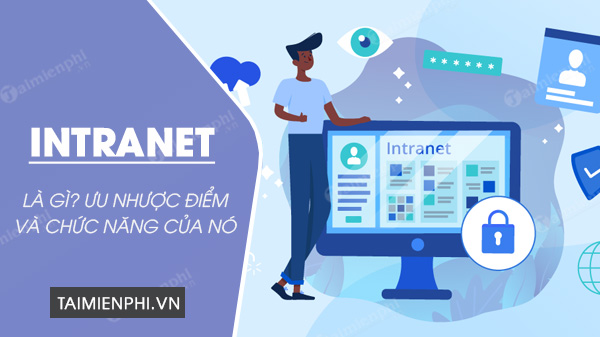
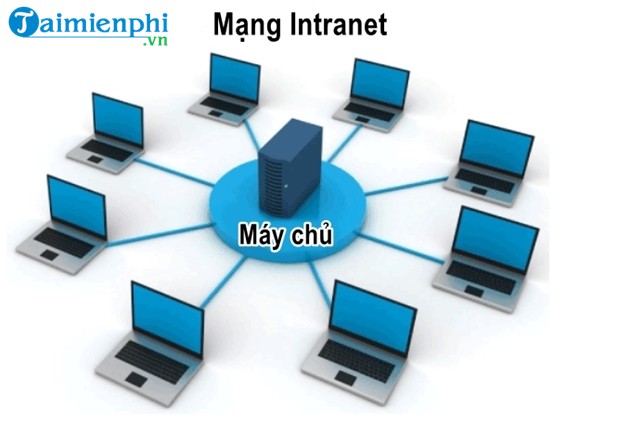
An intranet is a private computer network, accessible only to members of an organization, school or business. This network allows users to exchange information and share data with a high level of security. It is usually protected by measures such as firewalls, accounts and passwords.
Internal networks often use LAN (Local Area Network) systems to connect devices, and can be extended via WAN (Wide Area Network), helping to connect more distant areas.
2. Intranet operating model
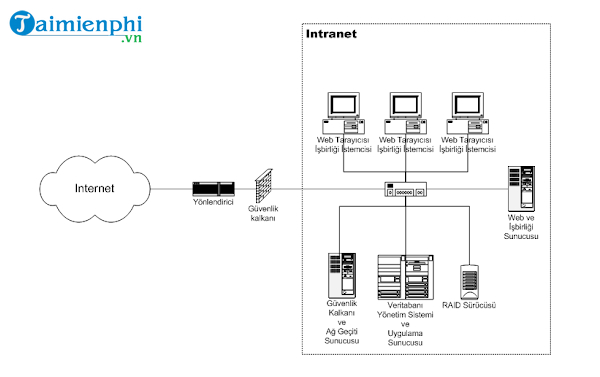
The Intranet system diagram can vary depending on the needs of the organization, but basically, it includes the following components:
- Servers: Store and provide data, documents, and applications for the internal network system. - Workstations: Users' personal devices to access applications and information. - Network Devices: Tools such as switches, routers, and firewalls, manage connections and secure the system. - Applications and software: Tools such as email, web browsers, and work software that help users interact. - Security systems: Includes solutions such as firewalls and authentication to help protect data.
3. Comparison of Internet and Intranet
Here are the differences between the two types of networks:
- The Internet is a global network, while Intranet is only for a group of people within the organization. - Internet users can access the intranet but with restrictions, while Intranet is only for authorized employees. - The Internet can contain many different sources of information, but Intranet focuses only on the organization's information. - Intranet has a much higher level of security than the Internet.
4. Advantages of Intranet
- Centralized data storage: Enterprise data is stored on a server system, making access simpler and faster. - Enhanced connectivity: Members can easily exchange information and work more effectively in groups thanks to the system's social networking features. - Cost savings: Storing and sharing data online reduces printing costs and reduces physical storage space. - Access anytime, anywhere: Modern Intranet technology allows users to access from multiple devices, including mobile phones.
5. Disadvantages of Intranet
- Risk of data overload: Storing too much data without proper organization can make users feel overwhelmed and not want to use it anymore. - Security risks: If not properly protected, data on the network can be leaked or accessed without permission. - Time consuming to apply: Getting familiar with a complex system can make it difficult for employees to use. - Cost and resources: Setting up and maintaining an Intranet requires significant costs and manpower.
So this article has introduced you to the definition of what Intranet is, the difference between Intranet and Internet, the advantages and disadvantages and applications of Intranet in today's businesses. Hopefully this information has answered your questions.
Besides, what is Web 5? is also one of the questions that many people ask when the virtual currency market is attracting many attention. So to learn more about what Web5 is, readers can refer to the article link below.
Key Takeaways
Use the guidance above as a practical reference for intranet. Check compatibility, follow the steps carefully, and verify important details with official documentation when software, security, accounts, health, or purchases are involved.
FAQ
What is an intranet used for?
An intranet is used for the purposes described in this guide. Its practical value depends on your goals, device, workflow, and required features.
What are the main benefits and limitations of an intranet?
The benefits may include convenience, performance, or greater control, while limitations can involve cost, compatibility, complexity, or security.
How do I decide whether an intranet is right for me?
Compare its requirements, limitations, cost, compatibility, and real-world value with your own priorities before making a decision.
Related Articles
 Theory - What Is Intranet?5 minutes read
 Why Should You Think Carefully Before Logging in with a Social12 minutes read
 Honda's Database Leaked, Revealing Many 'Deadly' Weaknesses in7 minutes read
 Israel Launches the World's First Cybersecurity Network3 minutes read
 Experience Trying Lotus Social Networks4 minutes read
 Vietnam Is Going to Have Lotus Social Network, Revolving Around4 minutes read
Reader Comments 0
Sign in with email or Google to join the discussion.