Table of Contents
The CPU (Central Processing Unit) is the "brain" of computers and electronic devices, responsible for executing commands, processing data, and controlling the operation of the entire system.
The CPU is a familiar component in laptops, but do you know what its main functions are? Without a CPU, your computer will be unable to activate or operate. So, to understand what the CPU does, let's find out below.
What is a CPU?
The CPU (Central Processing Unit) is the "brain" of computers and electronic devices, responsible for executing commands, processing data, and controlling the operation of the entire system.
The CPU receives instructions from the software, performs calculations, and outputs results, determining the speed and performance of the device.

For example, some popular CPUs in current laptops and desktops include Intel Core i3, i5, i7, i9 and AMD Ryzen 3, Ryzen 5, Ryzen 7, Ryzen 9.
What is the importance and role of the CPU?
The CPU is often likened to the "brain" of a laptop, as it processes data, analyzes information, and coordinates system operations. It's the core component that ensures all user tasks are processed accurately and quickly.
Furthermore, the speed and power of the CPU directly determine the overall performance of the laptop. Therefore, a CPU with faster processing speed will provide a smoother laptop experience than ever before.
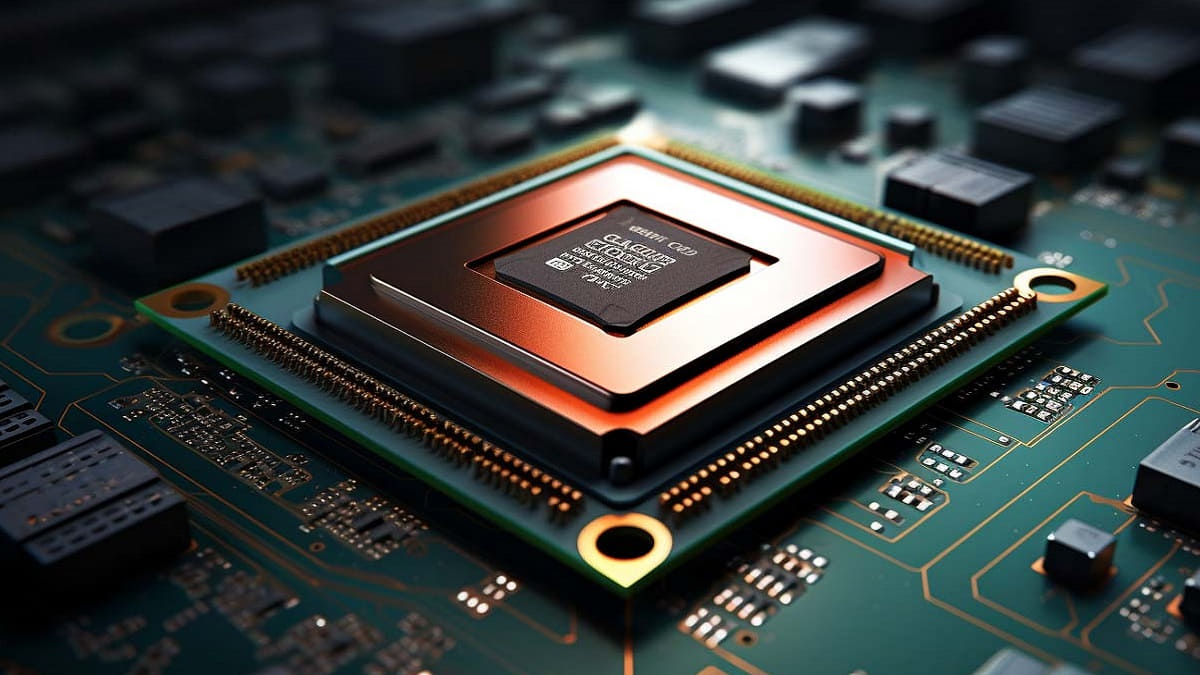 The importance of the CPU
Factors affecting CPU performance
To evaluate CPU performance, we need to consider several factors, including: architecture; number of cores and threads; cache memory; supporting features; manufacturing technology; connectivity and communication standards; and software optimization capabilities.
These factors not only impact overall performance but also determine the ability to perform tasks ranging from basic to complex, such as graphics processing, gaming, or big data computing.
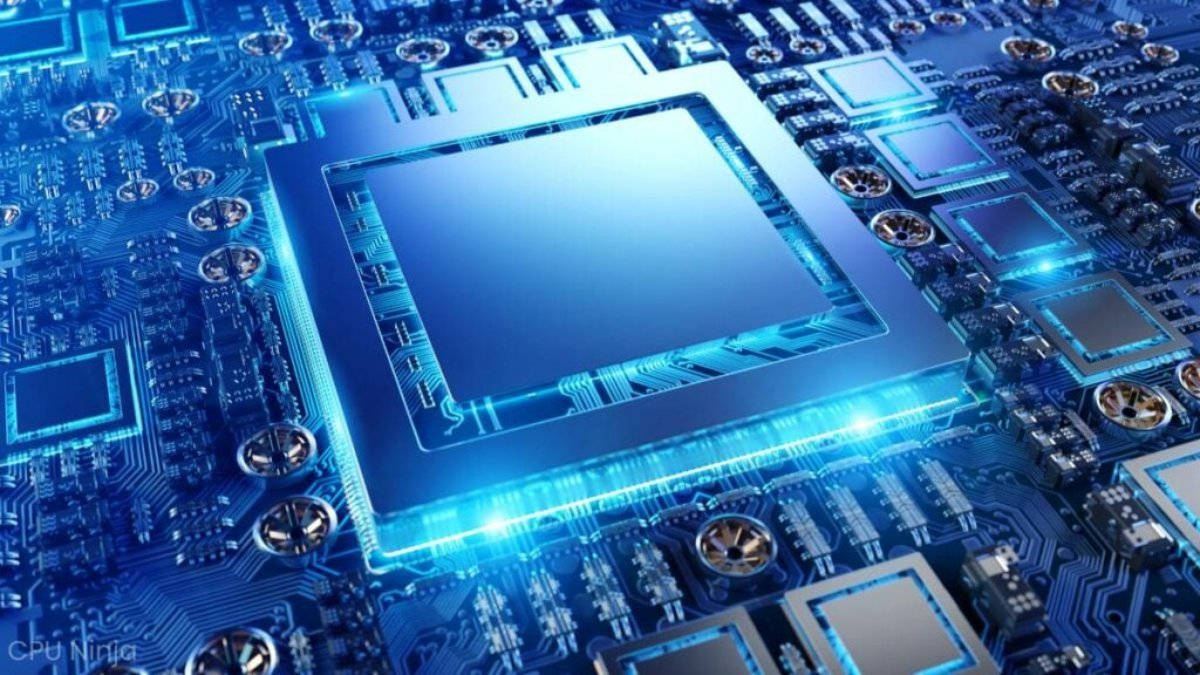 Factors affecting CPU performance
CPU structure
The CPU is designed with a sophisticated structure and many essential components. Each basic component of the CPU has its own role, but together they contribute to the overall power of the system. Specifically, the CPU has the following structure:
Control Unit
The Control Unit is a component integrated into the CPU that compiles program instructions. This ensures that control operations are performed accurately and quickly. As a core component of the processor, it is made up of logic circuits and guarantees high accuracy and efficiency in instruction execution.
Arithmetic Logic Unit (ALU)
The arithmetic logic unit (ALU), also known as the Arithmetic Logic Unit (ALU), is the component responsible for performing calculations such as addition, subtraction, multiplication, division, and logical comparisons. The results of these calculations are then sent to memory or registers for storage or further use.
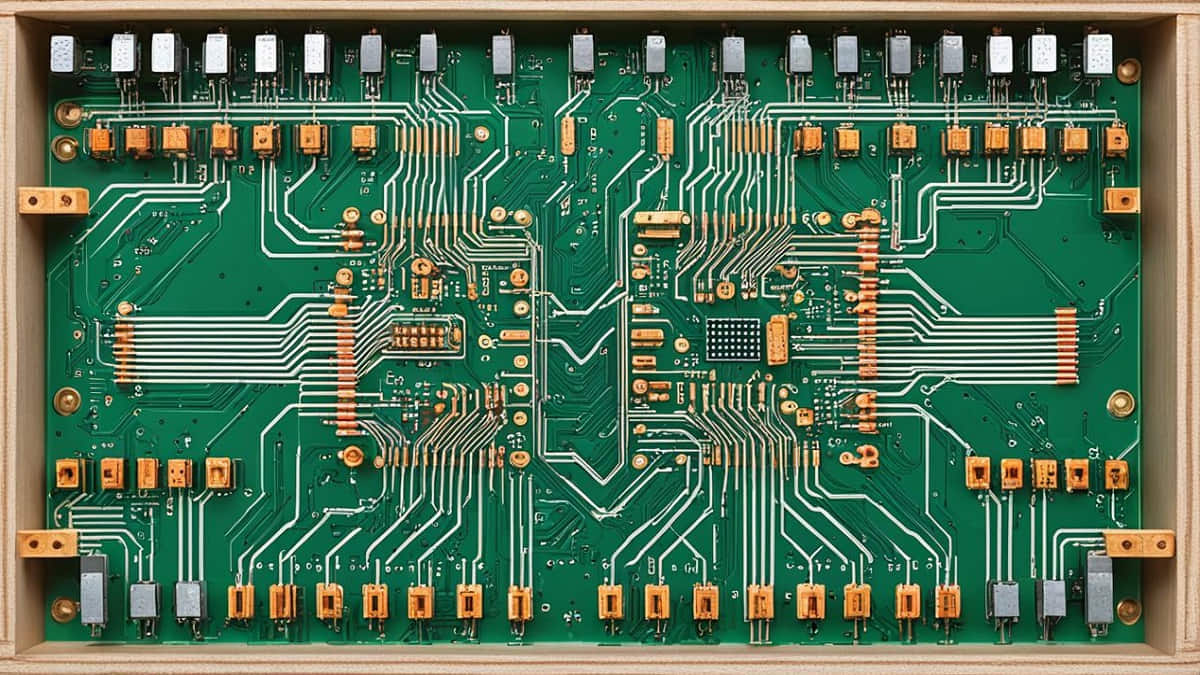 The computing unit on the CPU
Registers
Registers are small, compact memory units that offer extremely fast access speeds. They function as temporary storage for important data, calculation results, or memory addresses. Each register in the CPU performs a specific role, but the most prominent is the Program Counter, which determines the next instruction to be processed.
Cache
Cache memory is a type of memory that is small in size but possesses high speed. It is designed to temporarily store data and instructions that the CPU frequently accesses. Typically, cache memory is divided into different levels from L1, L2 to L3. Of these, L1 is closest to the CPU and operates at a high speed, thus optimizing processing performance.
Clock speed
The clock speed of a CPU determines the processing performance of a laptop and is measured in hertz (Hz). This speed tells the user how many processing cycles the CPU can perform per second. Simply put, the higher the clock speed, the faster the CPU will process data.
Bus Interface
A bus interface is a connection system that helps transmit information within the CPU or between the CPU and other components in the computer. To make it easier to understand, a bus interface can be likened to a 'pathway' through which commands, data, and control signals can quickly and efficiently move back and forth between components.
What are the main tasks that a CPU performs?
To date, CPUs have undergone many significant upgrades and improvements. However, fundamentally, CPUs still revolve around the following basic tasks:
- Command processing : Receiving and executing commands from software or the operating system, including: loading data, decoding, and processing tasks.
- Arithmetic and logical calculations : The CPU uses the ALU to perform arithmetic operations (addition, subtraction, multiplication, division) and logical operations.
- Data coordination : The CPU's control unit manages and coordinates data flows between computer components, including memory, input/output devices, and common peripherals.
- Data flow processing : Supports the movement and management of data between main memory (RAM), registers, and storage devices, etc., to help information be transferred quickly.
- Multitasking management : With parallel and multi-core processing capabilities, the CPU can perform multiple tasks simultaneously, helping the system run smoothly even when multiple applications are running.
How does a CPU work?
Although CPUs have a complex design, their operation generally revolves around three main steps: instruction loading, decoding, and execution.
This process is considered a command cycle and is repeated many times to process the encoded and stored programs.
Each instruction cycle performs a specific task, ranging from switching between windows (jump instructions) to mathematical operations such as addition, subtraction, multiplication, division, logic, or comparison. Despite their diversity, all instructions are processed sequentially by the CPU to meet the software's requirements.
How the CPU processes instructions and performs calculations
To better understand how the CPU works, you can look at how the CPU processes instructions and performs calculations. This process is carried out through the following three steps:
1. Place an order :
The CPU receives instructions from memory (RAM). These instructions are stored as sequences of numbers or characters, which are then tracked by the Program Counter to be processed in the correct order.
2. Decoding the command :
Once loaded, the CPU analyzes and transforms the instructions in preparation for execution. This process converts raw data into specific signals that the system can understand and process accurately.
3. Execute the command :
Once the instruction is decoded, the CPU will forward it to the appropriate components for execution. The final result will be stored in the CPU's registers and sent back to the user or output devices.
What constitutes a fast CPU speed?
CPU speed, or CPU clock speed, is measured in Gigahertz or GHz and represents the number of processing cycles a CPU can perform per second.
A higher clock speed means a faster CPU, but many other factors come into play. Like devices that use electrical signals, data travels at the speed of light, approximately 299,792,458 m/s.
The speed of a CPU depends on many factors, such as:
- Number of processing cores (2, 4, 10, 22 cores, .), the more cores, the more powerful.
- The smaller the manufacturing technology (14nm, 22nm, 32nm,.), the more energy-efficient and efficient it becomes.
- Technologies that increase CPU processing speed (pipelining, turbo boost, hyperthreading, etc.).
- CPU speed also depends on many other factors.
- Cache memory is used to store frequently used instructions/data or those that may be used in the near future, helping to reduce the time the CPU has to wait.
- Integrated graphics.
- TDP (Thermal Design Power), the amount of heat generated by the processor that needs to be dissipated by the cooling system. TDP typically represents the power consumption of the chip, and the lower the number, the better.
Common CPU platforms and use cases
Playing a crucial role in determining computer performance, more and more CPU models are appearing on the market, leading to fierce competition. Therefore, to choose the right CPU, let's take a look at the following names:
Intel CPUs
Intel is currently a leading CPU manufacturer and is well-known for its Intel Core i3, i5, i7, and i9 series. Among these, the Intel Core i7 and i9 CPUs are two popular choices for handling multitasking, graphics, and gaming.
With their stability and impressive performance, Intel CPUs will meet all requirements, from simple tasks to complex applications.
AMD CPUs
AMD is the world's second-largest CPU manufacturer (after Intel) and is highly regarded for products such as AMD Ryzen 5, Ryzen 7, and Ryzen Threadripper.
Most AMD CPU models offer superior performance and flexible overclocking capabilities. In particular, thanks to their multitasking capabilities, AMD CPUs provide an extremely smooth user experience.
ARM CPU
ARM CPUs are microprocessors developed by Advanced RISC Machines (ARM). Compared to traditional x86 chips, ARM offers several improvements, such as a larger number of registers and adjustable instruction lengths.
Boasting high performance and energy efficiency, this CPU series is commonly used in the M1 chips found in MacBooks , iMacs , and iPad Pro devices .
Apple Silicon CPU
Apple has officially switched from Intel CPUs to its own line of chips called Apple Silicon, with the notable Apple M1 product. This processor optimizes performance and energy efficiency, while also integrating seamlessly with macOS.
In addition to improving performance, the CPU also allows users to operate MacBooks and Macs more smoothly.
Embedded CPU
Embedded CPUs are microcontrollers integrated into devices such as washing machines or microwave ovens. With their compact design and energy efficiency, these products not only handle specialized tasks but also ensure high performance for various applications. It can be said that embedded CPUs play a crucial role in the operation of smart devices and modern control systems.
Server CPU
Server CPUs like Intel Xeon and AMD EPYC are commonly used in servers and data centers to handle demanding tasks. Thanks to their powerful performance, these CPUs can run multiple tasks simultaneously, making them ideal for applications such as large data storage, scientific computing, or complex system management.
Mobile CPUs
As its name suggests, a mobile CPU is a product designed for smartphones , tablets, and smartwatches. This processor has the advantage of saving battery power while still ensuring good performance for tasks such as web browsing, gaming, and making calls, thus helping the device operate more smoothly and efficiently.
From the information shared above, do you now know what a CPU is and what its main functions are? Hopefully, this article has helped you understand what a CPU does and other related knowledge. Also, to learn more computer tips and tricks, please visit our website regularly.
Related Articles
 Do You Know the Structure and Usage of the LEFT Function in4 minutes read
 Struct in C // C ++: Data Structure in C // C ++3 minutes read
 What Is the Best URL Structure for SEO?5 minutes read
 How Does the Lungs Work in the Human Body2 minutes read
 What Is a Microwave? Structure and Utility of a Microwave in Life7 minutes read
 VLOOKUP Function: How to Use It and Specific Examples20 minutes read
Reader Comments 0
Sign in with email or Google to join the discussion.