Table of Contents
VSAT IP Satellite: Strength in Small Wave Buds! is easier to understand when the core ideas are paired with practical examples. The sections below explain the topic clearly, highlight useful steps, and point out details that can prevent common errors.
After VietNamNet published the news about VTI (under VNPT) has just inaugurated the first port of VSAT IP STAR broadband satellite network. Many readers have sent letters asking for a better understanding of the operational mechanism, characteristics and disadvantages of this information satellite system.
How does VSAT work? Mr. Nguyen Quang Thao, Sales Department, International Telecommunication Company VTI said: 'Based on the limitations of the narrowband VSAT networks of VNPT / VTI today (only providing speed voice and data transmission services) low), VTI has been allowed by VNPT to deploy a new generation broadband VSAT network, providing multiple services on a high-speed IP-based terminal. The features of services provided on broadband VSAT networks are the same as existing IP-based services on terrestrial networks such as: Voice (VoIP); high-speed Internet access (MegaVNN); Virtual private network (MegaWAN),. and other IP-based value-added services, only the transmission method here uses satellites (radio transmissions) '.
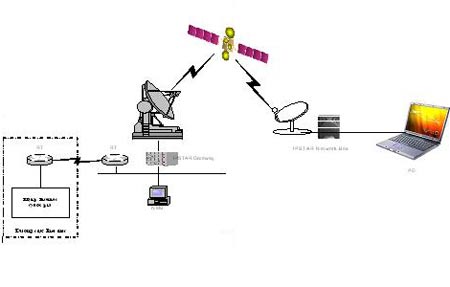
VSAT - IP STAR operating mechanism
Building VSAT IP information satellite system is a cooperation project with Shin Satellite (SSA) - a large telecommunications group of Thailand, one of the pioneers in the world and ambitious in the field develop broadband satellite.SSA's satellites are broadband satellites, if technologically, IP STAR satellites are different from traditional satellites, based on satellite communication technology, in particular, IP STAR 1 with tape Very large pine, the total capacity is about 45 Gb / s. VSAT is a new generation broadband network using iPSTAR satellite system, providing multiple services from a high-speed IP-based terminal. It consists of three basic components: port (Gateway), iPSTAR satellite and subscriber satellite stations (User Terminal-UT). The port (Gateway) has access to the public network (VSAT is an independent network, it must be through a gateway to access the public network - the domestic network accesses resources). Then, Internet and telecommunication resources from the gateway station will be sent as data packets to the subscriber satellite station (UT). IP STAR satellites use frequency multiplexing technology by using multiple covered spot beams to transmit, creating much larger bandwidth than conventional satellites. Workstations at the ground receive satellite waves, transmitting to operate as normal workstations of the ground network. Mode of transmission on the VSAT network uses satellites (radio transmission). The VSAT station is essentially like a switchboard, only different from the transmission method without fiber optic cable, connecting wire as the ground network, but using satellite waves but still ensuring the bandwidth and quality of data transmission by Advanced technologies. The model provides ideal service for remote areas! IPSTAR system allows to deploy many different applications based on IP protocol, with the aim of providing broadband connection for customers who are individuals, offices, enterprises, ISPs. The system uses a variety of satellite access techniques to provide the transmission line to customers in the form of commitment speed or bandwidth sharing method, with this feature, customers can pay the fee. Service fees are based on a fixed monthly fee or paid on the actual data sent and received by customers.
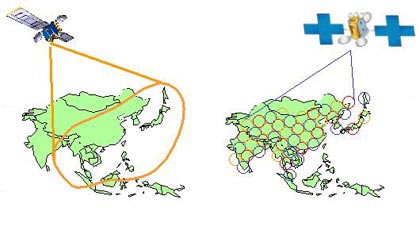
IP - STAR uses small beams with broadband bandwidth guarantee technology.
-
The Phong
FAQ
What is VSAT IP Satellite: Strength in Small Wave Buds!?
After VietNamNet published the news about VTI (under VNPT) has just inaugurated the first port of VSAT IP STAR broadband satellite network.
Why is VSAT IP Satellite: Strength in Small Wave Buds! important?
A clear understanding of VSAT IP Satellite: Strength in Small Wave Buds! helps you make informed decisions, avoid common mistakes, and use the relevant tools or techniques more effectively.
How should beginners approach VSAT IP Satellite: Strength in Small Wave Buds!?
Start with the fundamental concepts, follow the examples step by step, and test each change in a safe environment before applying it to important systems or data.
Related Articles
 The Trick That Makes iPhone Use a Bar-line Number4 minutes read
 Why Are Wi-Fi Waves Often Weak in Rooms in the Corner?3 minutes read
 Detailed Review of Samsung Galaxy Buds12 minutes read
 What File Is WAV and WAVE? How to Open, Edit and Convert WAV and7 minutes read
 Even Ships Are Capable of Being Hacked Remotely4 minutes read
 Guide to Plug Unique Spring Bud Buds to Play Tet4 minutes read
Reader Comments 0
Sign in with email or Google to join the discussion.