Table of Contents
This guide provides a clear, practical overview of "Things You Shouldn't Do During an Economic Recession". It organizes the most useful details, explains important considerations, and highlights the steps or choices that matter most.
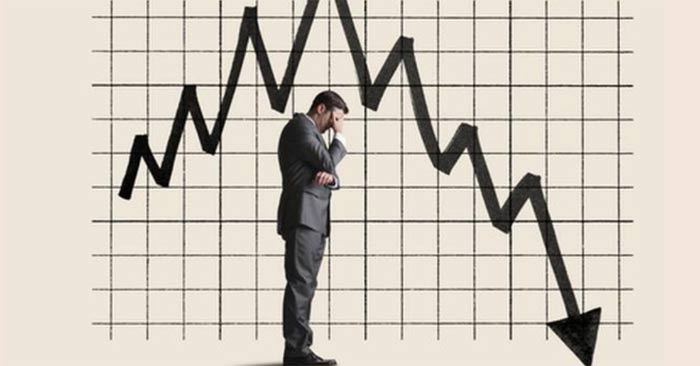
How you react in times of uncertainty is more important than the uncertainty itself. Whether the tariff changes are causing larger economic problems or are just a policy footnote, here's what not to do when fear starts to dictate your financial decisions.
Don't panic sell your investments
When the market is down, our instincts tell us to get out of the market quickly. This protective impulse may be valid, but experts consistently identify this as the most costly mistake investors make.
' The worst mistake anyone can make during a recession or period of increased volatility is to sell everything and go to cash, ' explains Ben Simerly, CFP and founder of Lakehouse Family Wealth in Cleveland, Ohio. 'This is a nightmare scenario, because we can't predict when the market will recover. In fact, many financial planning firms teach their planners that their most important job is to help clients avoid selling for cash during a recession. '
Nick Davis, CFP and founder of Brindle & Bay Wealth Management in Frisco, Texas, added that ' panic selling not only compounds losses, but also leads to missed rallies. Many investors sit on the sidelines waiting for confirmation that it's safe to re-enter, but by then the market has often recovered significantly. This is how people turn a 20% decline into a 40% mistake. '
Instead of panic selling, consider these four simple tips:
Pause before you act . Give yourself up to 48 hours to cool off before making any investment decisions when the market is down. Use this time to contact your financial advisor and discuss your desired course of action with them.
Remember the value of what you own. Once you were a stockholder in some of the best businesses in the world. The intrinsic value of businesses has not diminished, and there is no reason to stop being an entrepreneur just because everyone else is panicking.
Limit financial news . People who regularly follow financial news experienced unnecessary panic, while those who rarely follow financial news barely noticed the decline. That is why you should limit your exposure to market commentary that can increase anxiety without providing useful information.
Focus on your time frame. Remind yourself of when you really need this money and whether short-term market fluctuations are really important to those goals. Current market fluctuations are irrelevant if you don't plan to invest your portfolio in 10 or 15 years.
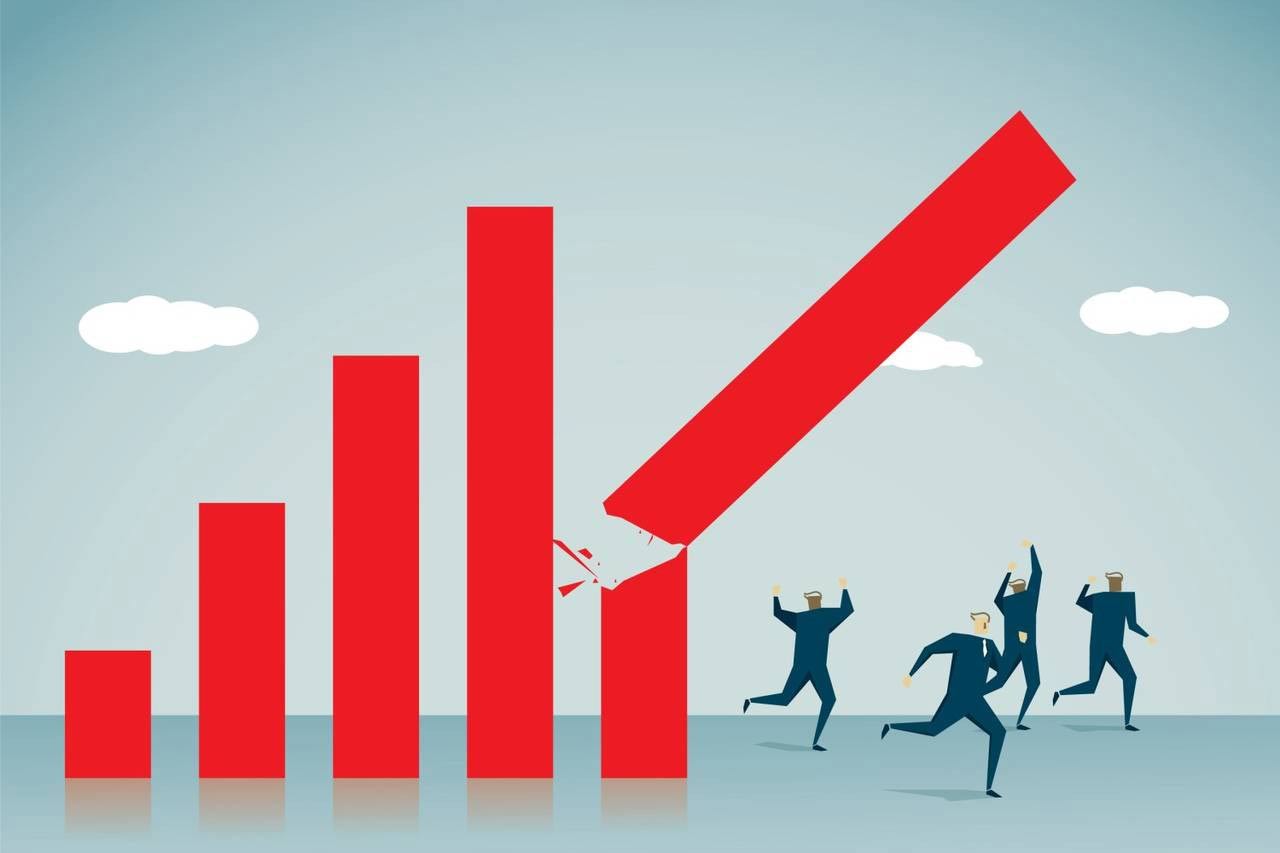
Don't change strategy during a recession
Another big mistake many investors make during a recession is abandoning their established investment approach in favor of a safer one.
'Many investors, even advisors, get nervous and change plans during a recession,' warns Ben Simerly. 'But this eliminates the possibility that existing investments will do the job the investor originally expected .'
Strategies built for long-term growth should take into account periodic market downturns. Changing your strategy in the middle of a downturn often leaves you at a loss and ill-positioned for a subsequent recovery.
The challenge we face, however, is that emotions like fear can significantly influence our financial decision-making during market downturns. Nick Davis points out that ' panic and fear overwhelm rational thinking. When fear is high, investors tend to feel short-term pain more intensely and lose sight of long-term potential. '
To deal with these emotional reactions:
Be clear about your feelings . Fear is natural, and sometimes even healthy. Ignoring or trying to suppress your fear won't work. Acknowledge it and separate decision-making from emotion."
Focus on what you can control. Shift your attention to actions within your power, such as adjusting your spending habits or increasing your short-term emergency fund, rather than market fluctuations.
Automate your investments. Set up regular automatic contributions through your investment platform or advisor to buy investments consistently regardless of market conditions, which naturally applies dollar-cost averaging and helps you minimize potential losses.
Create a decision-making framework. Establish simple rules for when and how you will make changes to your portfolio to help you eliminate momentary emotions.
Don't think this time will be different
Every recession has its own causes and characteristics, but many investors make the mistake of believing that standard investing principles no longer apply in a particular recession.
' This is what we call the 'this time is different ' trap,' explains Ben Simerly. ' It may be different, but that is no reason to rush into a decision. Every recession or market crisis is unique. The important thing is that that uniqueness is normal, not a reason to sell everything or change strategy. '
Looking at history helps us realize that while every recession is unique, certain economic patterns tend to repeat themselves:
Volatility works both ways. The market's best days often occur near the market's worst days. Cashing out during a downturn means you could miss out on the market's best days.
Sector performance varies. Different sectors decline and recover at different rates during a recession. This means your tech stocks may struggle while consumer staples thrive, showing why having a diversified portfolio is important.
Media coverage is slower. The news is often cautious in the early stages of recovery. If you wait until the headlines turn positive before reinvesting, you could miss out on significant gains, as the media only reports on them after the fact.
Markets lead economic data. Stocks often rally before unemployment or GDP growth numbers improve. Waiting for these indicators to signal 'all clear' often means missing out on the market's strongest rallies.
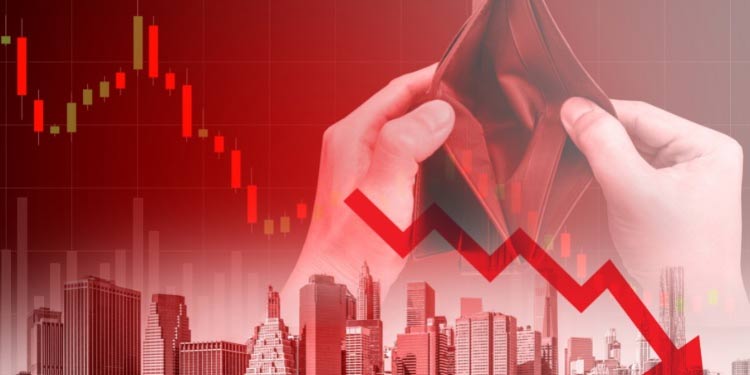
During the devastating Great Depression of the 1920s, stocks fell nearly 90%, and the Great Recession of 2008 saw the stock market lose more than 50%. However, patient investors who stuck with their end goal eventually saw the market recover completely and reach new highs — although the recovery period lasted nearly a decade in the worst cases.
FAQ
What should you know about don't panic sell your investments?
When the market is down, our instincts tell us to get out of the market quickly. This protective impulse may be valid, but experts consistently identify this as the most costly mistake investors make.
What should you know about don't change strategy during a recession?
Another big mistake many investors make during a recession is abandoning their established investment approach in favor of a safer one.
What should you know about don't think this time will be different?
Every recession has its own causes and characteristics, but many investors make the mistake of believing that standard investing principles no longer apply in a particular recession.
Related Articles
 IBM Lotus Symphony - Free Replacement for MS Office4 minutes read
 To Ensure Health You Need to Do Well 3 Things Later10 minutes read
 Before 35 Years Old, Still Single, Low Salary: Don't Forget to6 minutes read
 5 Things to Do Right on Your Computer to Effectively Start8 minutes read
 Netbook - Choosing Tough Economic Times?7 minutes read
 Taiwan Promotes Technological Innovation in the Era of6 minutes read
Reader Comments 0
Sign in with email or Google to join the discussion.