Table of Contents
The Greek alphabet system went from being geometric to pseudoscience. Let's find out about the second life of the Greek alphabet!
The Greek alphabet system went from geometry to pseudoscience. Why? Let's find out about the "second life" of the Greek alphabet!
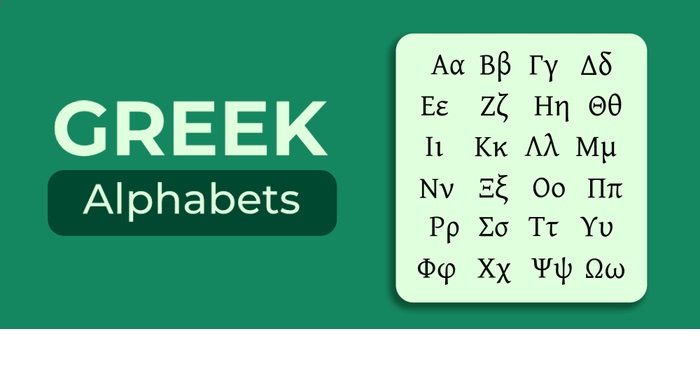
What do secret societies, infectious diseases, and male hierarchies have in common? They all use a system of symbols first developed more than 2,500 years ago. Since then, it has been repurposed in an astonishing variety of ways . Perhaps no set of characters is as widely used—or as adaptable—as the letters of the Greek alphabet.
This system of symbols was standardized into a set of 24 letters – from alpha to omega – in the 4th century BC. Because knowledge of ancient Greek was widely shared among educated Europeans, the Greek alphabet was easily adapted for a variety of purposes. Over time, it came to be used as mathematical constants – such as pi (π) – and as variables in fields such as engineering and physics.
Greek letters in the life of indigenous people
A very different application of the Greek letter appeared in early America. In December 1776, a secret literary and philosophical society was founded at the College of William and Mary in Virginia. The organizers named the organization using the initials ΦΒΚ—Phi Beta Kappa—from the initials of Philosophia Biou Kybernētēs.
Today, there are approximately 1,500 Greek-letter fraternities and sororities at hundreds of universities across North America. The number of college students participating in all-Greek activities is estimated to be in the hundreds of thousands.
Using Greek letters to track viruses
During the Covid pandemic, researchers used Greek letters to identify new variants of the virus that were evolving. Initially, they used lineage names to track these variants, but such designations quickly became complicated. In 2021, the World Health Organization began assigning Greek letters to ' Variants of concern ' and ' Variants of concern '.
Two of these variants—delta and omicron—caused major Covid outbreaks in 2021 and 2022. But by late 2023, the WHO had run out of letters and had to switch back to lineage names.
Alpha dominant, Beta submissive?
The idea of an 'alpha male' in human relationships has been promoted in a number of books whose authors have accepted and supported the idea without much controversy. These include psychotherapist Robert Glover's No More Mr. Nice Guy: A Proven Plan for Getting What You Want in Love, Sex, and Life (2003) and investigative reporter Neil Strauss's The Game: Penetrating the Secret Society of Pickup Artists (2005). Strauss's book also portrays a passive, submissive 'beta male' who is often unsuccessful in attracting women's attention.
The notion of men as dominant 'alphas' or submissive 'betas' has permeated the so-called manosphere and 'red pill' culture online. These labels have been used by anonymous blogger Roissy, as well as far-right figures like Gavin McInnes—founder of the Proud Boys—and social media celebrities like Andrew Tate and Mike Cernovich.
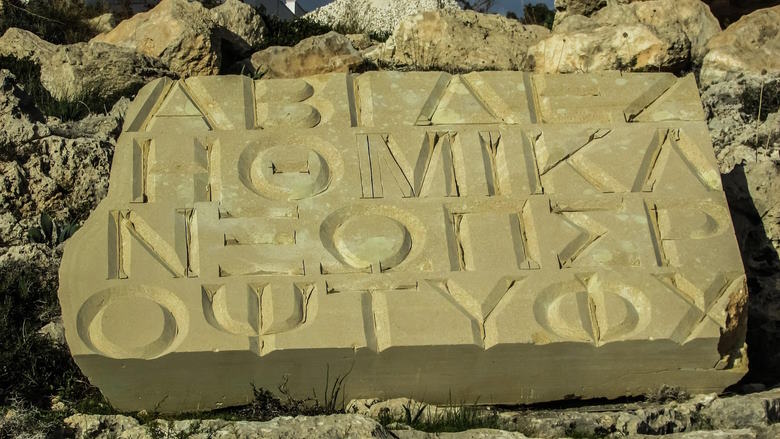
Alpha, Beta, Delta, Gamma, Omega and Sigma?
This 'Greek alphabet' view of male dominance has been greatly expanded upon through the musings of Theodore Beale, better known online as Vox Day.
In March 2011, Beale published a blog post titled "The Socio-Sexual Hierarchy." In it, he proposed a hierarchical order of masculinity that included alphas (dominant and charismatic men) and betas (alphas' loyal friends), but also deltas ("average guys" and "the vast majority of men"), gammas (unattractive, introverted, and bitter men), omegas ("social losers"), and sigmas (nonconforming outsiders).
Beale's typology has become a deeply rooted meme in many areas of the online world, and his terminology has entered the common language. However, it's important to note that these ideas aren't based on mainstream psychological theory or empirical research on male psychology—they're simply the musings of an activist whom Wikipedia calls " A far-right white supremacist, misogynist, and part of the alt-right ."

Nowadays, you can take any number of online " Male hierarchy " tests to " Discover your personality type ." Articles are published that say "Scientists say all men fall into six categories" or "Psychologists Say there are six core personality types ." But none of these concepts are based on scientific research. In this case, the Greek letters only provide a "thin veneer" of respectability for a dubious classification that has no empirical basis.
FAQ
What should you know about the second strange 'life' of the greek alphabet?
In practical terms, the Greek alphabet system went from being geometric to pseudoscience. Let's find out about the second life of the Greek alphabet.
Why does the second strange 'life' of the greek alphabet matter?
The article highlights that let's find out about the "second life" of the Greek alphabet.
What is the main takeaway?
The main takeaway is that because knowledge of ancient Greek was widely shared among educated Europeans, the Greek alphabet was easily adapted for a variety of purposes.
Related Articles
 The Unique Lifestyle and the Terrifying Strange Healing Method4 minutes read
 French Alphabet and Standard Pronunciation2 minutes read
 Greek Mythology - Greek Mythology Already in Every Minecraft Version2 minutes read
 Revealing How to Make Greek Yogurt to Lose Weight at Home Is13 minutes read
 Japanese Alphabet3 minutes read
 Chinese Alphabet and Standard Pronunciation2 minutes read
Reader Comments 0
Sign in with email or Google to join the discussion.