Table of Contents
Reports in March 2026 said Samsung was winding down Galaxy Z TriFold sales after its short initial run. That did not prove to be the complete story: Samsung announced a limited U.S. store restock for April 10. The accurate conclusion is that the TriFold was a scarce, experimental product with market-by-market availability—not that it vanished everywhere on March 17.
The Galaxy Z TriFold sales timeline
- December 2025: Samsung introduced the Galaxy Z TriFold and began sales in South Korea before expanding to a small number of markets.
- January 30, 2026: U.S. sales began through Samsung at a launch price of $2,899.
- March 17, 2026: reports said sales had ended in South Korea and would wind down in the U.S. after remaining stock was sold.
- April 10, 2026: Samsung returned limited quantities to selected U.S. Samsung Experience Stores, showing that the March reports were too final about U.S. availability.
The distinction matters. A limited restock does not turn the TriFold into a mass-market phone or guarantee continuing production, but it does mean “discontinued with no more stock” was no longer an accurate description of the U.S. situation. Availability could still change quickly by store and country.
Why the TriFold was always a niche device
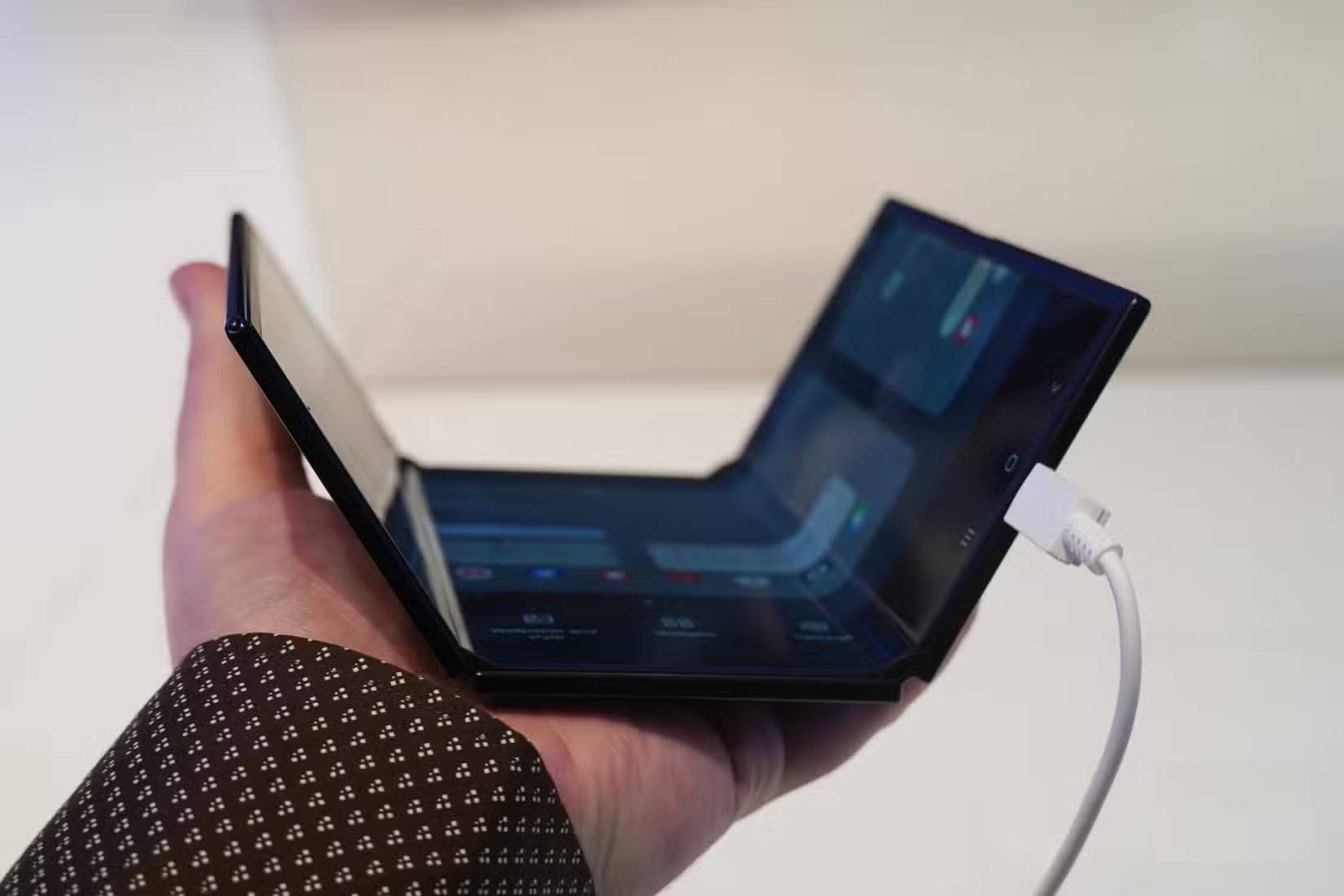
A price close to premium laptop territory
At $2,899 in the United States, the TriFold cost substantially more than mainstream flagship phones and conventional book-style foldables. That limited the audience to early adopters, collectors, and people who placed unusually high value on a tablet-size display that could fold into a phone-shaped device.
The price alone does not reveal whether demand was weak. Small production runs can sell out even when a product is unsuitable for a broad market, and strong demand for scarce inventory does not establish that large-scale manufacturing would be profitable.
A large device even when folded
The phone opened into a 10-inch main screen that could display three portrait-oriented apps side by side. Samsung also supported DeX features intended to provide a more desktop-like workspace. Samsung's own TriFold introduction confirms the 10-inch display and multi-window design.
That workspace came with a portability tradeoff. The device measured about 12.9mm thick when folded, making it bulkier than a conventional slab phone and many single-hinge foldables. Its two hinges and three display sections also made the product more complex to manufacture and handle.
Limited distribution made it difficult to buy
The TriFold was not launched as a standard Galaxy flagship with wide retail availability. Sales were restricted to selected markets and Samsung channels, and online inventory disappeared quickly. In March, The Verge reported that Samsung planned to wind down sales after remaining inventory cleared.
In April, however, Samsung supplied another small U.S. batch to selected stores in California, Texas, and New York. The limited-restock report quoted Samsung saying the device was returning to shelves. Buyers therefore needed to check live Samsung inventory rather than rely on the earlier “no more restocks” claim.
What the short run says about the design
The TriFold demonstrated a different compromise from a normal foldable. A Galaxy Z Fold-style phone prioritizes a more pocketable device with a medium-size inner screen. The TriFold accepts extra cost, weight, thickness, and mechanical complexity to create a display closer to a small tablet.
That makes the product significant as an engineering demonstration even if it never becomes a high-volume model. It showed how Samsung could protect the folding display with two inward folds and use the expanded screen for multi-app layouts. It did not establish that most phone buyers want to pay for or carry that format.
Was a successor confirmed?
No successor was confirmed in the March reporting. Samsung executives discussed the possibility that lessons from the larger screen and wider aspect ratio could influence future foldables, but that is not the same as announcing a Galaxy Z TriFold 2. Rumors, patents, and supply-chain reports should not be treated as a launch commitment.
The safest summary is straightforward: Samsung ended the first sales run in some markets, briefly appeared to be winding the product down, and then offered at least one limited U.S. restock. The Galaxy Z TriFold remained a scarce showcase device, while Samsung's longer-term plans for the tri-fold format were still unconfirmed.
Related Articles
 Samsung Stops Supporting Updates for 11 Smartphones3 minutes read
 Sodas You Probably Didn't Know Existed: Discontinued Sodas6 minutes read
 Samsung Galaxy: Complete Guide and Key Details4 minutes read
 Windows 10 1809 and 1909 Officially Discontinued Support4 minutes read
 Galaxy S11 5g Officially Appeared on Geekbench with Impressive3 minutes read
 How to Fix Samsung Galaxy S8 to Restart Automatically6 minutes read
Reader Comments 0
Sign in with email or Google to join the discussion.