Table of Contents
GPT-4, GPT-4o, and GPT-4o Mini occupy different points in OpenAI's model history. GPT-4 is the older, text-focused model. GPT-4o added faster and less expensive multimodal processing. GPT-4o Mini reduced cost and latency further for focused, high-volume tasks.
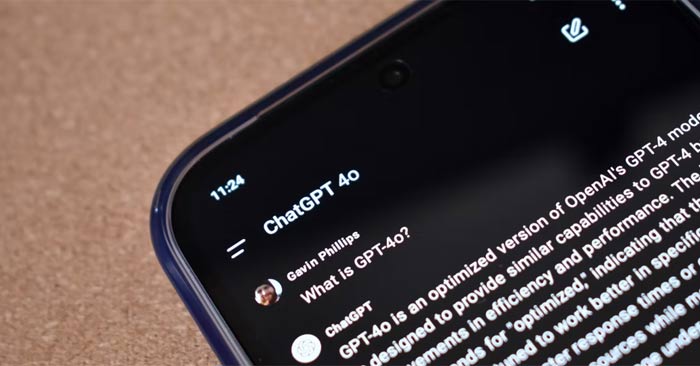
For a new API integration, do not assume that one of these three is still the recommended default. OpenAI now lists newer model families and marks GPT-4 as an older model. The comparison below remains useful for maintaining an existing integration or understanding the evolution of the GPT-4 family.
GPT-4, GPT-4o, and GPT-4o Mini at a glance
| Area | GPT-4 | GPT-4o | GPT-4o Mini |
|---|---|---|---|
| Position | Older high-intelligence GPT model | Faster, flexible “omni” model | Small, affordable model for focused tasks |
| Main API input | Text | Text and images | Text and images |
| Main API output | Text | Text | Text |
| Context window | Depends on the legacy model or snapshot | 128,000 tokens | 128,000 tokens |
| Maximum output | Depends on the legacy model or snapshot | 16,384 tokens for documented GPT-4o snapshots | 16,384 tokens |
| Function calling | Not supported by the current legacy GPT-4 model page | Supported | Supported |
| Structured Outputs | Not supported | Supported | Supported |
| Relative API cost | Highest of the three | Substantially lower than GPT-4 | Lowest of the three |
| Best use | Maintaining a compatible legacy integration | General text-and-image applications that already use GPT-4o | Classification, extraction, tagging, translation, and other high-volume focused work |
What is GPT-4?
GPT-4 is the oldest model in this comparison. It established a large improvement in instruction following, writing, analysis, and coding over earlier GPT models, but its current API entry is limited compared with later families.
The official model page describes GPT-4 as an older high-intelligence model. It lists text input and output, with no image, audio, or video support for that API model. The page also shows that function calling and Structured Outputs are not supported.
That does not mean every product once marketed as “GPT-4” had identical limits. GPT-4, GPT-4 Turbo, GPT-4 Vision previews, and dated snapshots were separate API models with different context windows and features. The original article's claim that all three models have a 32,000-token context window is therefore incorrect.
When GPT-4 still makes sense
- An existing application is pinned to GPT-4 behavior and has not completed migration testing.
- A regulated or validated workflow requires change control before switching models.
- You are reproducing a historical evaluation that specifically used GPT-4.
For new applications, review the current model catalog and deprecation schedule instead of selecting GPT-4 by name recognition. OpenAI's GPT-4 model page lists the remaining aliases and supported features.
What is GPT-4o?
The “o” in GPT-4o stands for “omni.” GPT-4o was designed to handle multiple input types more efficiently than the original GPT-4 family. In the standard model entry documented for the API, it accepts text and image input and produces text output.
GPT-4o supports function calling, Structured Outputs, fine-tuning, and predicted outputs. These features make it easier to use in applications that need tool calls, schema-valid JSON, or lower-latency editing workflows.
Do not interpret “omni” to mean that the main gpt-4o endpoint automatically provides every audio or realtime capability. OpenAI has separate audio, transcription, text-to-speech, and realtime models, and several older GPT-4o preview variants have been deprecated. Select the endpoint that matches the actual input and output modality.
When GPT-4o is useful
- An existing application needs both text and image understanding.
- You need Structured Outputs or function calling with a GPT-4o integration.
- You are maintaining a fine-tuned or snapshot-pinned workflow.
- You want lower latency and cost than legacy GPT-4 without moving the application to a newer model family yet.
See the GPT-4o model page for current snapshots, supported endpoints, features, and prices.
What is GPT-4o Mini?
GPT-4o Mini is the small, low-cost option in this comparison. OpenAI describes it as a fast and affordable model for focused tasks. It accepts text and image inputs, returns text, supports Structured Outputs, and has a 128,000-token context window with up to 16,384 output tokens.
The model is a practical fit when an application makes many predictable requests and can validate the result. Typical examples include:
- Intent classification and request routing.
- Extracting fields into a defined JSON schema.
- Generating tags, titles, or search keywords.
- Translation and short-form transformation.
- Processing large batches in which per-request cost matters.
- Fine-tuning a smaller model for a narrow, repeatable task.
A smaller model is not automatically the best option for complex reasoning, difficult software changes, or ambiguous decisions. Evaluate task success and correction rate; a cheap request that repeatedly fails can cost more than one successful call to a stronger model.
The GPT-4o Mini model page contains the current context, modalities, feature support, and token pricing.
ChatGPT access is not the same as API access
The ChatGPT model picker, message limits, file tools, voice features, and plan availability are product settings. They do not map directly to the API model pages. A model can remain available in the API after it leaves ChatGPT, or a ChatGPT experience can use a different alias from the public API.
For that reason, old statements such as “free users receive 16 messages every three hours” should not be reused as permanent model specifications. Limits can vary by plan, workload, region, and current product policy.
Which model should you use?
- Use GPT-4 only when an existing dependency or historical comparison specifically requires it.
- Use GPT-4o when maintaining an application that needs its text-and-image capability, tool support, or fine-tuned behavior.
- Use GPT-4o Mini for focused, high-volume tasks where low cost and speed matter more than maximum reasoning depth.
- For a new integration, compare these legacy choices with the models currently recommended in OpenAI's catalog.
Check deprecations before deploying
Model aliases and dated snapshots do not all share the same lifecycle. OpenAI has already removed several GPT-4 preview and GPT-4o realtime or audio variants, while other model entries remain available. Before deploying, pin an appropriate snapshot when reproducibility matters, monitor the official deprecations page, and test a replacement before the shutdown date.
The most useful distinction is not simply “large versus small.” Compare the exact model ID, supported modalities, structured-output needs, latency, token cost, and success rate on your own requests.
Related Articles
 Mini PC vs. Desktop PC? Which One Should I Choose: Key Differences8 minutes read
 HDMI, Mini HDMI vs. Micro HDMI: Key Differences8 minutes read
 Learn About Mini PC8 minutes read
 The 7 Top Mini PCs for Every Budget: Top Picks and Buying Guide10 minutes read
 Why Mini PC Is All You Need?6 minutes read
 Why Upgrade from Mac Mini M1 to Mac Mini M4?8 minutes read
Reader Comments 0
Sign in with email or Google to join the discussion.