Table of Contents
This updated guide examines The Computer Does Not Recognize the USB Drive, How to Identify and organizes the essential facts, background, and practical takeaways in clear American English.
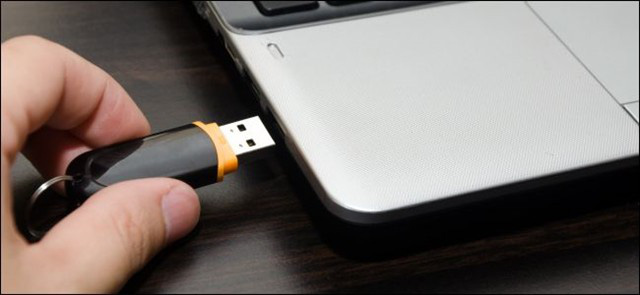
This article will suggest what you should do when your Windows 10 computer does not recognize USB, please read along.
1. Reinstall the USB driver for your Windows 10 computer
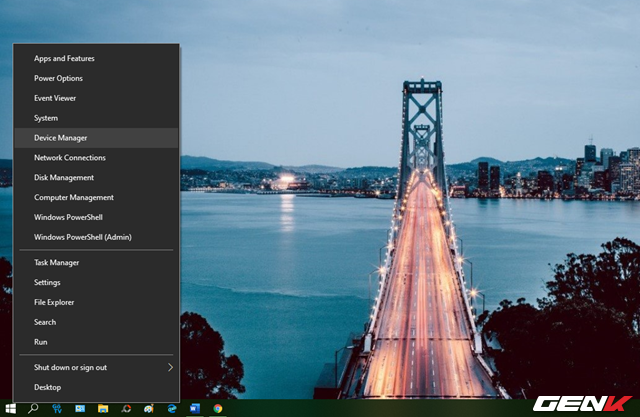
Connect the USB to the computer, right-click the Start button and select Device Manager.
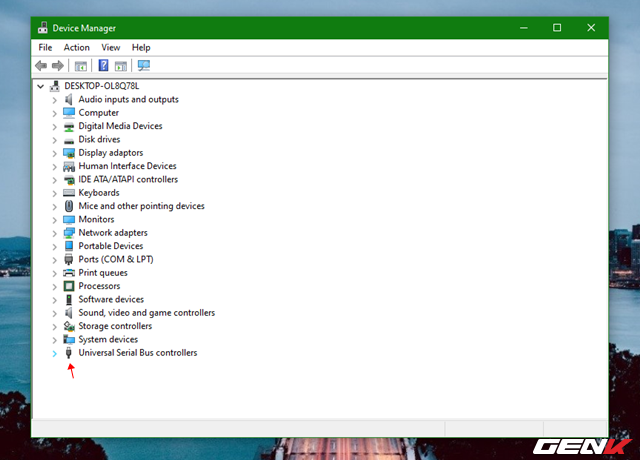
The Device Manager window appears, navigate to the Universal Serial Bus Controllers hardware group and click the extended menu icon.
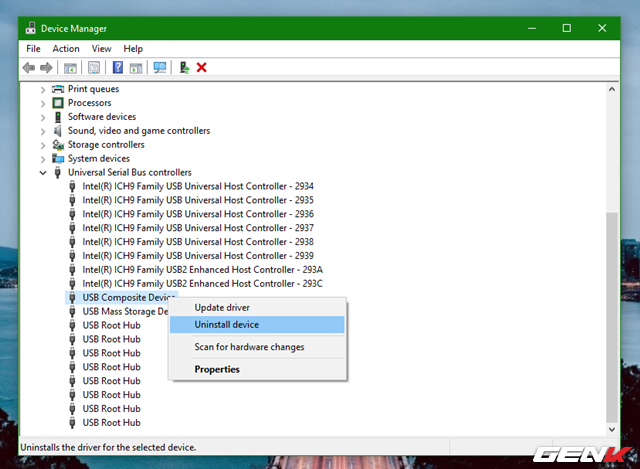
A list of USB drivers appears, find and right-click on the "USB Composite Device" line, select Uninstall device.
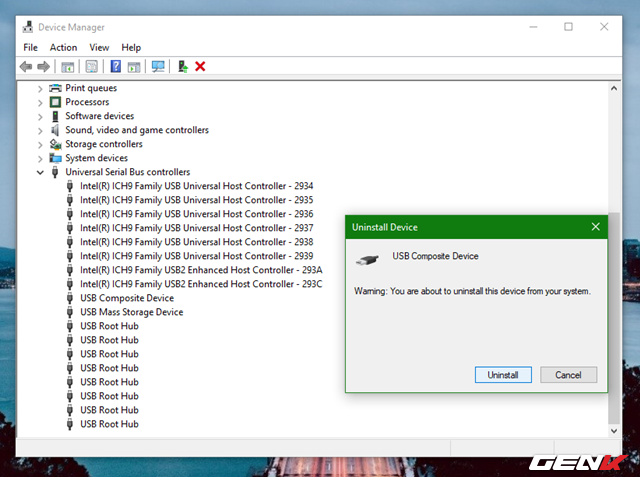
A confirmation window appears, press Uninstall to agree to the selected driver removal task.

After the uninstall process is complete, continue with the "USB Root Hub" driver.
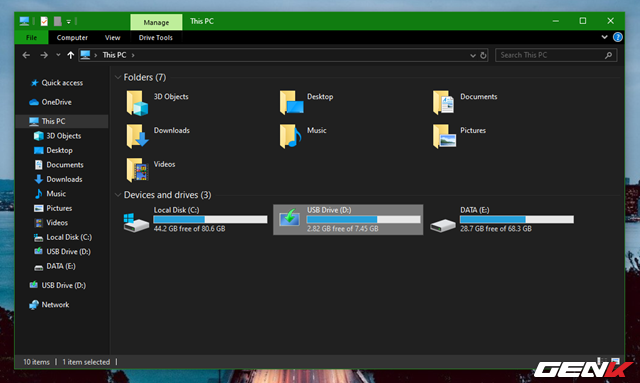
When done, remove the USB from the computer, wait about 1 minute and reconnect the USB. Then Windows will proceed to recognize and reinstall the USB.
2. Set Letter and Paths fixed to USB
To prevent the problem of Windows 10 not accepting USB in the future, you can implement a solution to set Letter and Paths fixed for USB as follows.
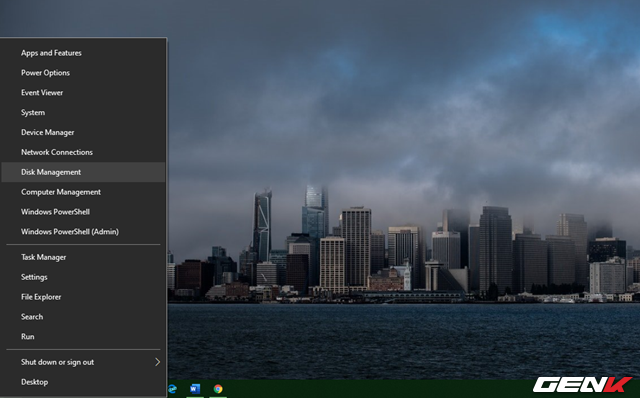
After deleting "USB Root Hub" and "USB Composite Device" in Device Manager above, connect the USB device to the computer and open Disk Management from the Start Menu.
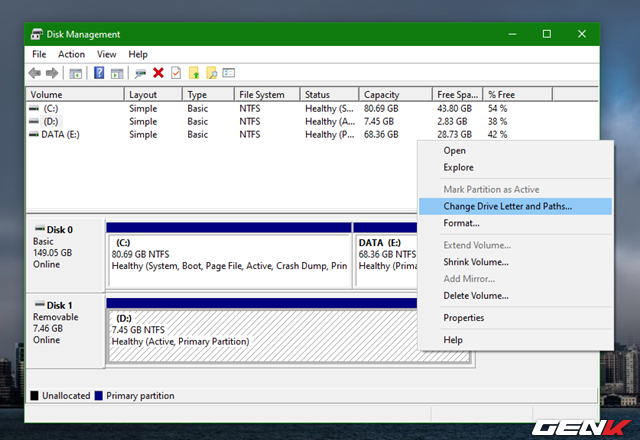
In Disk Management, the USB will be set to "DISK 1". Right-click the USB partition and select Change Drive Letter and Paths.
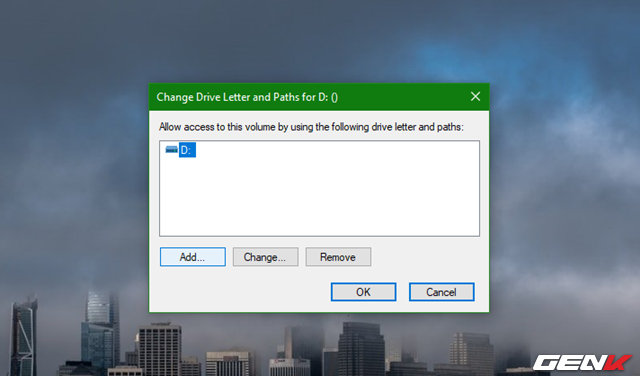
Click the name of the USB partition and select Add to proceed to set Letter for the partition.
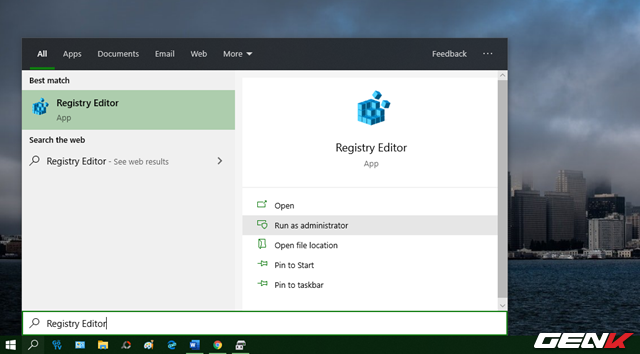
Once done, launch Registry Editor from the search bar.
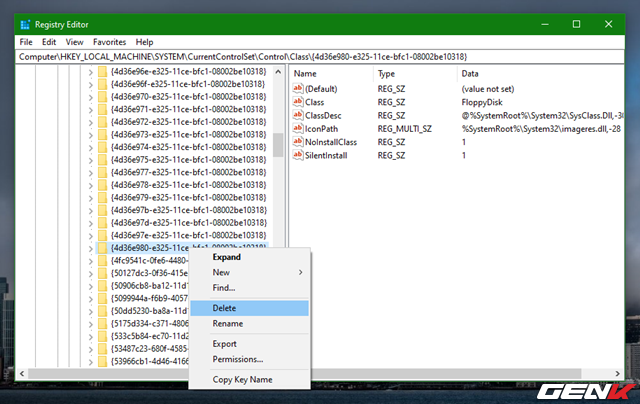
Navigate to "HKEY_LOCAL_MACHINESYSTEMCurrentControlSetControlClass" and delete 02 keys, "4D36E980-E325-11CE-BFC1-08002BE10318" and "4D36E967-E325-11CE-BFC1-08002BE10318".
Finally, restart the computer for the changes to take effect.
3. Check the device and the USB port again
If the above two methods still do not solve the problem of your USB is not recognized by Windows 10 computer, try all other USB ports of the computer, if any USB port also does not recognize while you plug the mouse, desk If the key is normal, the chances are high that the USB has a problem.
Don't forget to try plugging the USB stick in some other computer. If the other computers still recognize the USB normally, your computer is likely to be damaged USB ports or software errors. If the other computer does not recognize the USB, then your USB capability is damaged.

Next, use a soft brush to wipe the dust in the USB slot and secure the USB cable connected from the USB port to the motherboard on the computer (this is mostly done on the desktop) and reconnect the USB to whether it is the connection port or not.
In some cases, you should also try scanning your entire computer for Full Scan with a powerful antivirus software.
Hope the article will be useful for you.
FAQ
What is The Computer Does Not Recognize the USB Drive, How to Identify about?
It provides a structured overview of usb, explains the main context, and highlights practical takeaways for readers.
Why does this topic matter?
Understanding the main concepts helps readers evaluate the issue, avoid common mistakes, and make better-informed decisions.
How should readers use this information?
Use the guidance as a practical starting point, confirm details that may have changed, and follow current product, safety, or security recommendations.
Related Articles
 How to Fix the Computer Error Does Not Recognize the Hard Drive5 minutes read
 How to Identify SSD Hard Drive Is Real or Fake6 minutes read
 How to Fix the Error Windows 10 Computer Does Not Recognize5 minutes read
 A Simple 'Cure' for USB Drive Malfunctions2 minutes read
 How to Identify Hard Drive Failure, Hard Drive Failure, Bad Hard Drive7 minutes read
 How to Identify Counterfeit Money, Real Money from the State Bank7 minutes read
Reader Comments 0
Sign in with email or Google to join the discussion.