Table of Contents
This updated guide explores surprising facts about plastic that make us think with practical details, clear explanations, and useful takeaways. When plastic was invented, we thought it was the best thing since sliced bread. By the time we realized the dangers of plastic, it was too late.
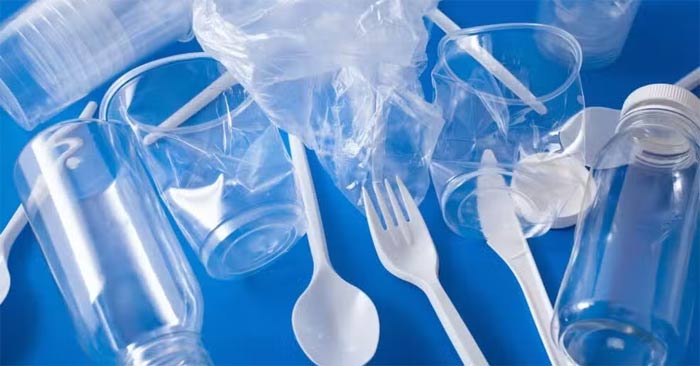
Plastic is used in many ways and is embedded in countless aspects of our lives, and at the same time, its ecological impact is undeniable.
While global efforts are underway to reduce plastic pollution, there is still a long way to go. Here are some surprising facts about plastic that aren't so great!
Up to 99% of the Seafood We Eat Contains Plastic.
Studies have found that we eat up to 3.8 million microplastic particles every year, but it is not just from fish. Microplastics have been detected in almost every form of seafood, including invertebrates like clams and squid and crustaceans like shrimp and prawns.
Traces of plastic also come from food packaging and even from heating leftovers in the microwave! While the human body can eliminate small plastic particles, scientists are still determining whether they pose a significant health risk.
Only 9% of Plastic Is Recycled
So where does the other 91% go? Well, 19% is burned, but a significant amount, between 8.8 and 15.4 million tons (8 and 14 million tonnes), ends up in the ocean. Meanwhile, the rest of the plastic ends up in landfills and scattered across places like beaches, forests, rivers, and lakes.
Every 60 Seconds, a Block of Plastic Waste Flows into the Ocean.
Alarmingly, a 2016 study predicted that by 2030, at least two garbage trucks of plastic waste will be pouring into the ocean every minute. That number is estimated to double by 2050.
So where does it all go? many it winds up in The Great Pacific Garbage Patch, a plastic monster floating between Hawaii and California in the North Pacific Ocean.
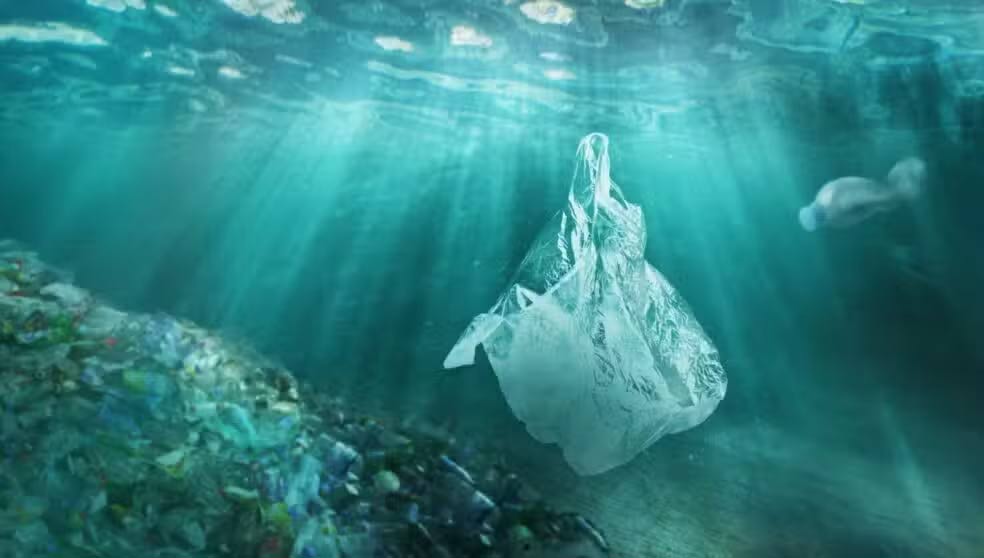
There Are More Than 5 Trillion Pieces of Plastic in the Ocean.
Of that total, 269,000 tons (273,304 tonnes) are floating on the ocean surface, visible to all.
Furthermore, the deep sea is polluted with a whopping ten billion microplastic fibres per square mile (four billion per square kilometre).
As a result, fish and all other marine life regularly ingest plastic. Along with eating seafood filled with plastic, birds and marine animals also become entangled in plastic debris.
73% of Waste Found on Beaches Worldwide Is Plastic
The plastic found on the world's shores looks pretty much the same everywhere—some bottles, some toothbrushes, some old polystyrene, etc.
One of the most plastic-polluted beaches on the planet is Kamilo Beach, located on the Big Island of Hawaii, east of the Great Pacific Garbage Patch. Because it is so close to shore, all sorts of strange things wash up on the beach, including the backs of TVs!
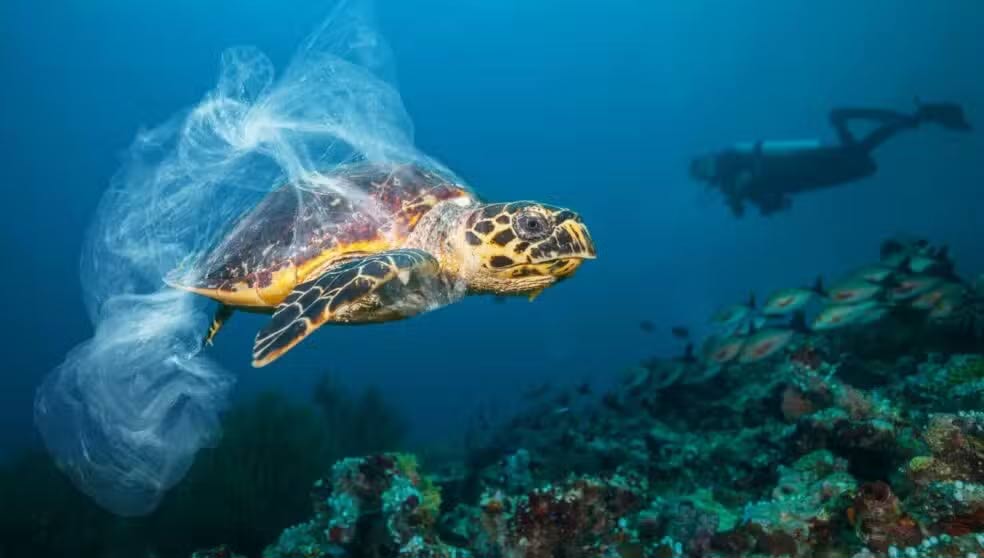
About 100, 000 Marine Mammals Die Every Year Because of Plastic Pollution
Overall, plastic has had a significant impact on the lives of 81 marine mammal species. Incredibly, one sperm whale was found to have ingested 66 pounds (30 kg) of plastic after its death, causing serious health problems.
Meanwhile, a 2023 study found debris present on 77 of 84 coral reefs worldwide, with plastic making up 88%, highlighting the widespread impact on marine ecosystems.
More Than 40% of Plastic Created Is for Single Use Only.
According to Statista, grocery bags are the most common single-use item contributing to plastic pollution, especially in our oceans. Incredibly, around five trillion plastic bags are used worldwide every year!
Single-use plastics like bottles and wrappers are also causing significant problems for our planet.
More worryingly, 98% of single-use plastic products are made from fossil fuels.
It is predicted that greenhouse gases emitted during production, use and disposal could increase to 19% of the global carbon budget by 2040.
A 2019 Study Found That 100% of Marine Life Washed Ashore in the UK Had Plastic Inside.
Including fifty animals from ten different species, all had plastic in their stomachs and intestines. This plastic pollution was mainly because of synthetic fibers from items such as fishing nets as well as microplastics.
Species affected include bottlenose dolphins, harbour seals and pygmy sperm whales, which are found across the UK coast.
About 70% of Plastic Waste Released into the Environment Worldwide Is Generated by Just 20 Countries.
By 2024, a study simulating real-world data put India at the top of the plastic pollution rankings, producing 10.2 million tonnes (9.3 million metric tons) per year.
Next on the list is Nigeria, with 3.9 million tonnes (3.5 million tons), nearly a third of India's output. Despite having a similar population to India, China ranks fourth with 3.1 million tonnes (2.8 million tons) of waste discharged into the environment.
FAQ
What is the main takeaway about Surprising Facts About Plastic That Make Us Think?
The key is to understand the core idea, compare the available options, and apply the practical guidance that matches your situation.
What should beginners know about Surprising Facts About Plastic That Make Us Think?
Start with the essential steps and terminology. Avoid changing advanced settings until you understand how they affect performance, privacy, cost, or compatibility.
How can I use this information in practice?
Follow the relevant section in order, test one change at a time, and confirm the result before moving to the next step or recommendation.
Related Articles
 30 Surprising Facts in the World Surprise Both Smartest People7 minutes read
 Interesting Facts About the Sun That You May Not Know15 minutes read
 What Is Abs Plastic? Applications of Abs Plastic in Life4 minutes read
 10 Surprising Facts About the Rubik's Cube: What You Need to Know5 minutes read
 Interesting Facts That Can Change the Way You See the World5 minutes read
 Interesting Scientific Facts Surprise You: Mars3 minutes read
Reader Comments 0
Sign in with email or Google to join the discussion.