Table of Contents
Early progress in Dynasty Warriors: Unleashed becomes easier when you stop treating every stage as a simple button-mashing fight. Break useful objects, group enemies before spending skills, bring the correct attribute, use support officers deliberately, and collect mission rewards before upgrading the roster.
Version note: this guide reflects the mobile game systems shown in the original release. Menus, rewards, balance, and service availability may differ by version or region.
1. Break stage objects for temporary boosts
Wooden crates, weapon racks, and other breakable objects can contain temporary attack, defense, movement, or recovery benefits. Clear nearby objects before a difficult group or boss rather than after the dangerous part is already over.

The original version used short-lived buffs, so activate them only when you can immediately exploit the effect. Learn which objects are decorative and which can be broken without wasting a skill.
2. Group enemies before using area skills
Most stages send several ordinary soldiers around a tougher target. Move so the group follows into one area, then trigger a wide attack that can hit multiple units. This saves time and avoids spending several cooldowns on isolated enemies.

Do not gather more enemies than the officer can safely control. If attacks interrupt your skill or drain health quickly, eliminate ranged units first and use movement to keep the mob on one side.
3. Keep moving during skill animations
If a skill allows directional adjustment while active, steer it through the densest part of the group instead of leaving the officer fixed in place. Small movement corrections can keep a boss inside the damage area and reduce missed hits.

4. Use the Fire–Wood–Water attribute cycle
The version documented here used a three-way advantage system:
- Fire is strong against Wood.
- Wood is strong against Water.
- Water is strong against Fire.
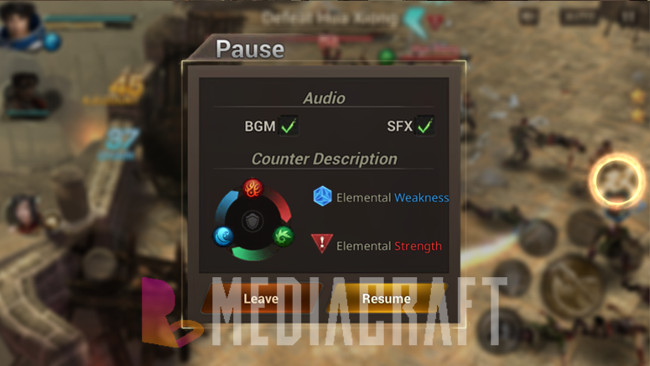
Check the stage or boss attribute before entering. A well-built officer at a disadvantage may perform worse than a slightly weaker officer with the correct matchup. Keep at least one usable officer from each attribute as the roster grows.
5. Borrow a support officer with a purpose
The pre-stage screen may offer officers from other players. Choose support that covers a missing attribute, adds reliable boss damage, or helps clear groups—not simply the highest visible number.
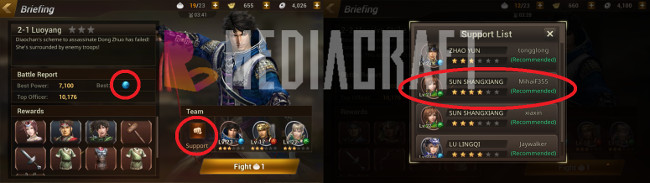
Review the stage preview first. If your main team already handles ordinary soldiers, use support for the boss. If the timer is the problem, choose an officer that can clear waves quickly.
6. Collect daily and event rewards
Daily login rewards, missions, achievements, and event tasks can supply currency, materials, or officers. Claim them before spending resources because a reward may complete an upgrade without an additional purchase.
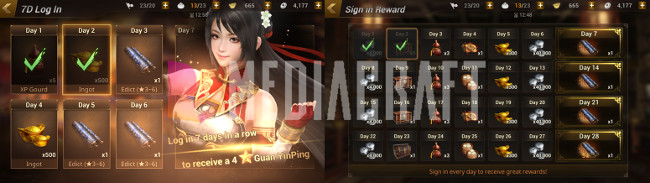
A login streak is useful only when the current version offers one. Read the displayed calendar and reset time; do not rely on an old reward table.
7. Check missions, mail, and the market
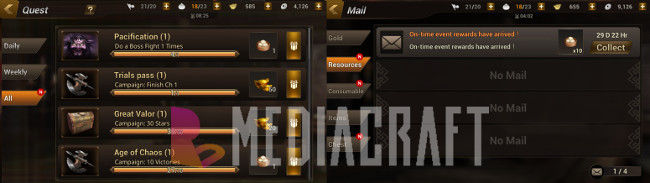
Unclaimed mission rewards and mailbox items can expire. Review their deadlines, then prioritize permanent upgrades and materials required by the active team. In the market, compare the item with upcoming stage needs instead of buying every highlighted offer.
Build a balanced early roster
- Develop a small core team instead of leveling every officer equally.
- Maintain attribute coverage for Fire, Wood, and Water stages.
- Use lower-cost upgrades that immediately unlock a difficult stage.
- Keep spare equipment or materials until you know the upgrade system.
- Recheck team power and stage recommendations after each meaningful improvement.
Simple stage routine
- Read the enemy attribute and reward preview.
- Select the main and support officers.
- Break useful objects while approaching the first group.
- Gather ordinary enemies and use area attacks.
- Save a strong skill or buff for the boss phase.
- Claim mission and mailbox rewards after the run.
These habits reduce wasted cooldowns and resources. The central idea is to enter each stage with an attribute plan, use skills on groups instead of single targets, and upgrade only the officers that solve the next clear problem.
Related Articles
 Anime Warriors III Beginner Guide: How to Play10 minutes read
 List of Latest Slayers Unleashed Codes and How to Enter5 minutes read
 Latest Anime Warriors Simulator 2 Code and How to Enter the Code5 minutes read
 Instructions for Entering the Latest Combat Warriors Codes and Codes4 minutes read
 5 Certain Tricks Must Know If You Are Using Android 8 Oreo7 minutes read
 4 Useful Gboard Tips to Make Typing on Android More Enjoyable8 minutes read
Reader Comments 0
Sign in with email or Google to join the discussion.