Table of Contents
Overview
This guide explains how to connect a phone to a projector in clear, practical terms. It covers the key concepts, recommended steps, common limitations, and useful checks so you can make a better-informed decision.
Are you looking for a way to quickly connect your phone to a projector? Knowing how to connect a projector to your phone can bring you many conveniences in your studies and work. You can comfortably enjoy movies on the big screen, or make eye-catching presentations when you forget to bring your computer or your computer is broken. Please refer to the simple and quick way to connect your phone to a projector in the this guide shares below.
The role of connecting the phone to the projector
Few people know that connecting from phone to projector has unexpected benefits for work, study and entertainment:
- To display enlarged information for convenient viewing and presentation, projectors are chosen by many people.
- On the contrary, if you find presenting on a computer quite cumbersome, you can use a phone which is both compact and convenient.
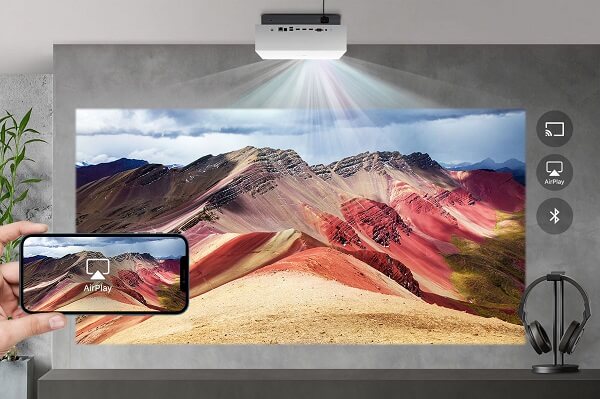
How to connect your phone to a projector quickly and easily
There are many ways to connect your phone to a projector that you can refer to. Here are some commonly used connection methods that you can refer to.
How to connect phone to projector via cable
- To directly connect an Android phone or iPhone to the projector, you can use an MHL connection cable. This cable will have 2 ports, you plug 1 port into the phone and the other port into the projector to be able to directly project all phone screen interfaces onto the projector screen.
- The conditions to be able to connect the phone to the projector using a cable are:
+ Does your phone support connecting to a projector: Some phone models cannot support this feature. To check, try connecting to see if the screen can be projected.
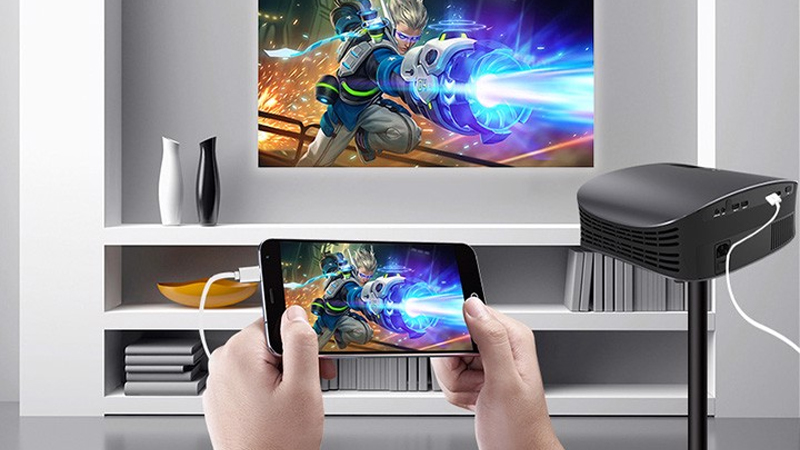
+ The phone connection port must be compatible with 1 end of the MHL cable: For iPhone, you need to choose an MHL cable with a Lightning port, while for Android phones, the cable end will usually be a Micro USB or USB Type-C port.
Connect your phone to the projector using the Chromecast app
Chromecast is a convenient feature of Google that allows connection and projection between 2 devices. To use this feature to connect your phone to the projector, do the following:
Step 1: Download the Google Home app to your phone and register or log in.
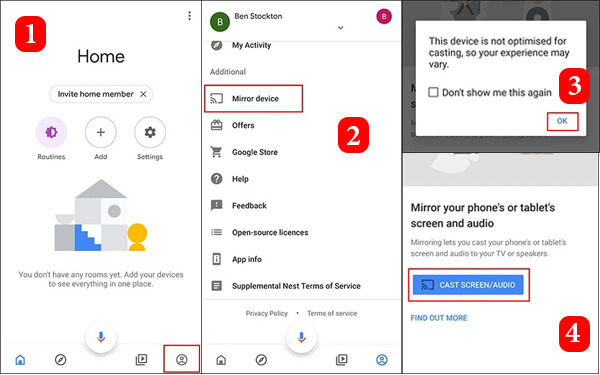
Step 2: Open Google Home > Click on the account icon > Click "Mirror Device" > Click on "Cast Screen/Audio" > Click on "Chromecast" to start connecting.
How to connect phone to projector wirelessly
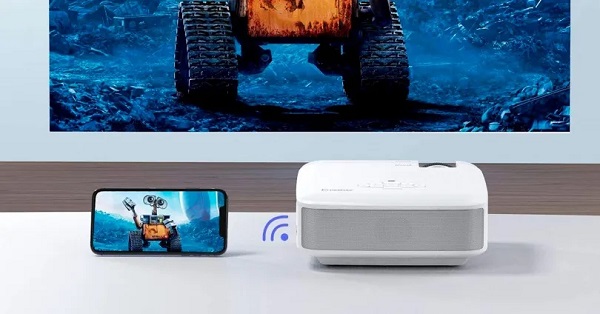
For connecting projectors to mobile phones with a plug, there will be inconveniences, troublesome or damaged connection wires. Therefore, manufacturers have developed a new feature that allows connecting projectors and phones via Wi-Fi waves.
Step 1: Plug in the power to EZCAST and then plug this device into the projector's HDMI port.
Step 2: Select the HDMI port on the projector. The EZCast interface will appear.
Step 3: Download the EZCAST app on CHplay.
Step 4: Open the EZCast application and click Search. An optional interface will appear so you can share data such as: Video, Photo, Music…….
Step 5: Connect your phone to EZCast. Select Wi-Fi connection and the name of the EZCast device will appear in the connection section.
Step 6: Connect the EZCast device to the internet. Select the network name and enter your home Wi-Fi password. Finally, you can use your phone and projector normally.
How to connect peripherals
Step 1: To connect peripherals, you need to connect Fcast to your projector via HDMI port and USB port to get power for Fcast. Select the input source as HDMI where you are plugging Fcast. The Wi-Fi name and password of Fcast will appear on the screen.
Step 2: After successfully connecting, open the web browser on your phone and access the Fcast address clearly displayed on the projector screen.
Step 3: After accessing, go to settings to connect Fcast to Wi-Fi according to the instructions displayed on the screen. When successfully configured, Fcast will connect to the Wi-Fi you just installed.
Smart View on Samsung devices
Step 1: Samsung devices have pre-installed Smart View application for connecting to the projector. First, open Screen Mirroring or Device Mirroring mode on the projector.
Step 2: Then on your phone, swipe down from the top to open the shortcut menu, and tap the Smart View icon to enable this feature.
Step 3: Your phone will scan for nearby devices that have Chromecast or Miracast enabled. Tap the name of the projector you want to connect to, and you're done.
Conclusion: Thus, through the article shared above, we have shared how to connect your phone to a smart projector, quickly. Hopefully this will be a useful reference information for you. In addition, if you have any questions that need to be answered, please contact this guide via hotline 19001903 for the fastest advice and support!
Key Takeaways
Use the guidance above as a practical reference for revealing how to connect your phone to a. Check compatibility, follow the steps carefully, and verify important details with official documentation when software, security, accounts, health, or purchases are involved.
FAQ
How do I connect a phone to a projector?
Follow the steps in this guide in order, confirm each setting before continuing, and save, restart, or reconnect the device when the instructions require it.
What should I check before I begin?
Confirm the correct device, account access, software version, compatibility, and a current backup whenever the process could affect files, settings, or security.
What should I do if the process does not work?
Repeat the steps carefully, check for model or version differences, install available updates, and consult the manufacturer's official support documentation.
Related Articles
 5 Popular Wireless Projectors to Connect to Laptops, Phones5 minutes read
 Summary of Ways to Connect a Computer to a Projector8 minutes read
 How to Connect Macbook to Projector7 minutes read
 How to Connect the Projector to a Computer, Laptop7 minutes read
 How to Connect Android Wirelessly to the Projector5 minutes read
 How to Connect a Mac to a Projector4 minutes read
Reader Comments 0
Sign in with email or Google to join the discussion.