Table of Contents
You do not need a perfect loadout to survive a PUBG Mobile match. Loot efficiently by choosing a landing route, using the first dependable weapons you find, sharing supplies with the squad, and changing priorities as the circle shrinks. The goal is to become combat-ready quickly—not to spend the match searching for one favorite gun.
Choose loot density that matches your plan
A hot drop can provide many items in a small area, but it also creates immediate competition. Choose it when the squad wants an early fight and can land together. For a more controlled start, use the outer buildings of a large compound or a small nearby settlement, then rotate after securing basic equipment.

Watch other parachutes and change buildings when an enemy reaches the same roof or doorway first. A safe weapon in the next building is better than a high-tier attachment beside an armed opponent.
Become comfortable with more than one weapon type
Players lose time when they ignore every weapon except a preferred assault rifle. Learn one practical option in several categories—SMG, shotgun, assault rifle, and DMR—so the first minutes are not determined by luck.
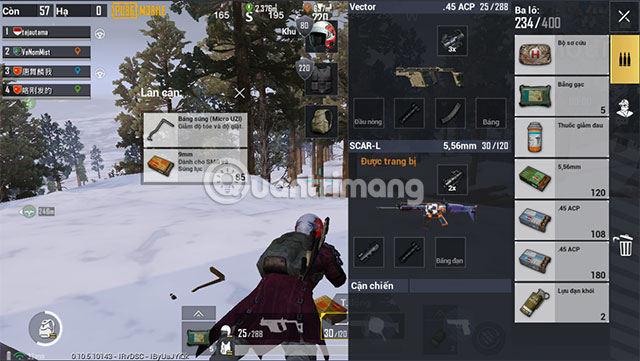
Use the ammunition and attachments that match the equipped weapon, and discard the rest once the loadout is stable. Do not assume a particular gun or caliber is abundant on every map or after every balance update. The PUBG Mobile attachment guide helps identify which parts are worth keeping.
Loot small compounds in a route
Several modest buildings can provide a complete loadout with less risk than a central hot zone, but only when the route is efficient. Pick a sequence that moves toward the safe zone or a vehicle rather than backtracking through cleared rooms.
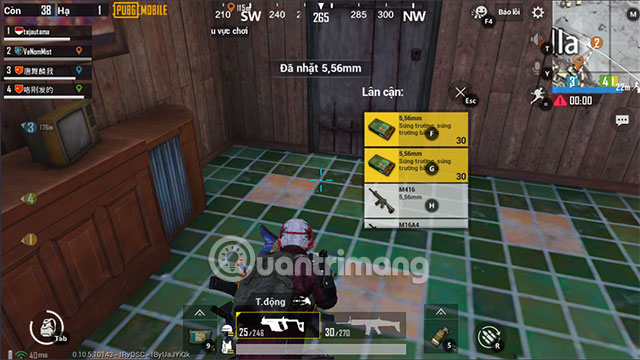
- Assign each squad member a nearby building.
- Call out enemies before separating.
- Mark spare armor, scopes, healing, and ammunition.
- Leave when the squad has weapons and protection; do not clear every room by habit.
- Check the map and timer before starting another compound.
Share loot with teammates
A squad is stronger when supplies match roles. Give a long-range scope to the player carrying a DMR or sniper rifle, distribute healing instead of storing it on one character, and share ammunition before an extended rotation.
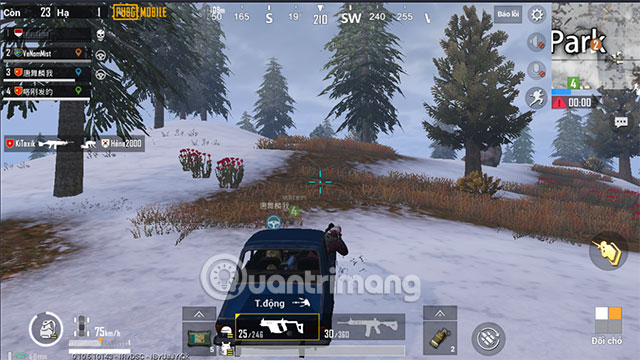
Use the item marker or quick-chat system so teammates can collect supplies without crowding one room. If a player changes weapons, ask whether the old ammunition or attachments can complete another loadout.
Change priorities during the match
At the start, the priorities are a firearm, ammunition, armor, a helmet, and basic healing. In the middle game, finish attachments, add boosts and throwables, and secure transportation for the next circle.
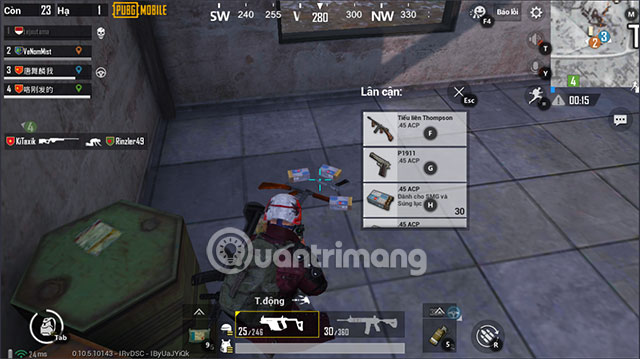
Late in the match, stop carrying supplies that no longer serve the likely fight. Reduce unused ammunition types and spare attachments; make room for smoke grenades, quick healing, and a practical ammunition reserve. A Level 3 bag filled with clutter is less useful than a smaller, organized inventory.
Review the backpack after every weapon change
Picking up a different weapon can leave incompatible ammunition, magazines, grips, or muzzle devices in the bag. Open the inventory from cover, equip useful parts, and drop obsolete items immediately.
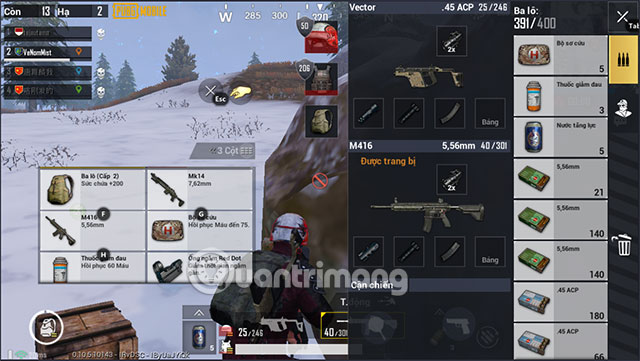
For a detailed capacity strategy at each bag level, see how to organize a PUBG Mobile backpack. If automatic pickup repeatedly adds unwanted items, adjust it with the PUBG Mobile auto-pickup settings.
Know when to stop looting
- The squad has two usable weapons per player and enough ammunition for the next engagement.
- Everyone has at least basic protection and some healing.
- The safe-zone timer requires movement.
- Nearby gunfire or open doors indicate another team is close.
- The next crate would require crossing exposed ground for only a minor upgrade.
Looting is a means to gain options, not the objective of the match. A modest loadout held from good cover is usually stronger than premium gear acquired late, alone, or while exposed. Combine this approach with the rotation and cover habits in the PUBG Mobile damage-avoidance guide.
Related Articles
 Tips for Quick Rankings in PUBG Mobile9 minutes read
 Standard Tips in PUBG Mobile8 minutes read
 Comparison Between PUBG Mobile VNG and PUBG Mobile International6 minutes read
 PUBG Mobile: Weapons That Are Easy to Win the TOP 1 of the Game9 minutes read
 How to Turn Off Auto-Picking in PUBG Mobile5 minutes read
 PUBG Mobile: Attack Tips Without Fear of Being Detected7 minutes read
Reader Comments 0
Sign in with email or Google to join the discussion.