Table of Contents
This article examines Nissan Revealed the Technology to Predict the Human Brain to Drive Safer. It presents the main facts, practical implications, and key points in a clearer, easier-to-follow format.
Understanding Nissan Revealed the Technology to Predict the Human Brain to Drive
Nissan has announced a new technology system in which it can determine what drivers want to do and it will operate a few seconds automatically to minimize highway risks. It is called Brain-to-Vehicle, or B2v technology.
For this system to work - in the current prototype, at least the driver must wear a headset equipped with measuring electrodes and it can "decode" the brain's cortical activity.
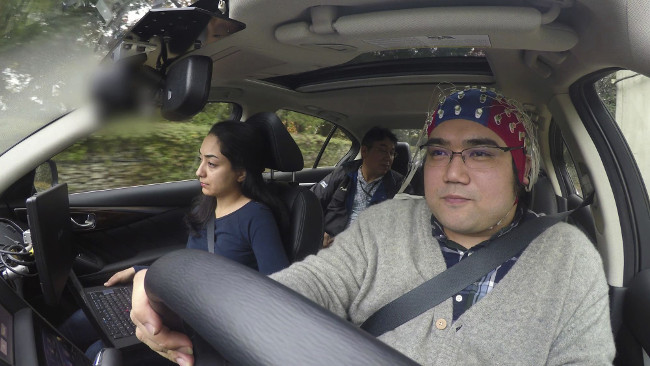
Based on this data, the system is reported to be able to detect signs that the driver is starting to think like sudden movements like turning the steering wheel or pressing on the brakes. Then the system will immediately start those actions a few seconds in emergency situations.
It will do so before about 0.2 to 0.5 seconds faster than the driver. Although enough to make a big difference in an emergency, Nissan claims that this "reception" effect is not clearly noticeable.
The B2V system will be shown on the driving simulation event at CES in Las Vegas.
See more information in the following video:
FAQ
What is the main point of Nissan Revealed the Technology to Predict the Human Brain to Drive Safer?
Nissan has announced a new technology system in which it can determine what drivers want to do and it will operate a few seconds automatically to minimize highway risks. It is called Brain-to-Vehicle, or B2v technology.
Why is Nissan Revealed the Technology to Predict the Human Brain to Drive Safer important?
Nissan Revealed the Technology to Predict the Human Brain to Drive Safer matters because it can affect how readers understand, choose, use, or respond to the subject discussed in the article.
What should readers verify about Nissan Revealed the Technology to Predict the Human Brain to Drive Safer?
Check the date, product or software version, compatibility, and any current guidance before acting, especially when technology, security, health, or pricing is involved.
Related Articles
 Transplanting a Mini-human Brain into Mice Causes Concern About3 minutes read
 Scientists Read the Bird's Brain and Know What It Is About to Sing3 minutes read
 Interesting Discovery: Human Brain Is More Flexible Than Chimp Brain3 minutes read
 Breaking into the Bank Holds 1,000 Human Brains in the UK3 minutes read
 Deciphering the Mystery of Consciousness, the Human Brain6 minutes read
 The Human Body Is Stronger Than the Supercomputer5 minutes read
Reader Comments 0
Sign in with email or Google to join the discussion.