Table of Contents
The latest study of 322,000 adults has confirmed that night owls have poorer cardiovascular health and face a significantly higher risk of death from cardiovascular events compared to early risers.
1. Scientific evidence from massive data banks.
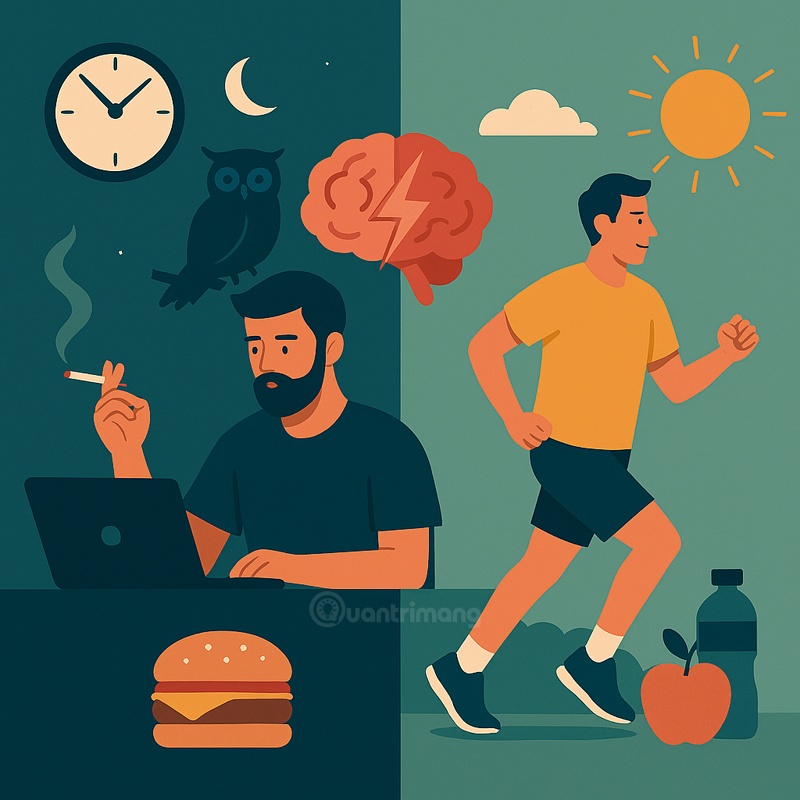
A groundbreaking study recently published in the Journal of the American Heart Association (JAHA) analyzed data from the UK Biobank . Researchers tracked over 322,000 people (aged 39–74) for nearly 14 years to understand their "chronotype"—their natural sleep patterns.
The results show that:
- Health risks: True "night owls" have a 16% higher risk of heart attack or stroke compared to those with neutral hours.
- Poor health indicators: The group that stayed up late was 79% more likely to score low on overall cardiovascular health (according to the Life's Essential 8- point scale) .
- Gender difference: Notably, women who stay up late tend to experience stronger negative effects than men.
2. Lifestyle: The real "culprit" accounting for 75% of the risk.
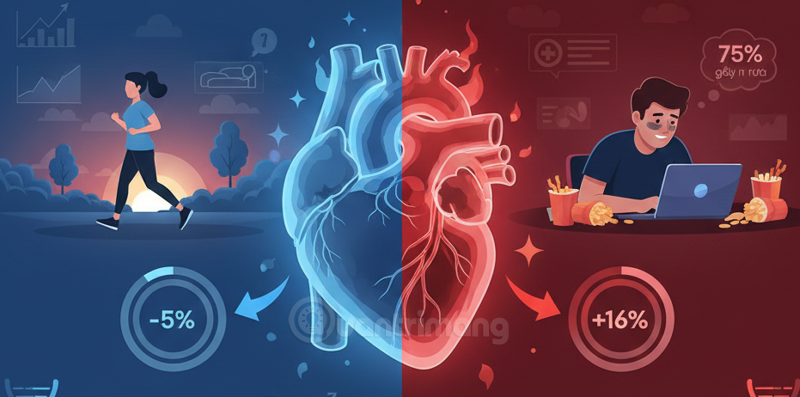
Upon further analysis, scientists discovered that staying up late doesn't directly "kill" the heart; rather, it's the habits formed from staying up late that are the root cause. Approximately 75% of cardiovascular risk in people who stay up late is explained by:
- Nicotine use (34%): "Night owls" tend to smoke more to stay awake.
- Poor sleep quality (14%): Going to bed late is often accompanied by shallow sleep and fragmented sleep.
- Blood sugar disorders (12%): Eating at night puts pressure on insulin metabolism.
- Diet and obesity (22%): The habit of skipping breakfast but consuming excess calories at night leads to a high BMI.
3. Biological nature: When genes are "out of sync" with society.
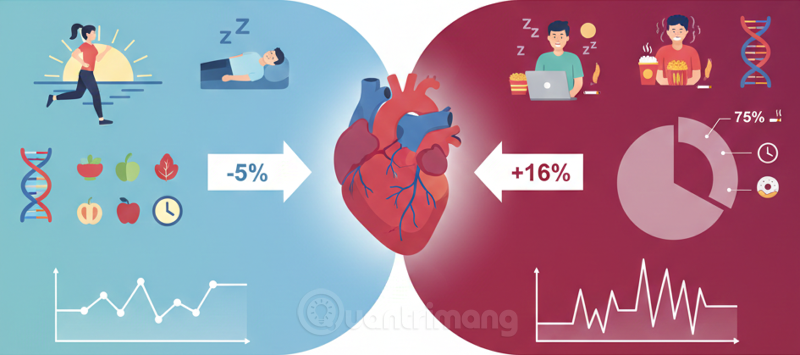
Staying up late isn't just a preference; it's in your genetic code . There are hundreds of genetic variations that control your 24-hour circadian rhythm.
The phenomenon of "Social Jet Lag"
This is a conflict between the body's internal biological clock and the societal work schedule.
- Stress hormones: In people who stay up late, cortisol levels (the hormone that wakes the body) rise later in the morning, causing them to feel tired at the start of the day.
- Nighttime blood pressure: Normally, blood pressure decreases during sleep. However, in "night owls," the "fight-or-flight" system is overactive, causing blood pressure to remain high throughout the night, damaging blood vessels over time.
Molecular metabolic disorders
These "clock genes" also control how the body breaks down fats and sugars. Disruptions to the circadian rhythm lead to increased triglycerides (a type of blood fat) and cause insulin resistance, creating conditions for atherosclerotic plaques to build up on artery walls.
4. Solution: Reversing the risks for night owls
If you're genetically a night owl, you don't necessarily have to develop heart disease. The key lies in proactively managing lifestyle factors .
- Strict sleep hygiene: Try to maintain a consistent bedtime as much as possible, and avoid strong blue light for an hour before bedtime.
- Eliminate nicotine and snacking: Absolutely no smoking and minimize snacking after 10 PM.
- Compensatory exercise: Increase physical activity during the day to help the body relieve oxidative stress.
- Regular check-ups: Regularly monitor blood pressure, blood sugar, and cholesterol levels to intervene with medication if necessary.
Related Articles
 6 Things to Do to Avoid the Consequences of Staying up Late12 minutes read
 Kill Yourself Because of the Habit of Sleeping Late10 minutes read
 The 27-year-old Mother Suddenly Died While Holding Her Smartphone4 minutes read
 Why Are People Staying up Late Often Smart and Alert4 minutes read
 19 Tips to Help You Achieve High Efficiency When Staying up at Night7 minutes read
 Serious Harms of Washing Your Hair Too Late4 minutes read
Reader Comments 0
Sign in with email or Google to join the discussion.