Table of Contents
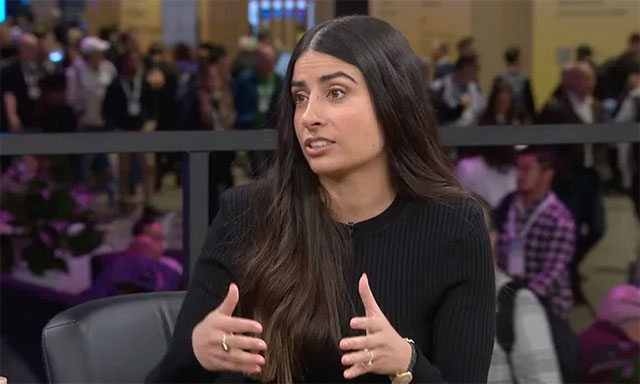
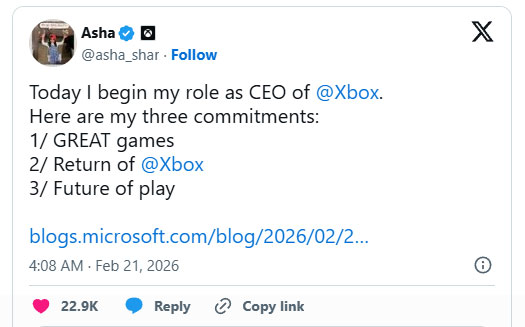
When Microsoft announced Asha Sharma as its gaming chief on February 20, 2026, her message acknowledged AI’s influence while emphasizing games created by people. She rejected using AI merely to pursue short-term efficiency or fill the ecosystem with low-quality content.
The statement set a creative direction. It did not announce a blanket ban on AI or a detailed policy covering every studio’s development tools.
The leadership change
The official Microsoft announcement named Sharma executive vice president and CEO of Microsoft Gaming as Phil Spencer retired. Matt Booty became executive vice president and chief content officer.
An update to that announcement says the business became known as XBOX on April 23, 2026, with Sharma’s title changed to CEO XBOX. The February message should therefore be read as her initial statement, rather than a newly announced appointment.
Three priorities, including human creativity
Sharma outlined three commitments: great games, a renewed focus on Xbox, and new ways to play. Her AI comments appeared within the third commitment, alongside a rejection of treating established fictional worlds solely as assets to monetize.
Her wording defended creative craft while leaving room for technology. It does not establish which tools teams will use, whether particular assets will be AI-assisted, or how those choices will be disclosed.
Separate tools, content, and player services
“AI in gaming” can refer to several different activities: help writing code, generating content, or providing an assistant to players. These raise different questions. For a development tool, the question is whether its output is useful and checked. For generated art or dialogue, authorship and creative consistency matter. For a player assistant, data handling and permissions matter.
TipsMake’s AI-assisted coding project examples include a game prototype. Its Gaming Copilot privacy discussion covers a separate issue: information used by an assistant.
The February promise is best judged against specific product decisions and released games. It supports an emphasis on human creativity; it does not, by itself, prove how every future use of AI will work.
Related Articles
 How Almost All Mobile Gaming Companies Start Off Small and Grow9 minutes read
 How Is AI Affecting Gaming Industry: Complete Overview8 minutes read
 The Impact of Technology on the Casino and Gaming Industry5 minutes read
 Top Trends in Game Development6 minutes read
 How Bingo Spearheaded the Modern Mobile Gaming Industry9 minutes read
 Technology Driving the Casino Industry5 minutes read
Reader Comments 0
Sign in with email or Google to join the discussion.