Table of Contents
Efficient Apex Legends movement begins with a few reliable actions: holster the weapon when speed matters, build momentum before sliding, jump near the end of a slide and use climbs or cover to break an opponent's line of sight. Advanced techniques should extend those fundamentals, not replace positioning and aim.
Default keys and controller bindings can be changed, so confirm them in the official Apex Legends controls guide. New players can also review the Apex weapon guide, improve performance with the FPS settings guide, and separate network lag from frame-rate problems with the high-ping guide.
1. Build a consistent slide jump
- Sprint long enough to reach full running speed.
- Crouch to begin a slide.
- Jump while the slide still has momentum.
- Land, take a few running steps and repeat instead of crouching continuously.
Slide jumping is most useful when rotating, crossing a short exposed area or changing direction around cover. Repeating it without enough running distance can slow the player rather than speed movement.
2. Holster the weapon during safe rotations
Holstering improves running speed, but it also adds time before the next shot. Use it when crossing safe ground or catching the squad, then draw the weapon before entering a doorway, cresting a hill or approaching enemy audio.
A simple habit is to keep the weapon out whenever the next piece of cover could hide an opponent.
3. Climb and mantle with a planned destination
Approach a climbable wall, hold forward and jump toward the surface. Keep the input held while the Legend climbs. Look at the top edge you want to reach rather than turning away during the animation.
Do not climb directly into an enemy's crosshair. Use a different edge, a teammate's pressure or a moment when the opponent must reload.
4. Practice a basic wall bounce
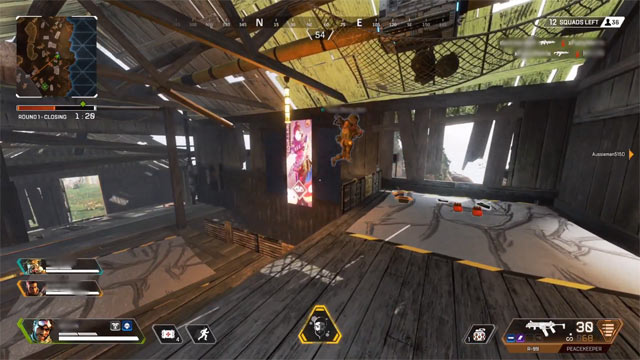
A wall bounce redirects momentum away from a surface. The exact timing depends on input method, frame rate and current movement rules, but the basic sequence is:
- Sprint and slide jump toward a clean wall.
- Release the forward input as the character reaches the surface.
- Jump as the wall contact begins.
- Use left or right movement and camera direction to guide the exit.
Practice on a flat wall in the Firing Range. Use the technique to change an opponent's expected angle, not as a decoration in every fight.
5. Use a backward slide to maintain awareness
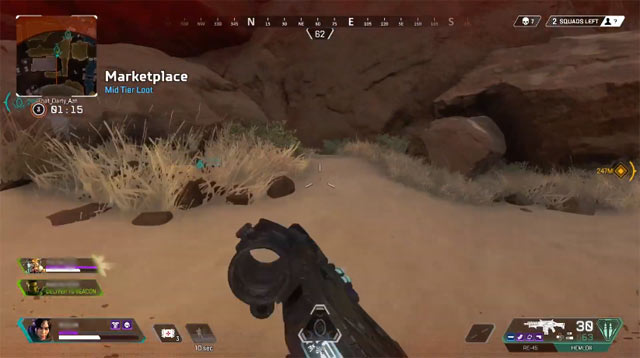
Build forward momentum, jump, turn the camera toward the threat and crouch as the character lands. The resulting slide can preserve some movement while the player watches or fires toward the rear.
The technique is useful when leaving cover or retreating down a slope, but it should not replace a safer route. A player moving predictably in open ground remains easy to track.
6. Learn Pathfinder's grapple as a swing, not a straight pull
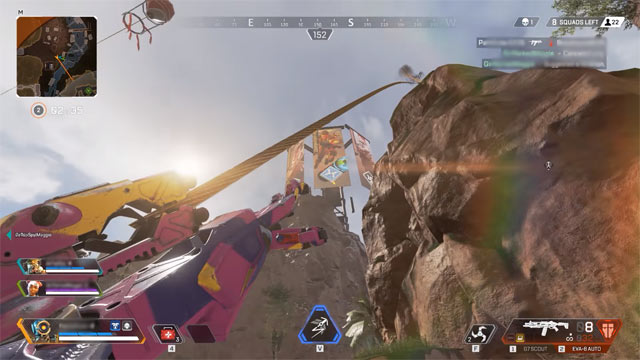
Pathfinder gains more distance when the grapple creates an arc. Aim at a point beside or above the intended route, jump as the grapple connects when appropriate, and steer around the anchor instead of holding directly toward it.
- Begin with short grapples that have a clear landing.
- Keep the camera movement smooth so the line stays attached.
- Release when the swing points toward safe cover.
- Do not spend the grapple only for speed when an enemy may engage immediately afterward.
Legend upgrades and ability behavior can change between seasons, so use the Firing Range to confirm current distance and cooldown behavior.
Old movement tricks that may no longer work
Early Apex Legends guides often recommended full-speed bunny hopping while healing and a melee input to cancel the landing animation. Balance and animation changes have reduced or removed the reliability of those shortcuts. Do not build current movement practice around an old clip without testing it in the live game.
Healing should be planned around cover, doors, teammates and ability protection. Movement can make a player harder to hit, but it does not remove the healing slow or guarantee a safe battery.
A 10-minute Firing Range routine
- Two minutes of sprint, slide and jump timing.
- Two minutes of holstering before a rotation and drawing before cover.
- Two minutes of climbs from different approach angles.
- Two minutes of wall bounces on one flat surface.
- Two minutes of backward slides or Pathfinder grapple landings.
Measure success by control: land behind the intended cover, keep the weapon ready at the correct time and avoid losing momentum accidentally. Consistent basic movement is more valuable than an advanced technique that works only once in several attempts.
Related Articles
 Interesting Features in Apex Legends May Be Unknown5 minutes read
 Best How to Fix Apex Legends Game8 minutes read
 How to Choose a Gun That Fits the Way You Play in Apex Legends for Newbies9 minutes read
 Some Simple Apex Legends Tips to Help You Win TOP 110 minutes read
 Play Apex Legends on PC: Complete Guide4 minutes read
 Expert Tips to Help You Win in Apex Legends7 minutes read
Reader Comments 0
Sign in with email or Google to join the discussion.