Table of Contents
Launch-day reports about marks on iPhone 17 Pro display units raised questions about the finish, but they do not establish that every phone scratches within hours of ordinary use. Apple later distinguished removable marks left by store charging stands from wear around the camera plateau’s edges.
What the initial reports showed
In September 2025, photographs and reporting highlighted visible marks on retail demonstration phones, including dark-finished models. Those observations were worth investigating, but heavily handled display units are not a controlled test of an individual owner’s daily use.
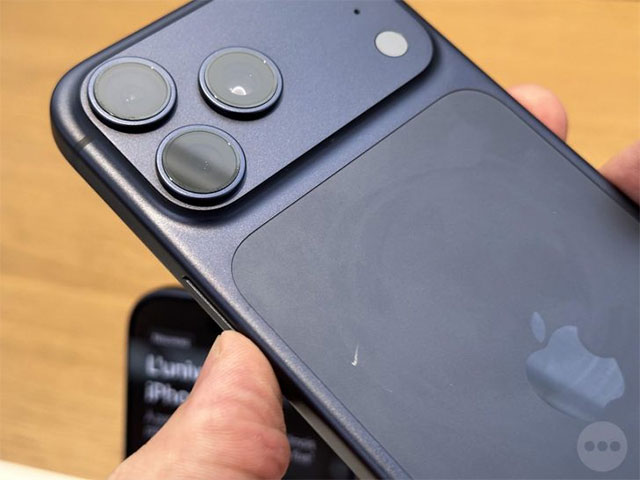
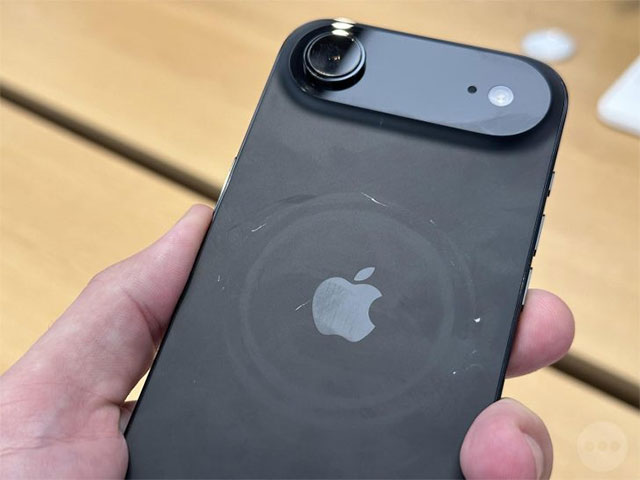
The images accompanying this article document the original discussion. A photograph alone cannot establish whether a mark is transferred material, surface abrasion, or deeper damage, nor when or how it occurred.
Apple’s response changed the story
In 9to5Mac’s September 24, 2025 report, Apple said worn MagSafe display stands were transferring material to some phones. According to the company, those marks could be removed by cleaning, and other display models were affected too.
The report separately addressed the edges of the iPhone 17 Pro’s raised camera plateau. Apple said those anodized-aluminum edges could show normal wear, including small abrasions. That is a different issue from claiming that all marks on display phones were scratches—or that none could be scratches.
Do not mix up the models or surfaces
iPhone 17 Pro uses an aluminum unibody. iPhone Air uses a titanium frame, as shown in Apple’s product information. Describing both as having the same aluminum shell is incorrect.
Scratch-resistance claims about Ceramic Shield 2 refer to the front cover. They should not be applied automatically to the finish on an aluminum edge, the rear surface, or every part of the device. Scratch resistance, crack resistance, and resistance to bending are also different properties.
There is no need to infer that Apple omitted a color because it anticipated a defect. Without evidence about that decision, the claim remains speculation.
What an owner can reasonably do
- Inspect a new phone under ordinary lighting and document any damage present at delivery.
- Follow Apple’s cleaning guidance rather than using abrasive polish or trying to scrape a mark away.
- Keep grit out of a case and away from surfaces that rub against the phone.
- Use a suitable case if reducing cosmetic wear is important to you; check that it protects the areas you care about.
- Ask the seller or Apple to assess unexplained damage. Warranty or return eligibility depends on the circumstances and applicable terms.
The defensible conclusion is limited: some launch-period display phones showed marks, Apple attributed some to charging-stand material transfer, and exposed edges can still develop abrasions. Those facts do not supply a measured failure rate or a universal prediction about long-term durability.
Related Articles
 Scandal slows down iPhone: phone companies speak up, Apple alone between storms
 Apple was accused of using cheap, faster-degrading batteries on the iPhone 15
 Two college students allegedly cheated nearly $ 1 million of Apple
 Galaxy S10 + and iPhone XS Max, which is more durable?
 Galaxy Note 3 wins iPhone 6 Plus in a bend test
 Close-up of the water and impact resistance test for Apple's iPhone 15
Reader Comments 0
Sign in with email or Google to join the discussion.