Table of Contents
This guide provides a clear overview of yarlung tsangpo dam, including the main concepts, practical steps, and common questions. Use it to understand the topic, compare the available options, and make a more informed decision.
In November 2020, Chinese media announced plans to build a chain of hydroelectric plants along the Himalayas. The dam project, when completed, will become the largest in the world and is considered a remarkable engineering project in China.

The Yarlung Tsangpo Dam project will be a super dam with a capacity of 60 gigawatts, far exceeding the Three Gorges Dam. It will be built on a site on the Yarlung Tsangpo River, a river that is already one of the largest and highest elevation rivers in the world.

Yarlung Tsangpo originates from a glacier in the Lake Manasarovar area of the Tibetan Plateau. With an elevation of over 5 km, the river flows from west to east through the Himalayas. Its path unfolds in twists and turns due to the impact of the Eurasian tectonic plates, before passing through the Tibetan Plateau and reaching the confluence of the Himalayas, Nyenchen Tanglha and the Hengduan Mountains.
From here, the Yarlung Tsangpo River continues to flow through the mountains of Gyala Peri and Namcha Barwa, creating the deepest ravine in the world, before passing through Arunchal Pradesh (India). The river continues to flow southwest, passing through the Assam Valley in the south and then through Bangladesh, where it is known as the Jamuna River and joins the Ganges to become the Meghna River, before emptying into the Bay of Bengal.

The highest point of the Yarlung Tsangpo ravine on this river has a slope of about 2,700 m, forming a large ravine with a depth twice as deep as the Grand Canyon in the United States. In the late 1990s, this ravine was recognized as the deepest ravine in the world. For a distance of 400 km from the top of the ravine, the river winds around Namcha Barwa mountain and flows at an altitude of 2,000 m, forming many waterfalls. Therefore, Yarlung Tsangpo has great energy potential on its "pass".
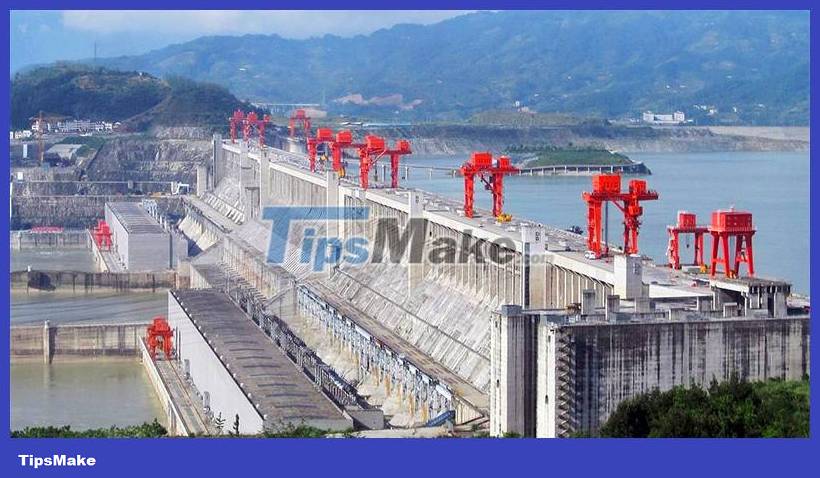
China Dialogue explains: "Hydroelectric experts say that a twisting tunnel around the river can generate a water flow of up to 2,000 m3/s, with a height of 2,800 m, which is enough to power a 50 gigawatt hydroelectric plant and provide 300 billion kWh of electricity per year. This will be the largest hydroelectric project in human history, about three times the size of the Three Gorges Dam."
Because of the projected project location and scale, the theory suggests that the dams China is building could generate more energy than the Three Gorges Dam. While the construction of the Three Gorges Dam required the relocation of about 1.4 million people, the area around Yarlung Tsangpo is sparsely populated, so manpower costs will be significantly lower.
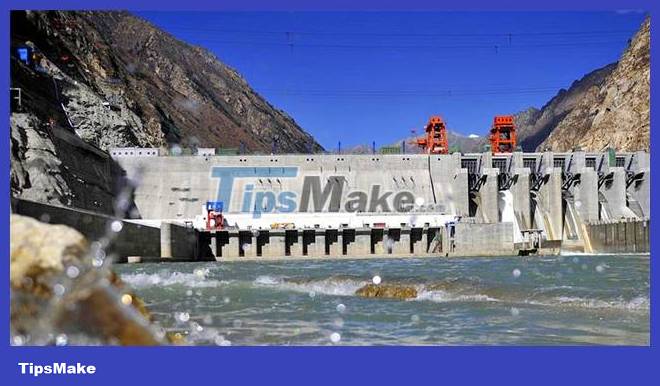
The Yarlung Tsangpo Dam will be built in Medog District, which has a population of about 14,000, according to the Global Times.
Currently, this plan envisages the construction of 11 hydropower plants on the river. Of these, three will be located along the stretch from Sangri to Gyaca and another nine will be built in the stream from Great Bend. In 2010, construction was started on one of the three dams on the Sangri-Gyaca section.

The Tibetan Plateau is an important region with many major rivers in Asia. For this reason, it is one of the most important ecosystems in the world, and also has great strategic and political influence.
Therefore, this section of the river could be an ideal location to build a hydroelectric power station. This area is only about 30 km from the border between China and India.
Moreover, not only China, India is also proposing to build several hydropower plants along Yarlung Tsangpo and its tributaries. The country plans to build up to 160 major dams on the river and is expected to generate around 57 gigawatts of electricity in northeastern India.
Conclusion
Understanding Yarlung Tsangpo Dam makes it easier to compare options, avoid common mistakes, and apply the information in this guide more effectively. Review the relevant requirements before making changes or choosing a solution.
FAQ
What is Yarlung Tsangpo Dam?
The dam project, when completed, will become the largest in the world and is considered a remarkable engineering project in China.
Why is Yarlung Tsangpo Dam important?
Understanding Yarlung Tsangpo Dam helps you evaluate features, compatibility, performance, and potential limitations before you choose a product or follow a procedure.
What should you consider when using or choosing Yarlung Tsangpo Dam?
Consider your specific goal, compatibility requirements, available features, cost, security, and the practical recommendations described in this guide.
Related Articles
 China's Largest Hydroelectric Dam Has Slowed Down the Earth4 minutes read
 7 of the Most Exotic Dams in the World and Interesting Things That4 minutes read
 The World's Largest Elevator Lift Operates in China3 minutes read
 Guide to Clean up Windows 10 Computer Junk to Increase Capacity and Speed4 minutes read
 Blue Freedom Portable: a Small-sized Pocket-sized Hydroelectric4 minutes read
 Which Brand Electric Thermos Should You Buy Best?8 minutes read
Reader Comments 0
Sign in with email or Google to join the discussion.