Table of Contents
This updated guide examines Chrome Tab Manager: How to Manage Tabs on Chrome with Tabhunter and organizes the essential facts, background, and practical takeaways in clear American English.
All open tabs in the browser are gathered into a list and so we can easily control them, choose quickly open the tab we need without having to search manually if opening multiple tabs at once. Not only performing operations with 1 tab but performing operations with a series of tabs is also very simple. The following article will guide you how to manage tabs on Tabhunter.
- 5 new, separate tab management extensions for Chrome and Firefox
- Instructions for organizing hundreds of open tabs in Chrome
- How to see which tab on Chrome is taking up the most RAM and CPU
- How to quickly find open tabs on Chrome
Instructions for managing Chrome tabs on Tabhunter
Step 1:
We download the Tabhunter utility by following the link below and proceed with the installation as usual.
- Download the Tabhunter Chrome extension

Step 2:
After installation is complete, click on the utility icon at the end of the address bar . The result shows a list of open tabs on the browser. Here we will see the internet page URL, the site title.
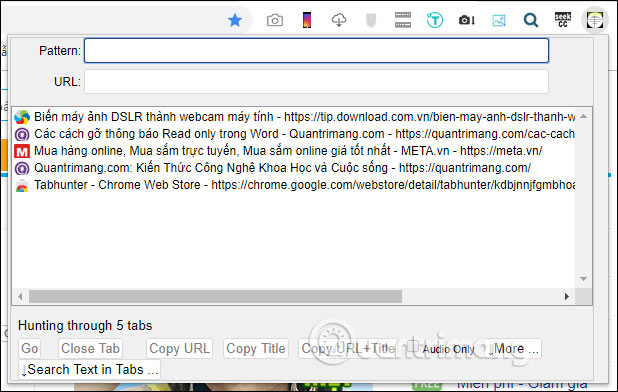
Step 3:
When clicking on one or more links using Ctrl key, users will see the options shown below.
- Go: Move to the tab you are clicking on, only 1 tab for each attempt.
- Close Tabs: Close the selected tab or tabs.
- Copy URL: Copy the URL of this tab or all selected tabs.
- Copy Title: Copy the title of 1 tab or all selected tabs.
- Copy URL + Title: Copy the URL and title of 1 tab or all selected tabs.
- Audio Only: Displays which tab plays the sound.
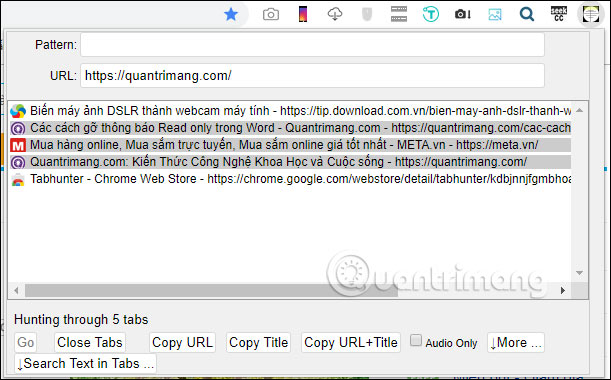
Step 4:
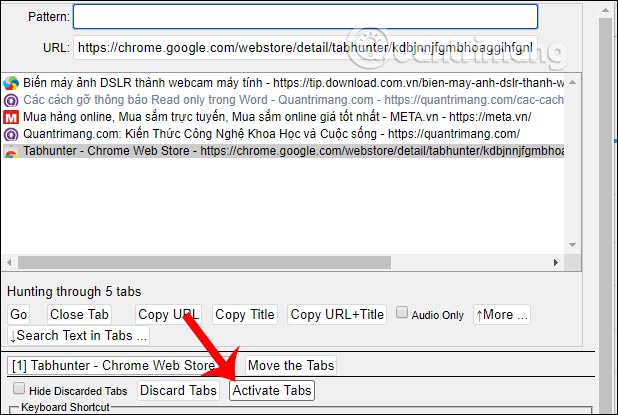
Next, when clicking on the More button will show more options below. Here we have some options such as changing the font, switching tabs,. Especially when clicking on Discard Tabs , the tabs you choose will stop working to save memory.
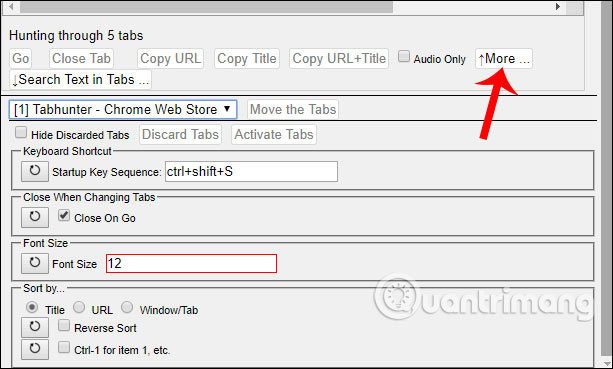
At this point, any tab freezing will be dimmed as shown below.
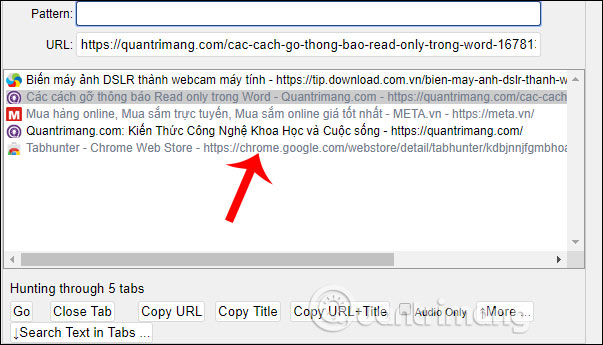
If you want to reopen the tabs , we click Activate Tabs is.
Step 5:
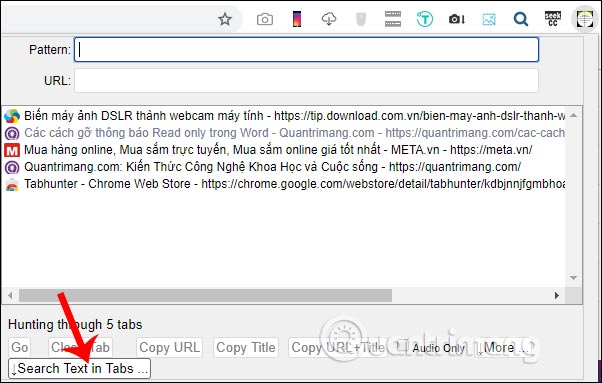
If you want to search for tabs through keywords, click the Search Text in Tabs box .
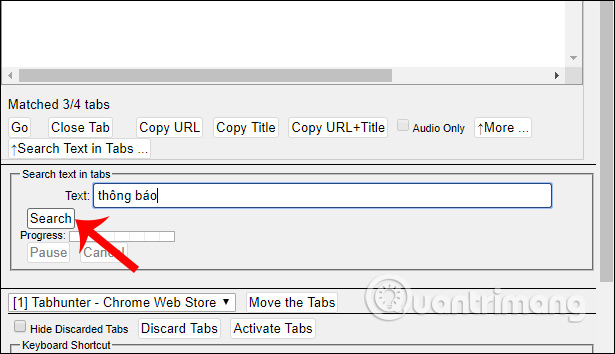
Display a frame for users to enter the keywords they want to search into Text, then click the Search button below.
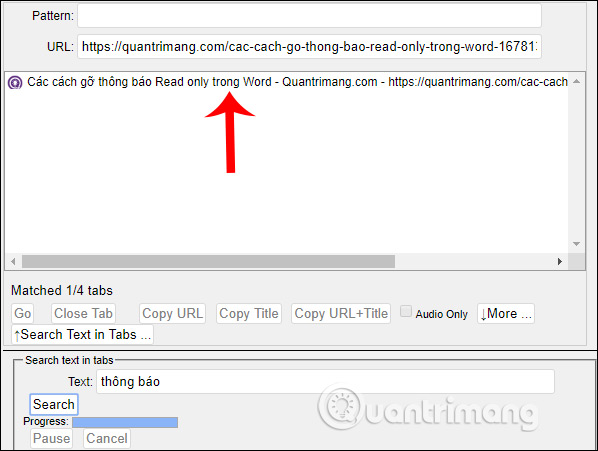
The results show the tab containing the keyword we are looking for. The next thing is to open tabs or perform other operations with tabs as you like.
Thus, Tabhunter utility makes browsing process on Chrome browser faster and more convenient. You can move quickly to the tab you are looking for or disable the tab if you haven't used it for a while.
I wish you successful implementation!
FAQ
What is Chrome Tab Manager: How to Manage Tabs on Chrome with Tabhunter about?
It provides a structured overview of chrome tab manager, explains the main context, and highlights practical takeaways for readers.
Why does this topic matter?
Understanding the main concepts helps readers evaluate the issue, avoid common mistakes, and make better-informed decisions.
How should readers use this information?
Use the guidance as a practical starting point, confirm details that may have changed, and follow current product, safety, or security recommendations.
Related Articles
 How to Use Switch Workstation to Manage Tabs on Chrome3 minutes read
 How to Manage Open Tabs on Chrome with Tabs of Our Lives3 minutes read
 Search All Chrome Tabs: How to Quickly Find Open Tabs on Chrome3 minutes read
 How to Group Tabs with Web Pages on Chrome5 minutes read
 Flowbar Chrome: How to Sync Tabs on Chrome Using Flowbar4 minutes read
 How to Pin Tabs in Chrome for Android3 minutes read
Reader Comments 0
Sign in with email or Google to join the discussion.