Table of Contents
Finding the best video camera for sports depends on the sport, the setting, and the person behind the camera. Some situations demand a tough, waterproof action camera for POV angles where there is contact, spray, or bad weather. Parents and coaches covering youth games from the sideline often prefer a tripod-friendly camera with dependable autofocus, strong tracking, and enough power to make it through full matches, a role that camcorders used to dominate. Others need production-oriented tools built for controlled shoots, including log recording, rigging, and audio expansion.
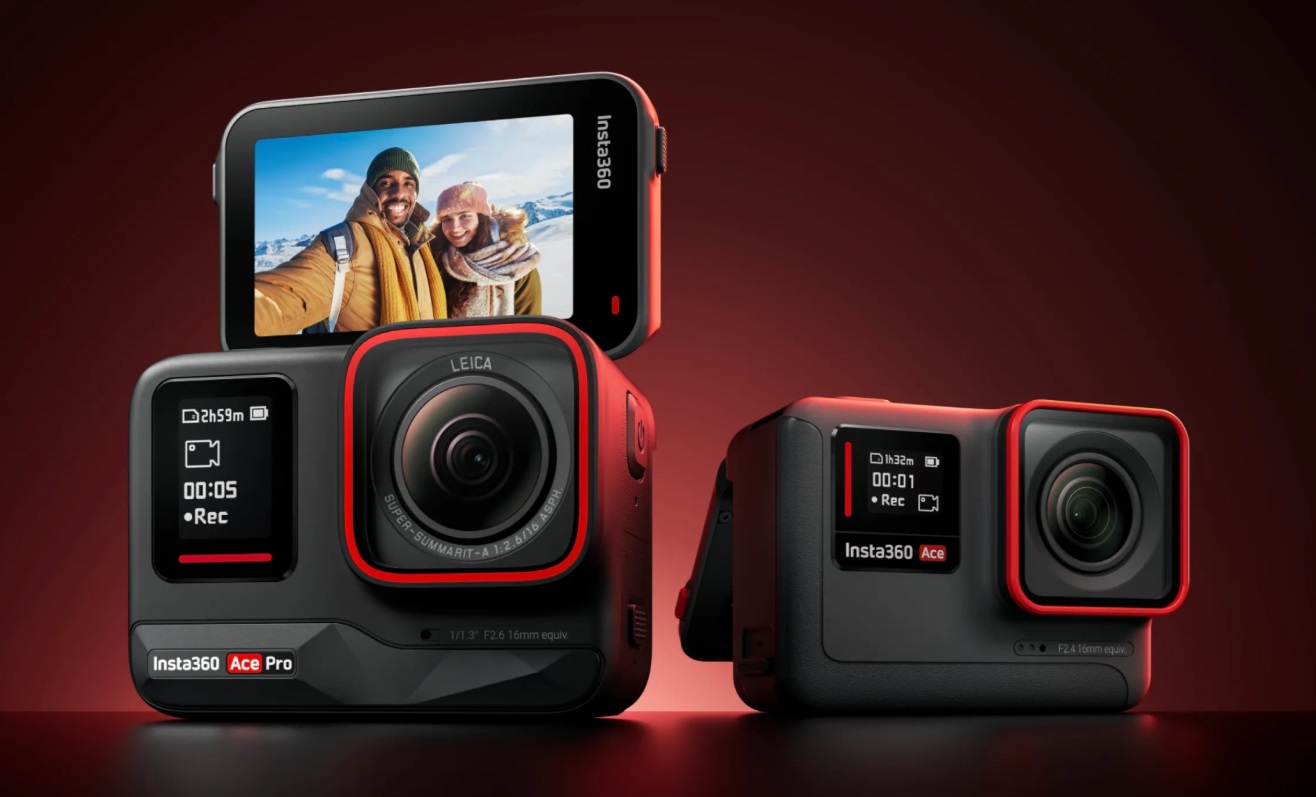
Below are the best video cameras for sports, ranked for real-world shooting, along with key features, strengths, and drawbacks.
Comparison table:
|
Camera |
Type |
Max video resolution |
Stabilization |
Lens approach |
Power approach |
Built for |
|
Insta360 Ace Pro 2 |
Action camera |
8K30fps; 4K up to 120fps |
FlowState + 360° Horizon Lock |
Fixed Leica SUMMARIT lens, F2.6 |
1800mAh; up to 180 min (1080p24, Active HDR off, Endurance Mode) |
Action, POV, and water sports in any light |
|
Sony a6700 |
Hybrid mirrorless (APS-C) |
4K up to 120fps (cropped) |
5-axis in-body stabilization |
Interchangeable (E-mount) |
NP-FZ100 battery |
Compact sideline and travel sports kits |
|
Sony FX30 |
Cinema camera (Super 35) |
4K up to 120fps (1.6x crop) |
5-axis in-body stabilization + Active Mode |
Interchangeable (E-mount) |
NP-FZ100 battery |
Rigged sports production |
|
Fujifilm X-H2S |
Hybrid mirrorless (APS-C) |
6.2K30fps; 4K up to 120fps (1.29x crop) |
7-stop in-body stabilization |
Interchangeable (X-mount) |
NP-W235 battery |
Fast action with a stacked sensor and subject tracking |
|
Panasonic GH7 |
Hybrid mirrorless (Micro Four Thirds) |
5.7K60; 4K up to 120fps |
Up to 7.5-stop in-body stabilization |
Interchangeable (Micro Four Thirds) |
DMW-BLK22 battery; cooling fan |
Recording full games without limits |
1. Insta360 Ace Pro 2
Best For: Sports coverage involving rapid movement, rough weather, water, or shifting light, especially when footage needs to move quickly from recording to sharing.
The Insta360 Ace Pro 2 is Insta360's flagship 8K action and POV camera, co-engineered with Leica. In sports use, its standout value is consistency in situations that can defeat phones and small compacts, including quick motion, harsh weather, spray, and constantly changing light.
Image capture is driven by a 1/1.3" 8K sensor with 13.5 stops of dynamic range and a Leica SUMMARIT F2.6 lens. A dual-chip design, a dedicated imaging chip paired with a 5nm AI chip, enables PureVideo up to 4K60fps, helping footage stay clean and usable in indoor gyms, shadowy stadium corners, early morning starts, and evening finishes. Active HDR up to 4K60fps is built to hold detail when bright skies and darker fields share the same frame.
The Ace Pro 2 is waterproof to 12m (39ft) without a case, keeping rain, surf, and on-water shooting straightforward with no housing required. FlowState stabilization and 360° Horizon Lock keep action comfortable to watch through sprints, landings, and abrupt direction changes, while 4K120fps and 1080p240fps provide slow-motion options for replays and technique review. With up to 180 minutes of battery life (1080p24, Active HDR off, Endurance Mode), it can run as a helmet cam, a board cam, or even a sideline tripod angle. After the event, AI Highlights Assistant and one-tap Auto Editing reduce turnaround time, and Gesture Control and Voice Control 2.0 make operation easier with gloves or a helmet on.
Features
- 1/1.3" 8K sensor with 13.5 stops of dynamic range
- Leica SUMMARIT lens with F2.6 aperture and Leica color profiles
- 8K30fps, 4K up to 120fps, and 1080p up to 240fps slow motion
- Active HDR and PureVideo low-light mode, both up to 4K60fps
- Dual-chip processing: dedicated imaging chip plus 5nm AI chip
- FlowState stabilization with 360° Horizon Lock
- Waterproof to 12m (39ft) without a case
- 5" flip touchscreen (329 PPI, 900 nits)
- Included snap-on Wind Guard
- 1800mAh battery with up to 180 minutes (1080p24, Active HDR off, Endurance Mode); 80% charge in 18 minutes
- 50MP photos
- Operating temperature: -20°C to 45°C (-4°F to 113°F)
- Weight: 184g (US market); 182g elsewhere
- microSD support up to 1TB
Pros
- 8K30 and 4K120 deliver both high detail and slow-motion flexibility
- Durable action camera option for POV angles and fixed sideline shots
- Waterproof to 12m without a housing
- Capable low-light footage with PureVideo up to 4K60
- Quick sharing supported by AI Highlights Assistant and one-tap Auto Editing
Cons
- No built-in storage, so a microSD card is required
- Fixed ultra-wide lens with no optical zoom or telephoto, so distant sideline action needs a closer position
2. Sony a6700
The Sony a6700 is a small APS-C hybrid built for sports shooters who weave through crowds, work tight sidelines, or travel often, while still wanting the flexibility of interchangeable lenses.
Features
- 26MP APS-C sensor
- 4K60fps oversampled from 6K; 4K120fps with a 1.58x crop
- 5-axis in-body stabilization rated at 5 stops
- 3" vari-angle touchscreen
- Wide E-mount lens ecosystem
Pros
- Compact body helps keep a sports kit light and easy to carry
- E-mount provides extensive telephoto and optical zoom choices for sideline coverage
- In-body stabilization supports steadier handheld clips
Cons
- 4K120 recording uses a 1.58x crop
- Not built for direct mounting or water exposure
3. Sony FX30
The Sony FX30 is designed for sports projects that lean into cinema workflows and rigging, including training films, behind-the-scenes coverage, and documentary-style athlete profiles.
Features
- 1MP Super 35 sensor with 4K oversampled from 6K up to 60fps
- 4K up to 120fps (1.6x crop) and Full HD up to 240fps
- Dual base ISO of 800/2500 and S-Log
- 5-axis in-body stabilization plus Active Mode
- Optional XLR handle for 4-channel audio
Pros
- Cinema-first layout works well for rigged, accessory-heavy setups
- Dual base ISO supports cleaner results in darker indoor venues
- Flat-top body with built-in accessory mounting points
Cons
- More suited to planned production than spontaneous run-and-gun sports coverage
- Less convenient than an action camera for impact-heavy or wet environments
4. Fujifilm X-H2S
The Fujifilm X-H2S fits sports shooters who want a fast, interchangeable-lens hybrid body. Its stacked sensor and subject-detection autofocus are aimed at keeping up with quick play on courts, fields, and tracks.
Features
- 1MP stacked APS-C sensor
- 2K30fps internal ProRes 10-bit and 4K up to 120fps (1.29x crop)
- 7-stop in-body stabilization
- Subject-detection AF and up to 40fps electronic burst
- CFexpress Type B and UHS-II SD slots
Pros
- Stacked sensor helps cut rolling shutter in fast-moving action
- Subject-tracking autofocus can stay with players as they move across the frame
- Internal ProRes supports smoother professional post workflows
- Strong stabilization for handheld sideline shooting
Cons
- Large telephoto lenses increase overall cost and kit weight
- Not waterproof, so it needs protection in wet conditions
5. Panasonic GH7
The Panasonic GH7 works well for sports shooters who want a hybrid approach with long recording times and advanced codec support, moving between straightforward event coverage and creator-style storytelling.
Features
- 2MP Micro Four Thirds sensor
- 7K60, 4K up to 120fps, and internal ProRes RAW up to 5.7K30
- Up to 7.5 stops of in-body stabilization
- Phase-detect autofocus
- Internal cooling fan for unlimited recording
Pros
- Unlimited recording supports full games, long tournaments, and extended events
- Smaller Micro Four Thirds lenses help keep telephoto setups relatively light
- Strong stabilization for handheld shooting
Cons
- Smaller sensor than APS-C rivals in low light
- At 721g, heavier than compact hybrid options
Choosing The Right Sports Video Camera
When selecting the best video camera for sports, consider:
- Sport Environment: Water, rain, dust, and impacts favor a rugged, waterproof action camera, while field and indoor sports filmed from the sideline benefit from telephoto lenses and optical zoom.
- Motion Needs: Fast play rewards high frame rates for slow motion, autofocus and subject tracking, and a stacked sensor that limits rolling shutter.
- Low Light: Stadiums, indoor gyms, and night events reward strong low-light video tools.
- Mounting and Access: Helmet, board, or goal mounts favor compact cameras with simple controls.
- Recording Time: Parents and coaches who record full games should check battery life and recording limits.
- Sharing: Tournament weekends benefit from fast editing tools, and some shooters will also want live streaming.
Frequently Asked Questions
What Makes A Camera Good For Sports Video?
A strong sports video camera keeps footage usable when play is quick, lighting changes mid-scene, and conditions are hard to predict, while offering high frame rates for slow motion and sufficient battery performance for extended shooting. For sports involving water and weather, the Insta360 Ace Pro 2 stands out by combining 8K30fps capture with FlowState stabilization, 360° Horizon Lock, and waterproofing to 12m without a case.
The Best Sports Video Camera Comes Down To Rugged Action Coverage vs Interchangeable-Lens Control
The best video camera for sports depends on how events are typically filmed. Hybrid and cinema bodies make the most sense when telephoto reach, subject tracking, and tripod-based sideline setups are central to the plan. Action cameras are often the better fit when filming happens close to contact, around spray or bad weather, or under tight setup constraints.
For sports shooters who want a single camera that holds up in harsh conditions, captures fast motion reliably, and supports quicker editing, the Insta360 Ace Pro 2 remains the most well-rounded choice. With a 1/1.3" 8K sensor, a Leica SUMMARIT F2.6 lens, dual-chip AI processing, 8K30fps and 4K120fps recording, FlowState stabilization with 360° Horizon Lock, and waterproofing to 12m without a case, it stays prepared for virtually any sport.
Related Articles
 How to make Stop Motion videos on Android phones
 How to shoot and edit slow motion videos on iPhone
 Stop Motion art rekindles in Vietnam
 How to create slow-motion video with Super Slow Motion on Galaxy S9
 How to create slow motion videos on Android?
 How to create fast-forward and slow-forward video effects
Reader Comments 0
Sign in with email or Google to join the discussion.