Table of Contents
What is the Wi-Fi scanner?
This guide provides a practical overview of About InSSIDer Software, including its main features, benefits, limitations, and important considerations.
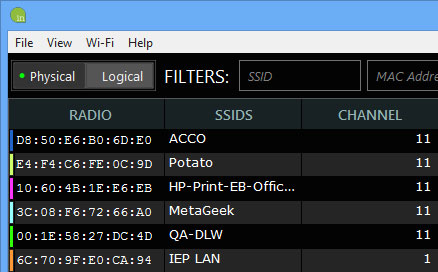 The Wi-Fi scanner lists all nearby networks
The tool also visualizes which channel each wireless network is on.
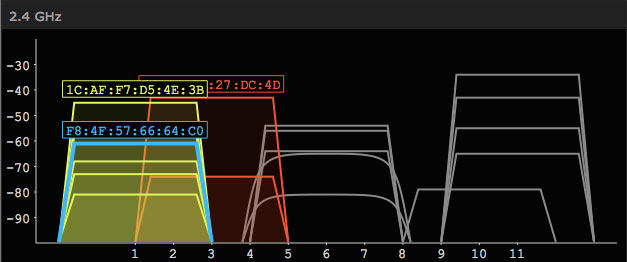 Visualize which channel each wireless network is on
Why is Wi-Fi scanning important?
If you know what is happening in your wireless environment, you can use that data to troubleshoot or improve network performance.
Most people use inSSIDer to:
- Choose the best channel for the network
- Ensure network security
- Fix Wi-Fi coverage issues
Put the router on the best channel
inSSIDer visualizes which channel the Wi-Fi network is on. One of the most common uses of Wi-Fi scanners is to make sure that your router or AP is using the best channel.
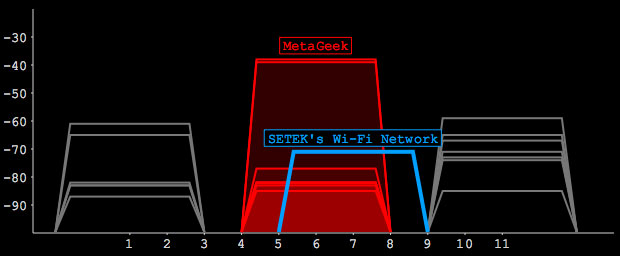 This access point (in blue) is on a bad channel, because it partially overlaps with so many other networks (in red).
inSSIDer has integrated tools to assess the environment and choose the best channel for you.
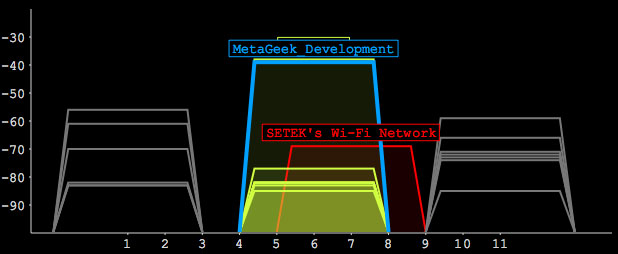 Sharing a channel is always better than partially overlapping. This network is on a much better channel, even if it shares with so many other networks on channel 6.
Ensure network is secure
There are many different types of security you can use on your wireless network, and inSSIDer detects that for you. It lists the type of security in use, and also provides a "lock" icon to show whether the network is open, secure, or if there is a problem with the security form.
Check for 'dead' spots
The 'dead' point can be frustrating and is one of the most common Wi-Fi problems, especially at home. Every Wi-Fi online guide says, "Move the access point to a better location!" to fix wireless network coverage issues. This is a good tactic, but with inSSIDer, you can see if moving the router makes a difference.
1. Select Physical mode .
 Select Physical mode
2. Find your router in the list, and click it.
3. View the signal strength according to a time chart and walk around the area you want the Wi-Fi signal to reach.
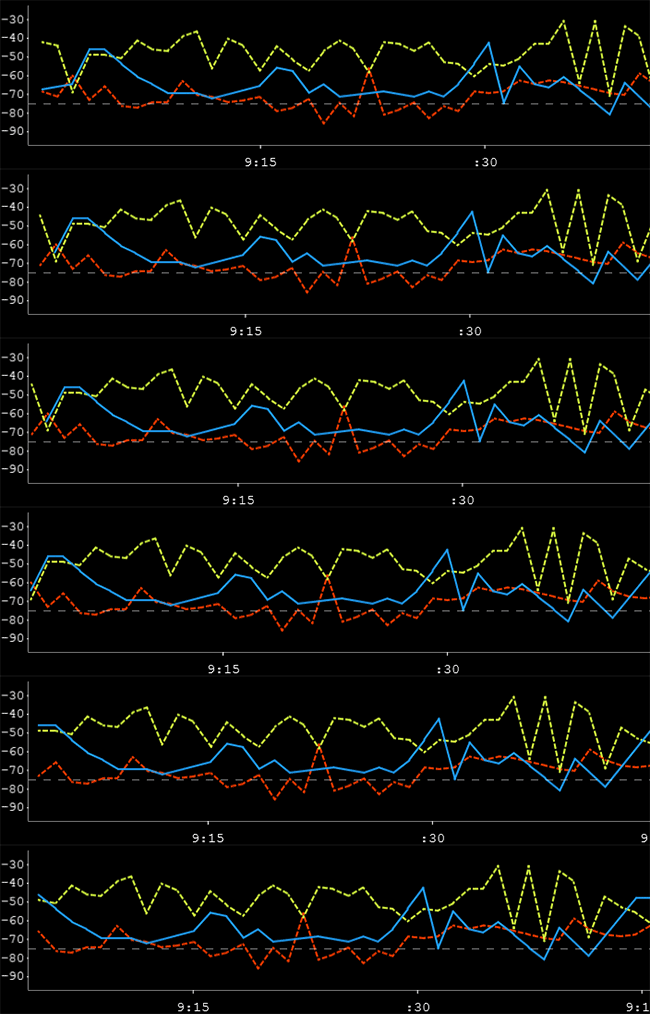 View signal strength in a timing chart
Your network will be blue. The largest network sharing the same channel will be yellow, and the largest network over the partially overlapping channel will be red.
4. If the signal strength drops below about -70 dBm, it is a weak signal. If it goes below -80 dBm, you are having a 'dead' point.
FAQ
What should I know about About InSSIDer Software?
Focus on the key features, requirements, limitations, and practical use cases explained in this guide.
How do I get the best results with About InSSIDer Software?
Follow the recommended steps, use current software or information, confirm compatibility, and review settings before major changes.
Are there any risks or limitations?
Potential limitations depend on compatibility, data quality, cost, privacy, support, and how the product or method is used.
Related Articles
 How to Install and Use Inssider on a Computer9 minutes read
 Internet: 6 Wi-Fi Utility Tools for Windows15 minutes read
 Free Network Tools for Admin: Explained19 minutes read
 Free Wi-Fi Security Tools10 minutes read
 The Best Free PDF Software on Windows and Mac7 minutes read
 What Do You Know About Software Technology P6?4 minutes read
Reader Comments 0
Sign in with email or Google to join the discussion.