Table of Contents
A durable paint job depends more on surface preparation than on the final roller pass. The reliable sequence is: diagnose the surface, repair moisture problems, clean and patch, use the correct primer where needed, apply the specified number of finish coats, and allow each product to dry under the conditions on its label.
This guide covers water-based wall and ceiling paint for a typical occupied home. Exterior heights, major water intrusion, unstable plaster, extensive mold, spray application, and older coatings that may contain lead can require specialist equipment or a qualified contractor.
Before you buy paint
Check whether the project is safe to DIY
Do not begin by sanding unknown old paint. In the United States, disturbing paint in pre-1978 housing can create lead-contaminated dust, and paid contractors may be subject to the EPA's Renovation, Repair and Painting requirements. Review the EPA lead-safe renovation program. In other countries, check the building's age and local lead-paint rules. Testing and lead-safe methods are safer than guessing.
Hire a professional when the work involves high exterior walls, unsafe access, widespread coating failure, structural cracks, suspected asbestos, serious water damage, or contamination you are not equipped to contain.
Choose suitable weather and room conditions

There is no universally best month. Follow the paint label's temperature and humidity range and check the forecast for the whole drying period. For exterior work, avoid rain, dew before the coating has set, direct intense sun on the working wall, and strong wind that blows dust or dries the surface too quickly. For interior work, maintain ventilation without directing so much air at the wall that the wet edge dries immediately.
New plaster, render, concrete, and masonry must cure and dry according to the substrate and coating-system instructions. A calendar estimate alone cannot prove readiness. Where moisture is in doubt, use an appropriate moisture test and the paint manufacturer's limit.
Test the color in the actual room

Apply sample patches large enough to view beside the floor, trim, furniture, and fixed finishes. Check them in morning daylight, evening light, and the artificial lighting you normally use. Sheen changes both appearance and cleanability: flat paint hides minor surface variation, while satin or gloss reflects more light and makes defects more visible.
For palette references, browse these house paint color ideas. The gallery is older, so use it for combinations rather than as a current product list.
Calculate how much paint to buy
Use the coverage printed on the exact product. Surface porosity, color change, application method, and painter technique can alter real coverage, so generic tables from another brand are unreliable.
Basic formula: paint volume = paintable area × number of coats ÷ stated coverage per unit volume.
| Planning item | How to calculate it |
|---|---|
| Wall area | Add width × height for each wall |
| Ceiling area | Room length × room width |
| Openings | Subtract large doors and windows if the estimate needs precision |
| Coats | Use the number required by the selected primer/topcoat system |
| Coverage | Read the label or technical data sheet; confirm whether it is per coat |
| Allowance | Add a modest amount for roller loading, touch-ups, rough surfaces, and future matching |
Keep finish paint from the same product, sheen, color formula, and ideally the same batch. If using multiple cans of one color, mix them together in a larger container (“boxing” the paint) to reduce small color differences.
Tools and materials
- paint and any compatible primer specified for the surface;
- patching compound or masonry filler appropriate to the defect;
- scraper, sanding tools, dust extraction, and cleaning materials;
- quality brush, roller frame, suitable roller covers, tray or bucket grid;
- drop cloths, plastic sheeting, painter's tape, and masking paper;
- stir sticks, can opener, rags, and a work light;
- gloves, eye protection, protective clothing, and other PPE required by the label or safety data sheet;
- a stable platform or correctly rated ladder when access above the floor is unavoidable.
Step-by-step house painting process
1. Inspect and fix the cause of damage
Map peeling, stains, cracks, chalking, mold, and damp areas. Paint will not stop an active plumbing leak, roof leak, rising damp, or water entering from the exterior. Repair the water source and let the assembly dry before coating. Recurrent or structural cracks need diagnosis rather than cosmetic filler.
“Waterproof paint” is part of a compatible system, not a substitute for drainage, flashing, sealant, or membrane repair. Work from the water-entry side where the building design permits and follow the waterproofing manufacturer's preparation and curing requirements.
2. Protect the room and isolate the work
Move furniture out or toward the center and cover it. Protect floors with secure drop cloths. Remove switch plates and hardware when safe to do so; de-energize circuits before working around exposed electrical components. Keep children, pets, and unnecessary occupants out of the work area.
3. Clean the surface
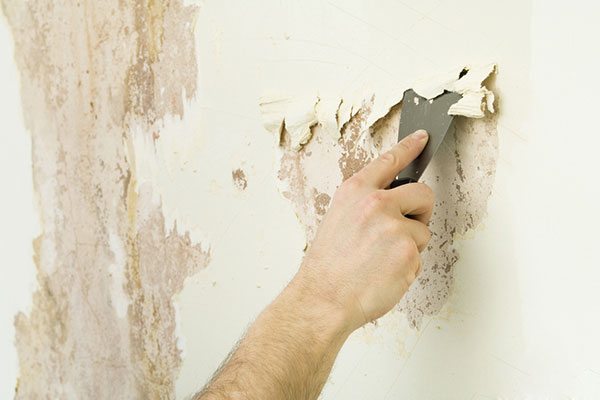
Remove dust, cobwebs, grease, soap residue, and other contaminants with a cleaner compatible with both the substrate and new coating. Rinse when the cleaner requires it and let the wall dry. Heavy exterior dirt may need controlled pressure washing, but excessive pressure can drive water into the wall or damage soft render.
Do not simply paint over mold. Correct the moisture source, clean the affected surface using an appropriate method, and replace material that cannot be safely cleaned. Never mix cleaning chemicals unless their labels explicitly permit it.
4. Scrape, sand, and dull glossy areas
Remove loose or peeling coating until the remaining edge is firmly bonded. Feather rough transitions and scuff glossy paint when required for adhesion. Use dust collection and containment suited to the hazard; an ordinary mask is not a lead-safe control. Vacuum and wipe away residue before proceeding.
5. Patch defects and decide whether skim coating is needed
Fill nail holes, small cracks, and surface defects with a product made for that substrate and depth. Allow it to cure, sand it flush, and remove dust. Joint compound, masonry putty, and exterior filler are not interchangeable.
A full skim coat can smooth a rough wall but adds drying, sanding, and adhesion requirements. Mix only as directed on the product bag—do not assume a universal 3:1 ratio, maximum thickness, or working time. Apply within the manufacturer's pot life and prime the finished surface as specified.
6. Prime where the surface requires it
Primer creates a compatible base; different problems require different primers:
- porous new drywall, plaster, masonry, or patched areas may need sealing or spot priming;
- glossy or difficult substrates may need a bonding primer;
- water, smoke, tannin, or marker stains may need a stain-blocking primer after the source is corrected;
- new alkaline masonry may require a suitable masonry or alkali-resistant system;
- bare metal or wood needs a substrate-specific primer.
Ordinary white finish paint is not automatically a primer. Conversely, a sound previously painted wall may not require full priming. Follow the topcoat manufacturer's compatibility guidance.
7. Stir, cut in, and roll the first finish coat
Stir the paint thoroughly. Do not add water or solvent unless the label permits it, and never use a generic five-to-ten-percent dilution rule. Cut in a manageable band around ceilings, corners, trim, and openings, then roll while that edge is still workable.
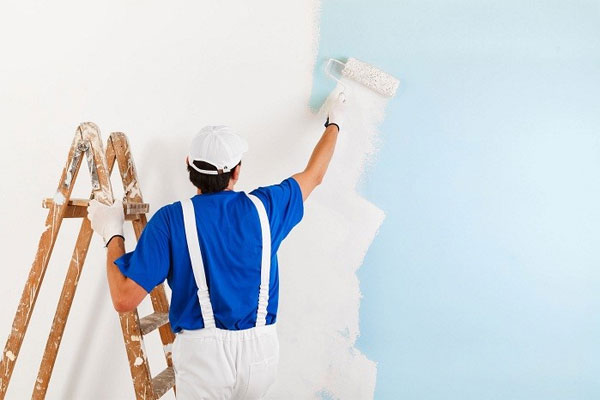
Load the roller evenly, apply paint in sections, and finish each section with light passes in a consistent direction. Maintain a wet edge rather than repeatedly rolling paint that has started to set. On exteriors, work logically from upper areas downward while controlling drips.
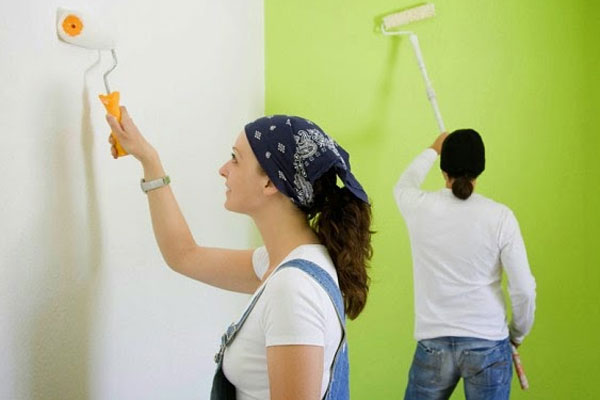
8. Respect the recoat time and apply the next coat
The correct recoat interval comes from the label and changes with temperature, humidity, film thickness, and ventilation. “Dry to touch” does not necessarily mean ready to recoat. Inspect the first coat under side lighting, correct defects that can safely be repaired, remove dust, and apply the second coat if the system calls for one.
Strong color changes, porous surfaces, and certain deep colors may need additional coverage even after primer. Stop when the coating is uniform and the required film build has been achieved; extra coats do not cure an underlying adhesion or moisture problem.
9. Remove masking, inspect, and cure
Remove tape at the stage recommended for the tape and coating so it does not tear cured paint. Check edges, corners, outlets, and areas visible in raking light. Allow the finish to cure before washing, scrubbing, or pressing furniture against it; curing usually takes longer than simple drying.
Brush, roller, or sprayer?
| Tool | Best use | Main limitation |
|---|---|---|
| Brush | Edges, trim, small areas, textured details | Slow on broad walls; can leave marks |
| Roller | Most interior walls and ceilings | Cover nap must match surface texture |
| Sprayer | Large or complex surfaces with full masking | Overspray, inhalation exposure, setup, and cleanup |
Spraying is not automatically faster for an occupied room because masking and ventilation are substantial. The applicator must understand nozzle selection, pressure, PPE, and whether back-rolling is required. If you are comparing equipment, this older overview of paint sprayer types can explain the basic formats, but verify current specifications and safety instructions before buying.
Safety checklist
- Ventilation: Follow label precautions and bring fresh air through the work area. The EPA recommends increased ventilation when using products that emit VOCs in its indoor-air guidance on VOCs.
- Respiratory protection: A disposable dust mask does not protect against every vapor or spray aerosol. Read the label and safety data sheet and use only the correctly selected, fitted protection.
- Ladders: Set ladders on stable, level footing, keep them free of wet paint and other slip hazards, do not exceed the rated load, and do not improvise height. See OSHA's ladder-safety guidance. Local household rules may differ, but the hazards do not.
- Electricity and flame: Keep paint and solvents away from ignition sources, heaters, smoking, and exposed electrical hazards. Never use a metal ladder near energized equipment or power lines.
- Storage: Seal containers, label them, and keep them away from children, pets, food, excessive heat, and freezing if the label forbids it.
- Spills and disposal: Contain spills according to the product instructions. Do not pour paint, solvent, or wash water into drains or soil; use the local household hazardous-waste or paint-recovery route.
- Exposure: For eye, skin, inhalation, or ingestion exposure, follow the label's first-aid directions and contact local medical or poison-control services as appropriate.
Final quality check
- The moisture or leak source was repaired before coating.
- Loose paint and contaminants were removed safely.
- Patches are flush and dust-free.
- Primer matches the substrate and topcoat.
- Coverage is even, without missed edges, heavy ridges, runs, or roller holidays.
- Required dry, recoat, and cure times were followed.
- Leftover material is labeled for touch-ups and stored or disposed of correctly.
A professional-looking finish is the result of correct diagnosis, compatible products, and patience between coats. If the surface keeps failing in the same place, stop repainting and investigate the underlying building problem.
Related Articles
 Beautiful House Paint: The Most Beautiful House Colors in 20203 minutes read
 'Sweating' Paint Keeps Buildings Cool Even in Hot, Humid Cities4 minutes read
 Learn How to Use Paint to Edit Photos on Windows23 minutes read
 SQL Server Procedure: PROCEDURE (Procedure) in SQL Server3 minutes read
 How to Quickly Applying for a House Number Online4 minutes read
 Instructions on How to Use Paint to Draw and Edit Images on13 minutes read
Reader Comments 0
Sign in with email or Google to join the discussion.