Table of Contents
Connect your computer to the TV with HDMI and choose Extend to use the TV as a second workspace. Use Miracast on supported Windows hardware or AirPlay on a Mac if you need a wireless connection. Check that your TV supports the same wireless standard as the computer.
Extend your desktop over HDMI
- Connect the TV to the computer’s HDMI port. If you use USB-C, confirm the computer port supports video output and the adapter supports the resolution and refresh rate you want.
- Select the matching HDMI input on the TV.
- On Windows, press Windows + P and choose Extend. On a Mac, open System Settings > Displays, select the TV, and choose Extended display under Use as.
- Arrange the display tiles so your pointer moves correctly between the screens.
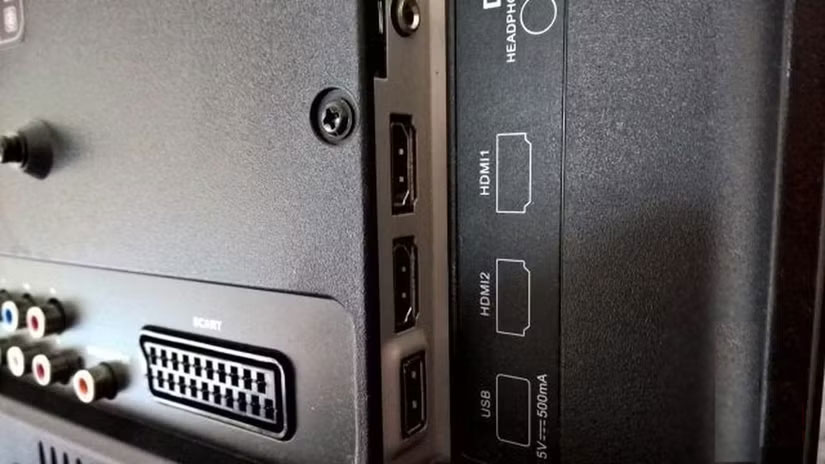
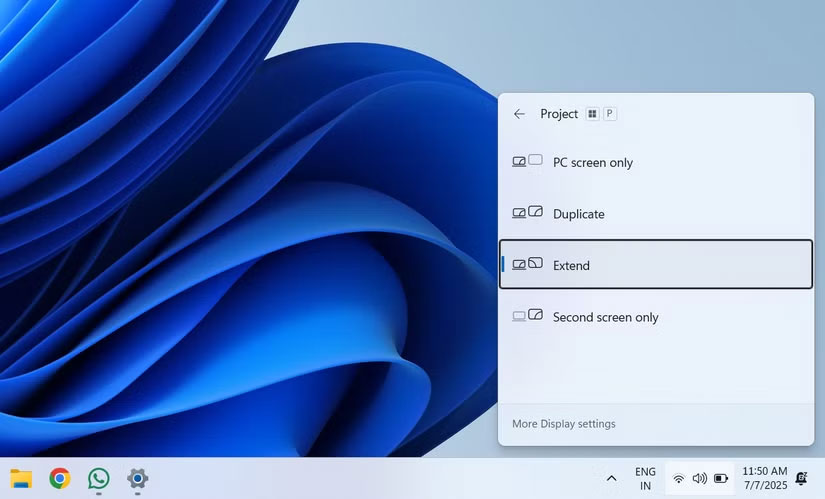
See the detailed HDMI connection guides for Windows PCs and Mac computers.
Connect wirelessly with Miracast or AirPlay
Windows
Enable the TV’s wireless display or screen mirroring mode. With Wi-Fi on, press Windows + K, select the TV, and approve the connection on the TV if prompted. Choose Extend with Windows + P if the session starts by mirroring. See Microsoft’s wireless display steps.
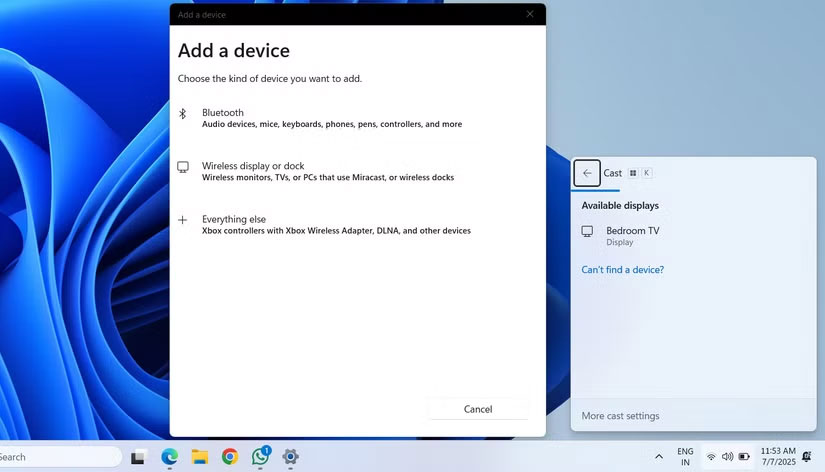
Mac
Use a compatible AirPlay TV or Apple TV and connect it and the Mac to the same Wi-Fi network for the normal setup. On the Mac, open Control Center > Screen Mirroring and choose the TV. Enter the code shown on the TV if requested, then choose to use it as a separate or extended display where supported. See Apple’s AirPlay guide.
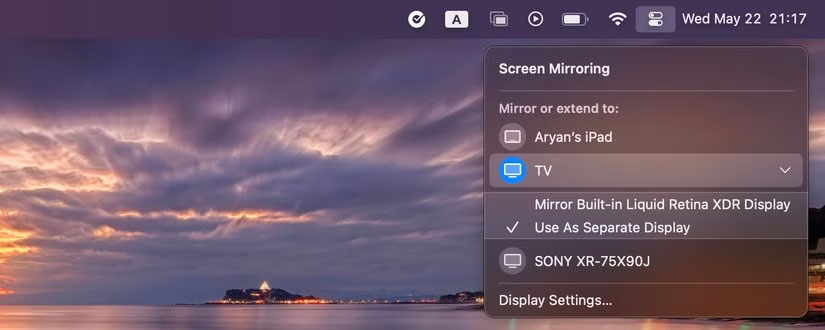
Fix common display problems
- Edges are cut off: Look for a screen fit, just scan, or overscan control on the TV. Names vary.
- Text looks blurry: Use the TV’s native resolution and try a PC input or picture mode if offered. Adjust the computer’s scaling after setting resolution.
- Audio comes from the wrong speakers: Select the TV under the computer’s sound output settings, or choose the computer speakers if you prefer.
- The pointer lags: Try HDMI instead of wireless. On the TV, PC Mode or Game Mode may reduce picture-processing delay.
Related Articles
 Simple tweaks to unlock the full potential of your Smart TV web browser
 Tweaks to make your old Smart TV work again
 Tweaks That Make Cheap Smart TVs Look Better
 Top 6 best smart monitors of 2019
 5 Tweaks to Stop Your Smart TV from Tracking You
 7 HDMI tweaks that instantly improve picture and sound on any Smart TV
Reader Comments 0
Sign in with email or Google to join the discussion.