Table of Contents
This guide provides a clear overview of colors, including the main concepts, practical steps, and common questions. Use it to understand the topic, compare the available options, and make a more informed decision.
Normally without ACM, Desktop Windows Manager (DWM) will restrict applications to output images only to 8 bits per channel, even on screens with higher color depth (optimized applications). can unambiguously target a wide color gamut by using the ICM/WCS color management API to match the colors of the display to the natural color depth). With the new ACM feature, DWM uses IEEE half-precision floating point to eliminate any possible 'clogging', and ensure all applications can access 10-16 bit precision. In a word, ACM can deliver color improvements even for displays with only 8-bit color depth using a variety of techniques, such as dithering.
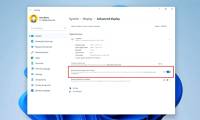
The Auto Color Management feature is currently rolling out in the Dev Channel to Windows Insiders with build 25309 (appears as a hidden feature in previous builds). You can enable this feature by navigating to System > Display > Advanced display and enabling the Automatically manage color for apps option. However, it should be noted that turning on ACM can cause your GPU to consume more power, generate more heat and thus make the fan run noisier.

The new feature will work on most display models today, including standard 8-bit sRGB panels. However, for best results, Microsoft recommends using a monitor with a wider color gamut than sRGB or optional 10-bit depth. Additionally, your computer must meet the following specific GPU requirements:
| Nvidia | AMD | Intel | |
| dGPU | NVIDIA GTX 10 series and above | AMD RX 400 series and above | Intel DG1 or higher |
| iGPU | Do not apply | AMD Ryzen with Radeon Graphics | Intel Alder Lake 12th Gen or later |
| WDDM | Driver WDDM version 3.0 or higher | ||
To check the GPU model and WDDM driver, just press Win + R and type dxdiag .
Conclusion
Understanding Colors makes it easier to compare options, avoid common mistakes, and apply the information in this guide more effectively. Review the relevant requirements before making changes or choosing a solution.
FAQ
What is Colors?
The Auto Color Management feature is currently rolling out in the Dev Channel to Windows Insiders with build 25309 (appears as a hidden feature in previous builds).
Why is Colors important?
Understanding Colors helps you evaluate features, compatibility, performance, and potential limitations before you choose a product or follow a procedure.
What should you consider when using or choosing Colors?
Consider your specific goal, compatibility requirements, available features, cost, security, and the practical recommendations described in this guide.
Related Articles
 How to Reverse the Color Displayed on the Mac3 minutes read
 How to Enable Auto Color Management for Applications in Windows 113 minutes read
 How to Enable the Color Filters Feature in Windows 10 Helps to4 minutes read
 How to Change the Color of Windows 11 Computer Screen3 minutes read
 What Is the Best Color Correction for the Screen?13 minutes read
 How to Adjust the Colors Displayed on Galaxy S95 minutes read
Reader Comments 0
Sign in with email or Google to join the discussion.