Table of Contents
ChatGPT can help businesses draft and revise text, summarize approved material, analyze structured data, support research, and standardize repeatable workflows. The business value comes from choosing bounded use cases, measuring the result, and keeping human review and data controls in place.
Buying access alone does not create business value. Teams also need training, clear ownership, approved data-handling rules, quality checks, and a way to measure whether a workflow saves time or improves accuracy.
This practical overview covers prompt design, data analysis, reusable assistants, department-level workflows, measurement, and governance.
Course content
- Understand the potential applications of ChatGPT in business and choose the right service package for your organization.
- Apply the "Context - Role - Constraint - Format" framework to create high-quality and consistent workflow results.
- Use the Advanced Data Analysis feature to upload files, visualize data, and create reports.
- Building reusable assistants helps automate repetitive processes for your team.
- Implementing workflows with ChatGPT specifically for the following departments: Marketing, Sales, Human Resources, and Operations.
- Designing data governance policies to address security risks, the issue of "Shadow AI" (unregulated AI), and compliance requirements.
Skills this course develops
- Turn a recurring business task into a clear prompt, input schema, and review checklist.
- Analyze approved spreadsheets and documents while checking calculations and source coverage.
- Design reusable assistants for bounded processes without hiding approval steps.
- Create department-specific procedures for marketing, sales, HR, and operations.
- Define data classifications, access rules, retention requirements, and escalation paths.
- Measure time, error rate, turnaround, and business outcomes before expanding a pilot.
What you will build
- Custom GPT for a Business Function : Design and build documentation for a custom GPT that automates a specific business process – including system prompts, sample interaction scenarios, and deployment instructions for team use.
- Enterprise AI Governance Policy : Develop data governance policies and regulations for the legitimate use of AI tools in the enterprise environment, including guidelines on security, measures to prevent "Shadow AI" (uncontrolled use of AI), and compliance requirements.
- Demonstrate your ability to apply structured prompt writing techniques , build reusable assistants, analyze business data, and design AI governance policies for organizations.
What ChatGPT can do in a business workflow
Start with tasks that have a clear input, an observable output, and a reviewer who can identify errors. Avoid beginning with high-stakes decisions or unrestricted access to confidential systems.
Let's set aside the hype. Here's what ChatGPT actually accomplishes in today's real-world business processes:
| Capability | Practical business use | Required control |
|---|---|---|
| Write and edit | Draft emails, proposals, reports, and reusable copy | Owner review, brand rules, and fact checking |
| Analyze data | Explore approved spreadsheets, summarize patterns, and create charts | Recalculate key figures and preserve the source file |
| Research | Collect and organize information from specified sources | Open citations and verify claims against primary sources |
| Reusable assistants | Apply consistent instructions to a bounded team task | Versioned instructions, test cases, permissions, and an owner |
| Automation | Trigger recurring summaries or route structured work | Approval gates, logs, failure handling, and least privilege |
Do not borrow ROI figures from unrelated companies. Establish a baseline for your own process, run a limited pilot, and compare time, quality, cost, and rework using the same definition before and after.
Choose capabilities, not a model name
Model names, defaults, limits, and plan features change. Select the approved workspace and model based on the task's required tools, accuracy, latency, context size, and data controls. For important work, test representative examples and keep a fallback process rather than assuming automatic routing will always make the best choice.
This course equips you with the skills to bridge the gap between technology deployment and creating tangible value:
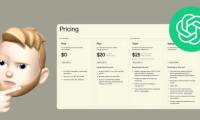
- Choose the right service plan - A comparison between Free, Team, and Enterprise plans, and the factors that truly matter for data security.
- Write effective prompts - Apply the "Context - Role - Constraint - Format" framework to achieve consistent and high-quality business results.
- Data analysis - Upload to spreadsheets, get visual charts and insights in seconds.
- Build reusable assistants - Automate repetitive team workflows.
- Implement standardized procedures for each department - Specific procedures for marketing, sales, human resources, and operations.
- Responsible governance - Data policies, preventing the uncontrolled use of AI (shadow AI), and ensuring regulatory compliance.
This course is highly practical. Each lesson includes content you can apply immediately to your daily work. By Lesson 8, you will have built a workflow with ChatGPT that suits your specific role.
Key points
- Access to AI is not the same as a successful deployment.
- Start with a bounded task, a named owner, acceptance criteria, and approved data.
- Keep human review for external communication, regulated decisions, financial commitments, and other high-impact outcomes.
- Measure outcomes against a baseline before expanding a pilot.
- Update workflows when product capabilities, policies, or business requirements change.
Try it now: Evaluate the ROI (return on investment) when using ChatGPT in your business.
Open ChatGPT. Copy this command (prompt):
Act as a business AI workflow analyst. Evaluate one task I perform regularly.

Role and industry: [ ]
Team size: [ ]
Task and current steps: [ ]
Hours per week spent on the task: [ ]
Input data classification: [public / internal / confidential / regulated]
Approved AI workspace and tools: [ ]
Current bottleneck: [ ]
Definition of a correct result: [ ]

Return:
1. Three candidate use cases ranked by value, feasibility, and risk.
2. One two-week pilot with an owner, sample size, and acceptance criteria.
3. The exact reusable prompt and required input format.
4. A review checklist and escalation conditions.
5. Data that must not be entered under the stated policy.
6. Metrics: time, error rate, rework, cost, and outcome quality.
7. Three tasks that should remain human-led.

Do not assume plan features or legal compliance. Flag every point that requires confirmation from our security, privacy, legal, or procurement teams.
Replace the brackets with specific, non-sensitive details. If the task involves confidential or regulated data, use only an organization-approved workspace and follow its written policy.
The result should be a role-specific pilot, a reusable prompt, a review checklist, and a measurement plan—not a promise of savings.
Review the proposal with the process owner and security or compliance stakeholders, then test one use case before considering wider deployment.
If the suggestions are too general, provide a representative input format, a correct output example, and explicit constraints. Remove sensitive data from examples unless its use is approved.





Reader Comments 0
Sign in with email or Google to join the discussion.