Table of Contents
This guide provides a practical overview of What Are Chips, Chipsets, and Processors? What Role Do They Play in the, including its main features, benefits, limitations, and important considerations.

What are chips, chipsets, and processors?
With the early days of computers when they were first developed, the technologies were too new and primitive. The use of a motherboard to link, connect components together to form a combination of activities to handle the internal data information. To be able to exchange, transfer data and connect components together, separate chips are needed to decode and read the signal because each device has a different code and uses. So on a motherboard with the appearance of many different chips such as: Mouse, keys, sound, images.

But having so many separate chips on such a motherboard is a very difficult problem for manufacturers because the chips take up too much space on the motherboard as well as processing and testing time. much longer product. So manufacturers, developers need to find a more appropriate direction and synchronization with each other.
With the arrival of the PCI bus (Peripheral Componet Interconnect), a microprocessor is designed to be a southbridge - a northbridge that works in parallel and supports each other. With the south - south bridge chip, all chips will be replaced as before. The individual processing chips are now aggregated and gathered into two main chips, the south-south bridge.
North Bridge Chip - Located at the top, north of the motherboard. The northbridge is directly linked to the central processor, the CPU, and acts as an intermediary environment to make the devices interoperable. The Northbridge is much more responsible and burdened than the Southbridge because it has to manage components such as RAM, PCI-e, AGP.
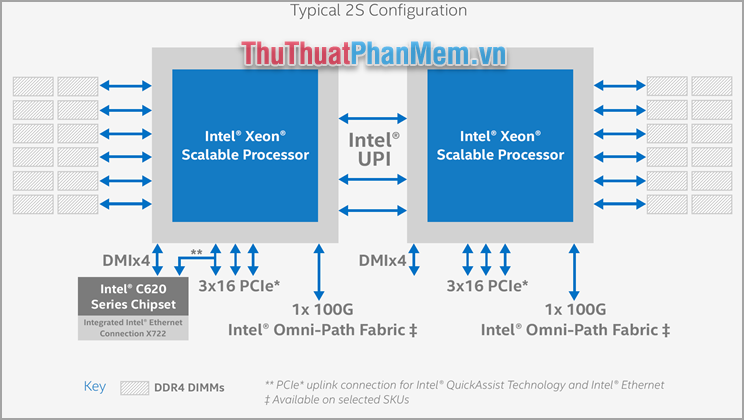
South Bridge Chip - Located at the bottom of the motherboard, south of the motherboard. Southbridge chip is responsible for processing signals of components such as: PCI slot, Sata port, IDE, USB, audio, LAN.
The order of operation of the components when connected to the CPU must go through the Southbridge, then the Northbridge, and finally to the CPU to process the data.
The design using the North-South Bridge Chipset has helped the motherboard tidy and arrange the components more appropriately, especially the stable performance of the system. But technology has never "stopped in place", until today, the North-South Bridge Chip has been combined into one to facilitate the management and construction of the motherboard.
A new Intel system combined with the Platform Controller HUB (PCH) combines the North and South bridge chips into a single chipset on the motherboard and takes care of all the tasks of the previous two chipsets.
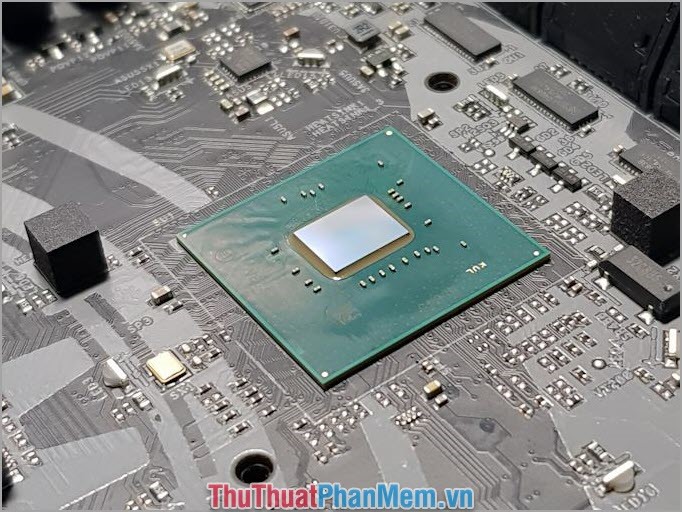
The role of the Chipset system
The chipset system in the computer is responsible for managing the components connected to the motherboard and controlling peripheral devices together. A chipset system will be tasked with adjusting the bus speed of the RAM to match the CPU accordingly.
A chipset system will be responsible for hardware compatibility, such as: Supporting the amount of RAM that can be mounted on the motherboard, expansion options (PCI slots), the ability to overclock RAM and CPU, etc. When building a computer system, the first concern is the CPU and the chipset. For high-end CPUs that use low-end chipsets, it will not be possible to optimize the performance and features of the CPU. As simple as if you use an OC-enabled CPU but the chipset does not support the OC feature, that is unreasonable.
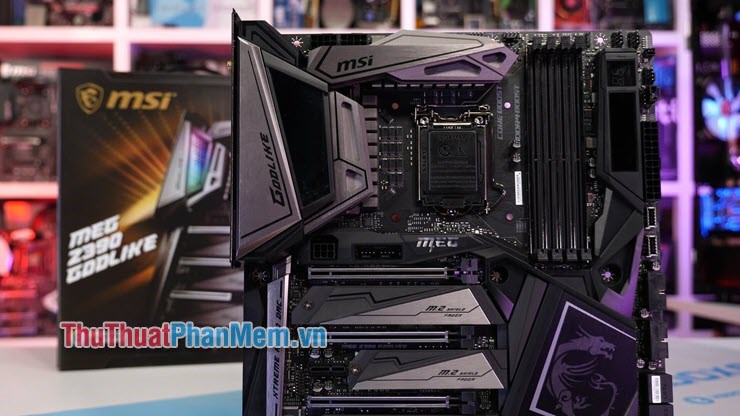
The chipset determines which hardware is compatible with each other, but also the expansion options. The chipset determines the hardware options to expand through the bus. Hardware and peripherals connected to the motherboard via a bus. Each motherboard supports different types of buses and each bus has different speeds and bandwidth.
For those who prefer OC, the chipset is also a very important factor. Overclocking simply means pushing the clock of the components higher than the factory default, but they can still work normally. With a Chipset, the task in OC process is to control the voltage, multiplier, clock speed as appropriate or most accurate according to the settings of the user.
Thus Chip, chipset, processor are very important tasks on the motherboard. They are responsible for connecting and connecting components on the static machine as well as adjusting the parameters to best suit.
FAQ
What should I know about What Are Chips, Chipsets, and Processors? What Role Do They Play in the?
Focus on the key features, requirements, limitations, and practical use cases explained in this guide.
How do I get the best results with What Are Chips, Chipsets, and Processors? What Role Do They Play in the?
Follow the recommended steps, use current software or information, confirm compatibility, and review settings before major changes.
Are there any risks or limitations?
Potential limitations depend on compatibility, data quality, cost, privacy, support, and how the product or method is used.
Related Articles
 How Computer Chips Are Produced7 minutes read
 China Produces X86 Chips Close to AMD Server Processors5 minutes read
 Glowing Silicon: the Key to Big Strides in the Semiconductor3 minutes read
 AMD Released the 2nd Generation Ryzen Computer Processor with SenseMI Technology3 minutes read
 Cpu-z Has a New Version, Adds Support for Alder Lake Chips5 minutes read
 Snapdragon 865 Pitted A13 Bionic: 'One More Pain' for the3 minutes read
Reader Comments 0
Sign in with email or Google to join the discussion.