Table of Contents
This updated guide explores scientists reveal a simple way to communicate with cats with practical details, clear explanations, and useful takeaways. Cats have a reputation for being cold (and clumsy), but if you and your cat aren't bonding, a language barrier is probably the main culprit.
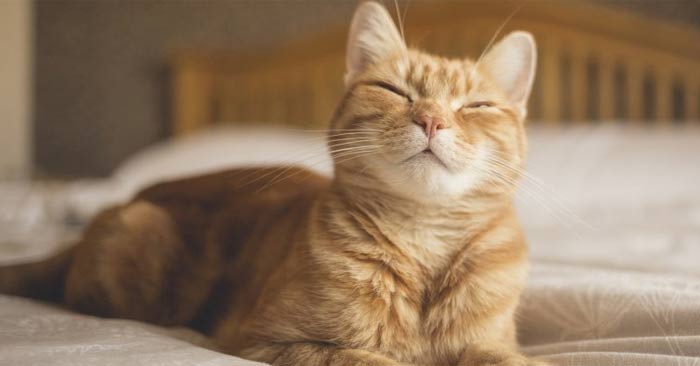
do not worry – research from 2020 has shown that it is not that hard to fix. You just need to smile at them more. Not in the human way, by baring your teeth, but in the cat way, by squinting and blinking slowly.
By observing interactions between cats and humans, scientists have confirmed that this expression makes cats - both familiar and unfamiliar - more approachable and receptive to humans.
' As someone who studies animal behavior and is a cat owner, it is great to be able to demonstrate that cats and people can communicate in this way ,' Karen McComb, a psychologist at the University of Sussex, said in a 2020 statement.
' This is something many cat owners have suspected, so it is exciting to find evidence of it .'
If you've spent any time around cats, you've probably seen their "half-closed eyes" facial expression, accompanied by slow blinking. it is similar to the way humans squint when they smile, and is often seen when cats are relaxed and content. This expression is known as a cat smile.
Anecdotal evidence from cat owners has suggested that humans may copy this expression to convey to cats that we are friendly and open to interaction. So a team of psychologists designed two experiments to determine whether cats behave differently toward people who blink slowly.
In the first experiment , cat owners slow blinked at 21 cats from 14 different households. After the cat was settled and comfortable in one spot in their home environment, the cat owners were instructed to sit about 1 meter away and slow blink when the cat looked at them. Cameras captured the faces of both the owner and the cat, and the results were compared to how the cats blinked when there was no human interaction.
Results showed that cats tended to blink slowly at their owners after their owners also blinked slowly at them, compared to no interaction.
The second experiment involved 24 cats from eight different households. This time, it was not the cat owners who blinked, but researchers who had never been exposed to cats before. For the control group, the cats were recorded responding to a no-blink condition, in which humans stared at the cats without blinking.
The researchers performed the same slow-blinking procedure as the first experiment, holding out a hand toward the cat. And they found that not only were cats more likely to blink back, they were also more likely to move closer to the human's hand after they blinked.
" This study is the first to experimentally investigate the role of slow blinking in communication between cats and humans ," said McComb.
" And it is something you can try yourself with your own cat or with a cat you meet on the street. it is a great way to strengthen the bond between you and your cat. Try squinting at them as if you're smiling in comfort, then close your eyes for a few seconds. You'll see they respond the same way, and you can both strike up a conversation ."
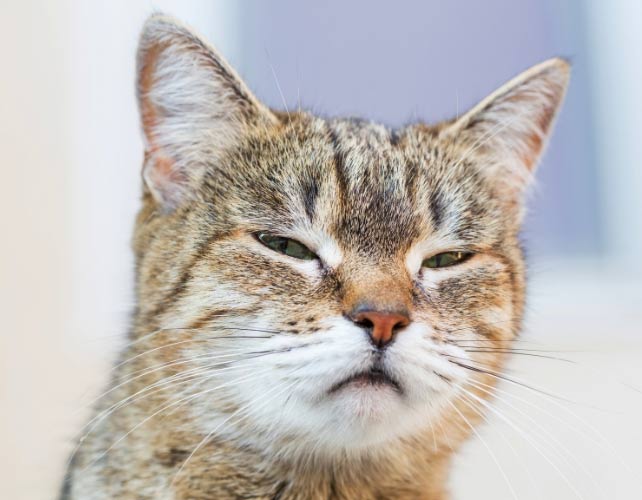
Dogs may be much more affectionate than cats, but this news shouldn't come as a surprise to cat lovers. Research in recent years has shown that cats get along much better with their housemates than we once thought, and comparing them to dogs is really not appropriate.
for instance, cats react similarly to the people who receive them – so if you find your cat being aloof, it may be your problem, not the cat's. Likewise, cats take on the personality traits of the people they live with – which may be linked to why cats seem to understand their owners' emotions. They can recognize their owners' names (although they often choose to ignore them). And their bond with them is surprisingly deep.
it is hard to know why cats blink slowly at humans in this way. it is been suggested that it is a way to signal good intentions, as cats are thought to interpret a constant stare as threatening. But it is also possible that cats developed this expression because humans respond positively to it.
Either way, the act seems to help build a bond. And that is something cat owners should know. Learning to improve your relationship with these mysterious creatures can be a way to improve their emotional health – not just in the home environment, but in many potentially stressful situations.
'Understanding the positive ways in which cats and humans interact could enhance public understanding of cats, improve cat welfare, and tell us more about the social cognitive abilities of this understudied species,' said psychologist Tasmin Humphrey of the University of Sussex.
' Our findings have the potential to be used to assess cat welfare in a variety of settings, including veterinary clinics and shelters .'
FAQ
What is the main takeaway about Scientists Reveal a Simple Way to Communicate with Cats?
The key is to understand the core idea, compare the available options, and apply the practical guidance that matches your situation.
What should beginners know about Scientists Reveal a Simple Way to Communicate with Cats?
Start with the essential steps and terminology. Avoid changing advanced settings until you understand how they affect performance, privacy, cost, or compatibility.
How can I use this information in practice?
Follow the relevant section in order, test one change at a time, and confirm the result before moving to the next step or recommendation.
Related Articles
 Scientists Reveal Why Cats Always Sleep on Their Left Side3 minutes read
 10 Incredible Facts About Languages - How Animals Communicate6 minutes read
 Infographic - the Grrr Benefit of Cats!3 minutes read
 Top 10 Most Beautiful Cats in the World5 minutes read
 Why Are Cats Afraid of Water?7 minutes read
 Arabian Cat Cats Were Discovered After Ten Years of Searching4 minutes read
Reader Comments 0
Sign in with email or Google to join the discussion.