Table of Contents
This guide provides a clear overview of cleaning washing machine, including how to Maintain the Washing Machine to Use It for a Long Time, how to Clean the Washing Machine Periodically. Use it to understand the topic, compare the available options, and make a more informed decision.
 Washing machine maintenance and cleaning
How to Maintain the Washing Machine to Use It for a Long Time?
- After washing, you must clean the soap dispenser, softener. to avoid drying causing blockage.
- Wipe off water on and around the washing machine to avoid rusting the metal parts.
- Always keep the washing machine area clean to avoid moisture.
- Turn off the power to the washing machine when not in use.
- Periodically clean the drum of the washing machine with a specialized detergent.
How to Clean the Washing Machine Periodically
You should clean the washing machine periodically about every 3 or 6 months to help the washing machine operate smoothly, strongly and without minor damage.
first
Washing the Washing Machine
Wipe the washing machine clean and dry with a soft cloth, do not use brushes, polishing powder, Benzine or volatile materials to clean the machine as this may damage the plastic components and the coating.
2
Clean the Water Filter of the Washing Machine
Clean the filter mesh of the water supply valve to avoid clogging due to dirt sticking, do the following:
- Turn off the water supply to the washing machine and open the end of the water hose that connects to the washing machine's water supply valve.
- Use a sharp-pointed plier to remove the filter from the water supply valve.
- Use a brush to scrub away the dirt and put the filter back in place. Be careful not to throw away or puncture the filter, to avoid damaging the water supply valve.
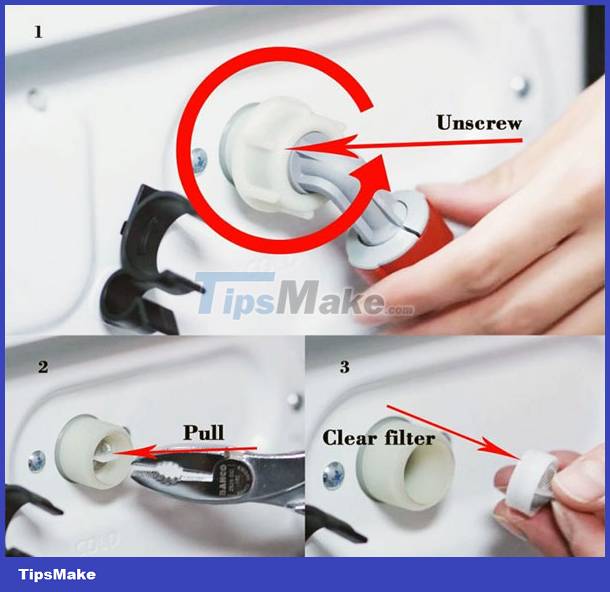 Clean the water filter of the washing machine
3
Clean the Lint Filter Inside the Washing Machine
Cleaning the lint filter inside the washing machine should be done regularly by removing the filter from the machine, cleaning it thoroughly with a brush, and then reinstalling it.
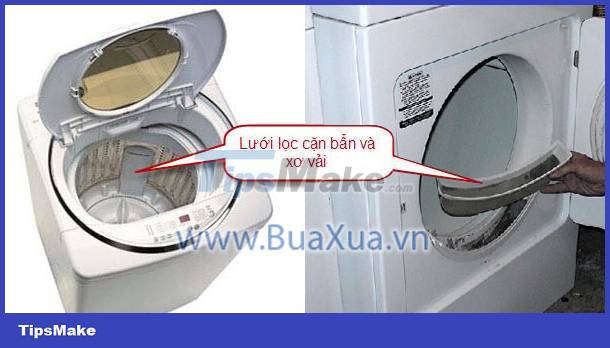 Clean the lint filter and dirt inside the washing machine
4
Clean the Detergent and Softener Drawers
Normally, the washing machine can pump water on its own to remove the amount of soap and detergent in the compartment. But if you add too much, the soap and conditioner will spill out. Therefore, after each wash, you should clean the drawer.
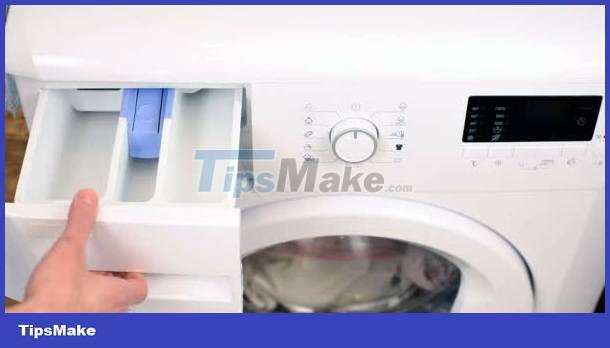 Clean the soap and rinse water dispenser of the washing machine
5
Clean the Drain Filter
Some washing machines are equipped with a filter before the water is drained out, this filter is usually located at the inner end of the drain hose, please find the location and remove it to clean up the items left behind when washing. and clean the filter.
 Clean the washing machine's drain filter
6
Clean the Drain Pump Filter Mesh
For washing machines with a drain pump, you need to clean the drain pump filter by unscrewing the screw on the back cover to operate the pump, turning the pump cover counterclockwise, opening the cover to remove it. Dirty objects get inside. Check for water leakage after installation, especially the rubber gasket at the pump cover.
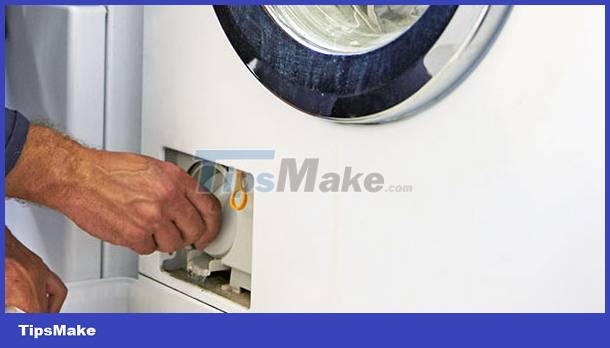 Clean the drain pump filter of the washing machine
See How to install and use the washing machine
Conclusion
Understanding Cleaning Washing Machine makes it easier to compare options, avoid common mistakes, and apply the information in this guide more effectively. Review the relevant requirements before making changes or choosing a solution.
FAQ
What is Cleaning Washing Machine?
Cleaning Washing Machine refers to the main subject explained in this guide, including how it works, where it is used, and the factors that affect the best choice.
Why is Cleaning Washing Machine important?
Understanding Cleaning Washing Machine helps you evaluate features, compatibility, performance, and potential limitations before you choose a product or follow a procedure.
What should you consider when using or choosing Cleaning Washing Machine?
Consider your specific goal, compatibility requirements, available features, cost, security, and the practical recommendations described in this guide.
Related Articles
 How to Clean the Horizontal Loading Washing Machine, Top6 minutes read
 Things to Know When Using a Washing Machine10 minutes read
 Seemingly Harmless Items That Can Damage Your Washing Machine7 minutes read
 3 Simple Ways to Clean Your Washing Machine Effectively7 minutes read
 The Necessary Precautions When Using a Front-loading Washing Machine7 minutes read
 How to Identify Samsung Washing Machine Error and How to Fix It12 minutes read
Reader Comments 0
Sign in with email or Google to join the discussion.