Table of Contents
Baking soda can be an optional laundry booster for some washable clothes, but it does not replace detergent and is not suitable for every fabric. Check the garment label, washer manual and product directions before adding it. “Natural” does not mean harmless to all fabrics or irritation-free for everyone.
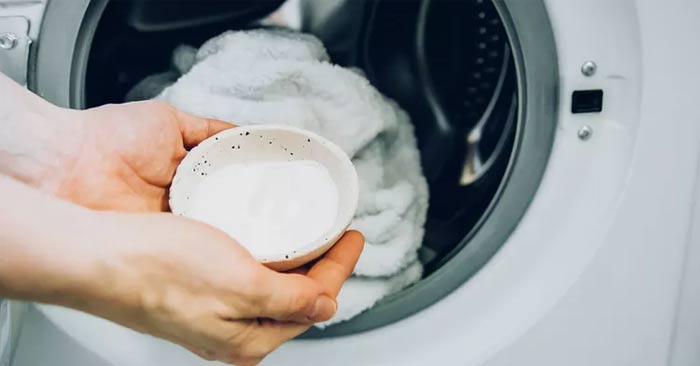
What baking soda can—and cannot—do
Baking soda is sodium bicarbonate, a mildly alkaline substance. It may help with some odors as part of a suitable wash routine. It is not the same product as washing soda, and the two should not be substituted measure for measure.
It also is not a universal stain remover, disinfectant or fabric-safe bleach. Grease, protein stains, dye transfer and musty odors can require different treatments. Start with a correctly dosed detergent and a wash cycle suited to the fabric.
Check the fabric first
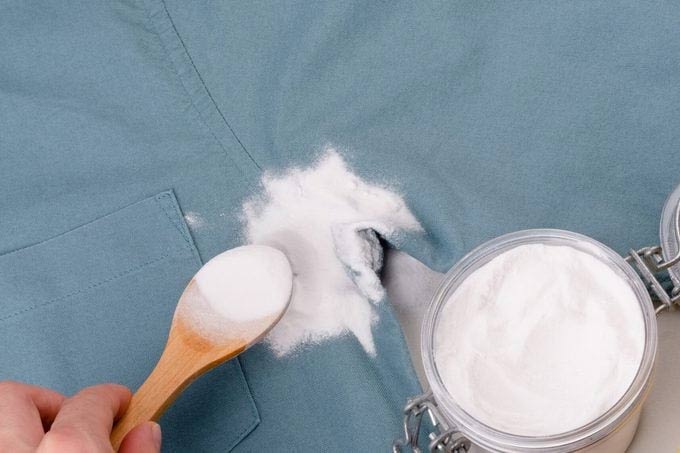
Do not use a general baking-soda recipe on wool, cashmere, silk, dry-clean-only garments or delicate finishes without explicit care guidance. Alkalinity can affect protein-based fibers and some dyes. Test an inconspicuous area before treating a colored garment.
Use the temperature allowed by the clothing label. Warm water is not automatically appropriate, and a cool rinse does not reverse shrinkage or fading caused by unsuitable washing.
How to add it to a suitable wash
- Check permission and placement. Confirm that your machine and fabric instructions allow the additive. Follow the washer's rules for powders; do not put baking soda in an automatic dispensing reservoir unless the manufacturer permits it.
- Use a documented amount. Arm & Hammer's laundry-booster instructions specify half a cup alongside regular liquid laundry detergent. Treat that as product guidance, not a universal dose for every machine or load.
- Add the correct detergent dose. Account for load size, soil and water conditions using the detergent label. Baking soda is an addition, not a replacement.
- Run the appropriate cycle. Do not interrupt or override a machine's filling sequence just to follow a generic recipe.
- Inspect before drying. Check odor, visible stains and residue. Dry promptly according to the care label once the result is satisfactory.
If powder residue remains, follow the washer's rinsing guidance and reconsider the amount or product choice next time. More additive does not necessarily mean cleaner clothes.
Dealing with sour or musty laundry
Clothes left wet in the washer may need rewashing with detergent and prompt drying. Baking soda is one possible addition when permitted, but it is not the only way to address odor.
Check for an overloaded drum, detergent residue and a dirty washer seal, dispenser or filter. Maintain the machine according to its manual. A persistent machine odor can return to otherwise clean clothes, so repeatedly adding fragrance may hide rather than solve the problem.
Treat stains with the right product
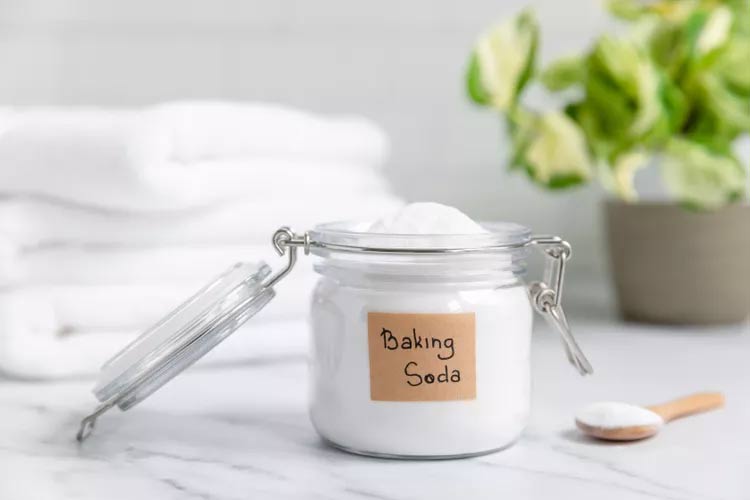
For a washable garment, remove excess material gently and use a suitable laundry pre-treatment according to its label. Avoid aggressive scrubbing with a gritty paste, particularly on delicate fabric. Dish soap can create excess suds in a washing machine and should not be added as though it were laundry detergent.
Check the stain after washing before using the dryer; heat can make some remaining stains harder to remove. Repeat an appropriate treatment only if the fabric instructions allow it. See the clothing stain-removal guide to identify the type of stain before choosing a method.
Skip essential-oil jars for non-washable garments
A scented baking-soda jar in a box does not clean a garment or remove the source of every odor. Essential oils can leave marks if spilled, and added scent may be unwelcome on sensitive items. Do not sprinkle or rub powder into dry-clean-only clothes as a substitute for professional care.
Air an item as its care instructions allow, and consult a cleaner when the odor persists or the fabric is valuable or delicate.
Avoid improvised cleaning mixtures
Do not combine baking soda with bleach, vinegar or other cleaners merely because a household recipe suggests it. Use each laundry product only as its label permits. Mixing baking soda and vinegar produces fizz but does not automatically create a more effective detergent.
Tide's laundry guidance also notes fabric and cleaning-performance limits. When labels conflict with a generic tip, follow the instructions for the actual garment, washer and product. For help interpreting a label, see recognizing laundry symbols with an iPhone, while checking any identification against the printed label.
Related Articles
 Absolutely do not use baking soda to clean these items.
 What miracle will happen if you sprinkle baking soda on the mattress bed?
 How to Remove Smells from Your Purse
 Tips to clean the hood quickly and simply at home
 How to effectively eliminate odors in the room?
 [General] 10+ How to make toilets and bathrooms out of bad smell effectively, easy to implement
Reader Comments 0
Sign in with email or Google to join the discussion.