Table of Contents
This updated guide explains how to Drift on a Bicycle through clear steps, practical examples, and important checks that help prevent common errors.
Method 1 of 2:
Learning the Basic Motions
-
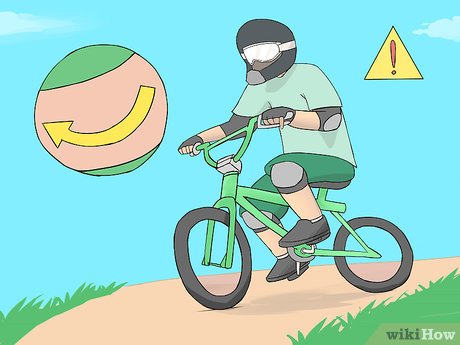 Pedal quickly toward a turn. The faster you're going when you get to the turn, the easier it will be to get your back tire to skid. Riding downhill toward a turn can help you pick up speed.[1]XResearch source
 -
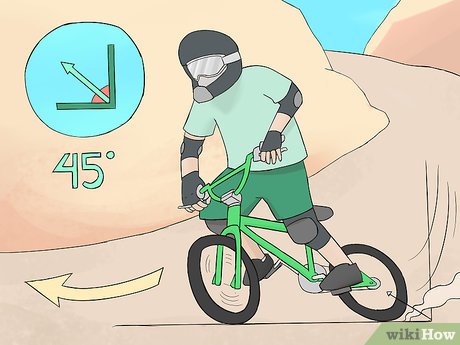 Lean in the direction of the turn once you reach it. Shift your body weight in the direction you're turning so your body and bike are at about a 45-degree angle from the ground. Keep leaning as you go around the corner of the turn.[2]XResearch source
- For example, if you're taking a left turn, lean your body to the left.
-
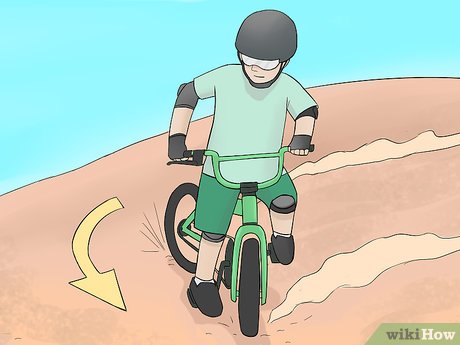 Shift your weight forward as you go around the turn. To shift your weight, lean slightly forward over your handlebars. This will lighten the load on your back tire, which will let it skid off the ground. As you're going around the turn, you should start to feel your back tire skidding outward. Gently press the rear brake if you need help getting the tire to break loose.[3]XResearch source
 -
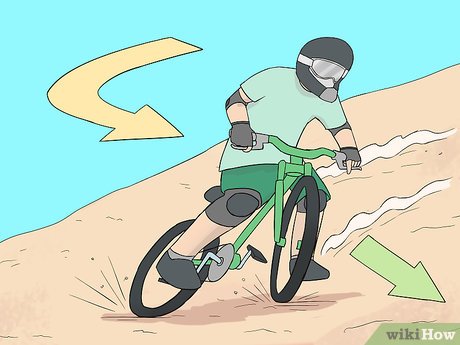 Extend your inside foot out so it's hovering slightly above the ground. Your inside foot is your foot that's closest to the inside corner of the turn. Continue to hold your foot out just above the ground as you go around the turn.[4]XResearch source
- For example, if you're taking a right turn, your right foot would be your inside foot.
- If you feel like you're skidding out of control or your bike is going to spin out, plant your inside foot on the ground to stabilize yourself.
-
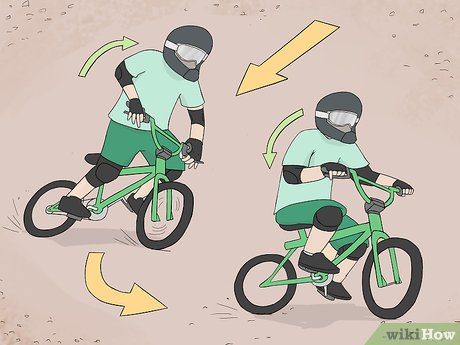 Bring your body and bike upright again once you complete the turn. This will help your back tire regain traction after skidding. To bring yourself upright on your bike, stop leaning into the turn and pull your body weight up.[5]XResearch source
Method 2 of 2:
Practicing Skidding
-
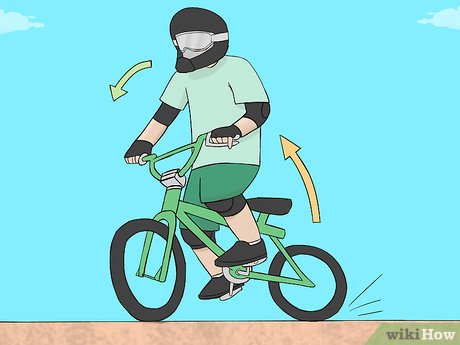 Practice skidding at slower speeds first. Skidding is easier when you're going faster, but higher speeds can increase your chances of wiping out. When you first start out, approach turns slowly and work on leaning into the turn and shifting your weight forward. Once you get the motions down, gradually increase your speed going into the turn.[6]XResearch source
 -
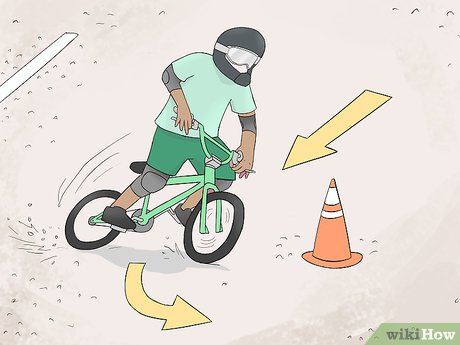 Try skidding in a gravel parking lot before you practice on a trail. Use cones or another marker to indicate where you should turn in the parking lot. Then, pedal toward that spot and try to get your back tire to skid outward as you go around the turn. Practicing in a parking lot is safer than practicing on a downhill trail, and you won't have to worry about damaging the trail.[7]XResearch source
Tip : Remember, never skid on a public trail because it will ruin the trail for other users! Only skid on a trail if it is a private one that you own.
-
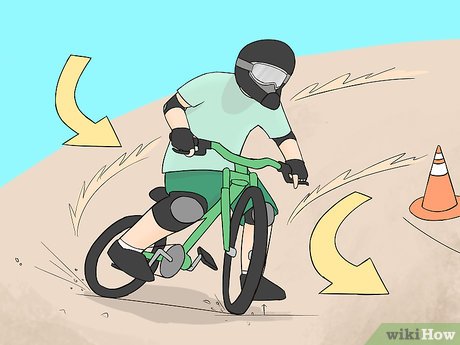 Skid around wide, round turns when you're starting out. Thin, sharp turns give you less room for error and less time to skid, so they're not the best to practice on. Look for turns that are round and wide so you have more time to work on your form as you go around them.[8]XResearch source
 -
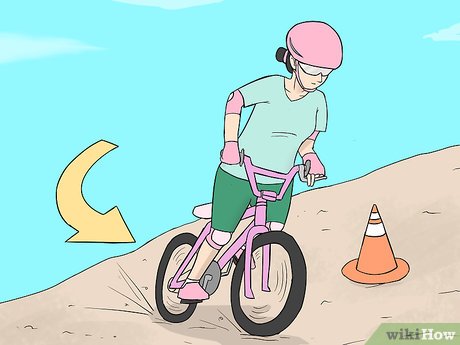 Be persistent. Skidding is an advanced biking move, and it can take a lot of practice to get it down. If you keep spinning out or your back tire isn't skidding outward, try adjusting how much you're leaning in and shifting your weight forward. You can even ask someone to film you practicing so you can see what your form looks like. Keep practicing and eventually you'll get there!
FAQ
What is the easiest way to Drift on a Bicycle?
Start with the requirements in this guide, then follow each step in order. Check the result after every major change so problems are easier to identify.
Can beginners follow these instructions?
Yes. The process is organized into practical steps, and you can repeat any step before moving forward.
What should I check if the method does not work?
Confirm your software or device version, permissions, settings, file format, and internet connection when the task depends on online services.
Related Articles
 Review Inertial Drift - Come on, Let's Drift Together6 minutes read
 How to Drift a Car: Step-by-Step Guide18 minutes read
 How to Ride a Bicycle in Jakarta: Step-by-Step Guide10 minutes read
 How to Build a Bicycle Cargo Trailer: Step-by-Step Guide13 minutes read
 How to Commute by Bicycle: Step-by-Step Guide5 minutes read
 See the World's Longest Overhead Bike Route in China3 minutes read
Reader Comments 0
Sign in with email or Google to join the discussion.