Table of Contents
This updated guide explains how to Connect PC to TV with HDMI through clear steps, practical examples, and important checks that help prevent common errors.
Part 1 of 2:
Connecting the PC to the TV
-
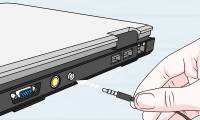
 Connect one end of the HDMI cable to the PC. The HDMI slot is usually behind the CPU if you have a desktop computer, or on the side of a keyboard on a laptop.
- Some PC's may use a regular HDMI port, while others will use an HDMI mini or MiniDisplay port.
- For HDMI mini and MiniDisplay cables, one end of the cable should be an HDMI mini or MiniDisplay cable which you can plug into your computer, and the other end should be a regular sized HDMI cable.
- Not all computers have an HDMI port. Some older computer may use a VGA or DVI cable. You can connect these to the HDMI port of a TV using an adapter and a separate audio cable. If you are using a laptop that does not have an HDMI or other video-out port, you can purchase a USB-to-HDMI adapter. You may need to install additional software on your PC.
-
 Connect the other end of the cable to the TV. Find a free HDMI port on your TV and connect the other end of the cable to it. The ports are usually numbered and labeled with "HDMI".
- Make a note of which HDMI port you are connecting to.
- Make sure you purchase an HDMI cable that is the right length needed to connect from your PC to your TV. Measure the distance if needed.
-
 Use the TV remote to select the HDMI source on the TV. Look for a button on the TV or remote that says "Source", or "Input" or something similar. Use this button to select the HDMI port you connected your PC to.
- After connecting the PC and TV together, sometimes the TV will automatically display what's on your computer monitor. If it is blank, use Method 2 to detect your TV in Windows 10.
- Use the number labels on the HDMI ports to help you find which HDMI source your computer is connected to.
Part 2 of 2:
Detecting Your TV in Windows
-
 Click the Startmenu on your PC. This is usually found in the bottom left-hand corner of the screen. It has an icon with the Windows logo. This displays the Start menu.
-
 Click the Settingsicon. It's the icon that resembles a gear. It's on the left side of the Start menu.
-
 Click System. It's the first option in the Windows Settings menu. It's next to an icon that resembles a laptop computer.
 -
 Click Display. It's the first option in the sidebar menu to the left. This displays your Display settings.
 -
 Scroll down and click Detect. It's at the bottom of the Display Settings menu. Windows will detect any connected displays.
- Adjust the resolution as needed so it looks good on your TV. If you have an HDTV, select 1920 x 1080 in the "Resolution" drop-down menu. If you have a 4K TV, select up to 3840 x 2160 or highest possible resolution in the "Resolution" drop-down menu.
FAQ
What is the easiest way to Connect PC to TV with HDMI?
Start with the requirements in this guide, then follow each step in order. Check the result after every major change so problems are easier to identify.
Can beginners follow these instructions?
Yes. The process is organized into practical steps, and you can repeat any step before moving forward.
What should I check if the method does not work?
Confirm your software or device version, permissions, settings, file format, and internet connection when the task depends on online services.
Related Articles
 Decoding HDMI Sign (STB) on TV5 minutes read
 How to Connect PC to TV Via HDMI5 minutes read
 How to Connect Laptop to TV via HDMI Port6 minutes read
 What Is the HDMI (ARC) Port on TV Used For?6 minutes read
 Which HDMI Ports on the TV Support ARC: Explained7 minutes read
 How to Connect to TV via HDMI Port: Practical Guide11 minutes read
Reader Comments 0
Sign in with email or Google to join the discussion.