Table of Contents
This practical guide explains how to assemble an atx power supply for a computer with clear steps and useful context. It also covers common requirements, potential problems, and the details that can help you get better results.
Here Are the Steps to Assemble an ATX Power Supply for a Computer
Open the case side cover (Case) by tightening the rear screws and sliding the case cover back or up depending on the case. (Each case can be opened differently)
Insert the power supply into its place, located on the back of the case. Pay attention to the correct direction and position of the screw holes, the fan is facing outside.
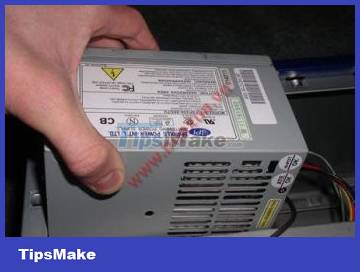 Insert the power supply into the position on the back of the case
Take 4 screws to position the power supply and case.
 Take 4 screws to position the power supply and case
Plug the power supply leads into the correct positions of internal devices such as the motherboard and the drives.
 Plug the power supply cords into the internal devices
Close the cover on the side of the case by sliding it from the back to the front, paying attention to the slots, grooves, etc. between the cover and the case. Grab the screws to position the cover.
 Cover the side cover of the case
Plug the power supply cord into the socket of the power supply.
- You can use plastic knots to tie up the power cords that are too long, do not let the wire touch the CPU fan.
- If the switch is turned on but the machine has no power, the internal plugs must be checked, some old power supplies have a 110v/220v power switch and an On/Off switch on the back.
Conclusion
Understanding Power Supply makes it easier to compare options, avoid common mistakes, and apply the information in this guide more effectively. Review the relevant requirements before making changes or choosing a solution.
FAQ
How do you assemble an atx power supply for a computer?
Follow the steps in this guide in order, confirm the required settings or tools, and verify the result before making additional changes.
Is it safe to assemble an atx power supply for a computer?
It is generally safe when you follow the recommended instructions, use trusted tools, and avoid changing settings you do not understand.
What should you do if the process does not work?
Recheck the requirements, restart the device or application when appropriate, and review each step for missed settings or compatibility issues.
Related Articles
 4 Things to Note Before Choosing to Buy a PSU Power Supply7 minutes read
 How to Check a Power Supply8 minutes read
 Computer Power Source: More Important Than You Think34 minutes read
 How to Test a PC Power Supply: Step-by-Step Guide8 minutes read
 How to Test a Computer Power Supply and Measure Capacity7 minutes read
 What Are the Signs of a Weak Computer Power Source? How to Fix It?8 minutes read
Reader Comments 0
Sign in with email or Google to join the discussion.