Table of Contents
Germany’s storybook castles do not all belong to the Middle Ages. Some preserve medieval residences, while others are later recreations of an idealized past. These five examples offer different combinations of architecture, setting and history.
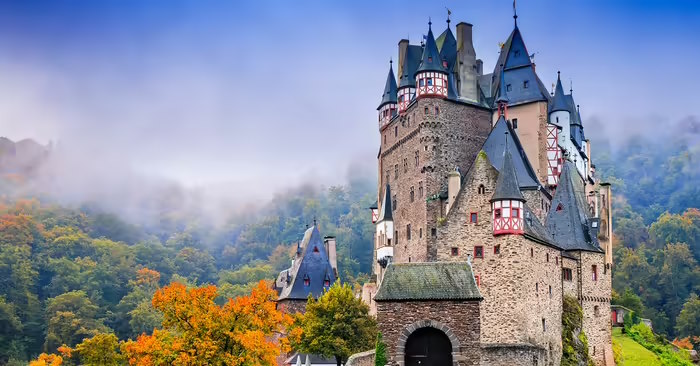
Neuschwanstein: a royal vision of the Middle Ages
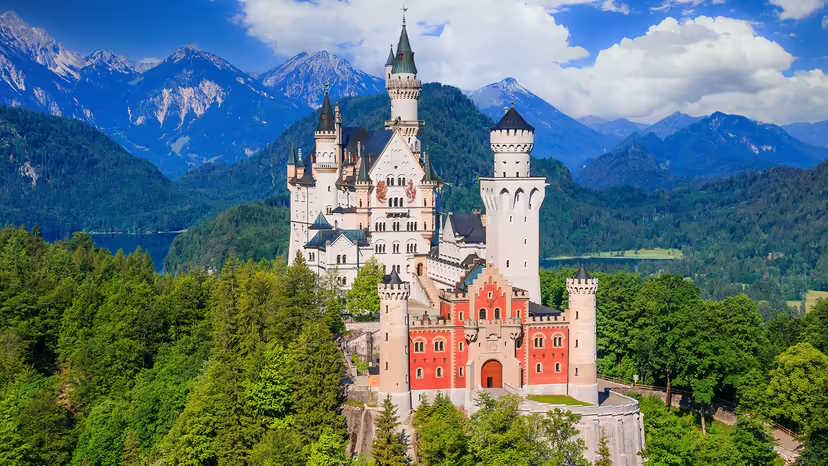
Above Hohenschwangau in Bavaria, Neuschwanstein combines pale walls, pointed towers and a mountain setting. It looks medieval, but construction began in 1869 for King Ludwig II. Its appearance reflects a romantic vision of castles rather than the practical needs of a medieval defensive stronghold.
The distinction matters when visiting: this is a royal architectural project with decorated interiors, not a surviving knight’s fortress. The Bavarian Palace Administration’s building history explains how the project developed and why parts remained unfinished during Ludwig’s lifetime.
Burg Eltz: a family castle in a wooded setting
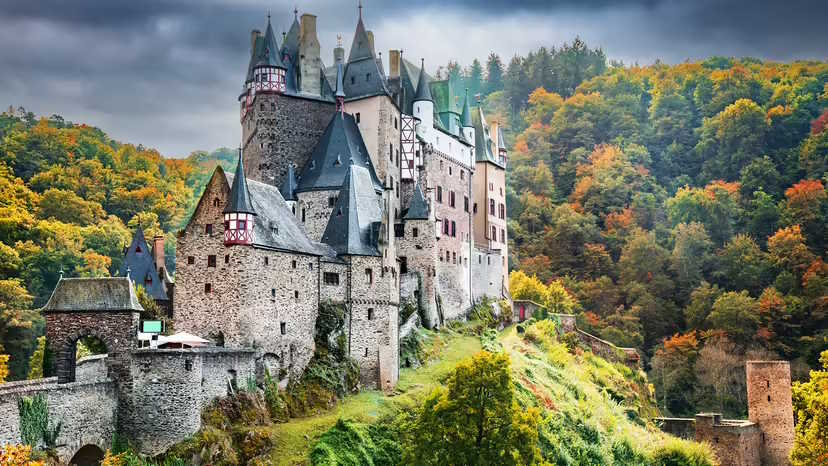
Burg Eltz stands in a wooded valley near the Moselle region. Its clustered towers, steep roofs and timber-framed upper sections create a very different silhouette from Neuschwanstein’s planned royal residence.
The Eltz family’s long association with the castle is central to its history. Instead of treating it as one uniform building, look at how its connected residential sections fit together. They reflect a shared family home developed over generations.
Heidelberg Castle: the appeal of a romantic ruin
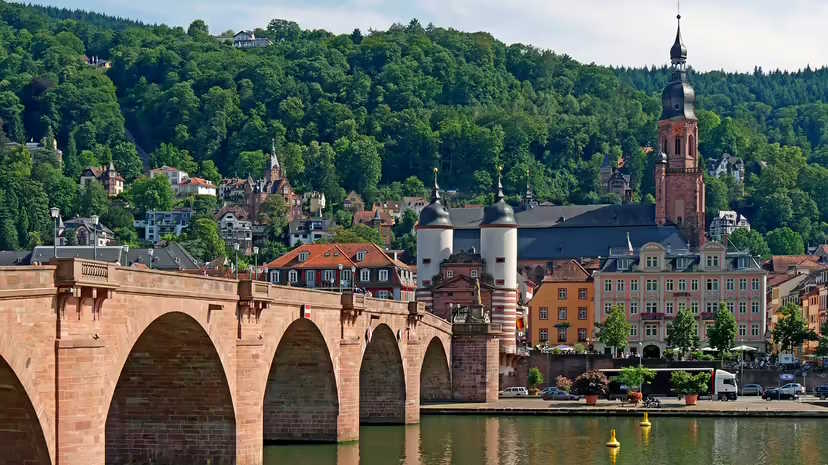
Heidelberg Castle overlooks the town and the Neckar valley; it does not stand in the river itself. Its surviving façades combine architectural periods, including Gothic and Renaissance work from its time as the residence of the Palatine electors.
War damage in the late 17th century and later lightning fires helped create its ruined condition. The appeal lies partly in that contrast: elaborate stonework survives alongside broken walls and open spaces. The official castle overview traces this history and the later Romantic fascination with the site.
Hohenzollern: a 19th-century hilltop reconstruction
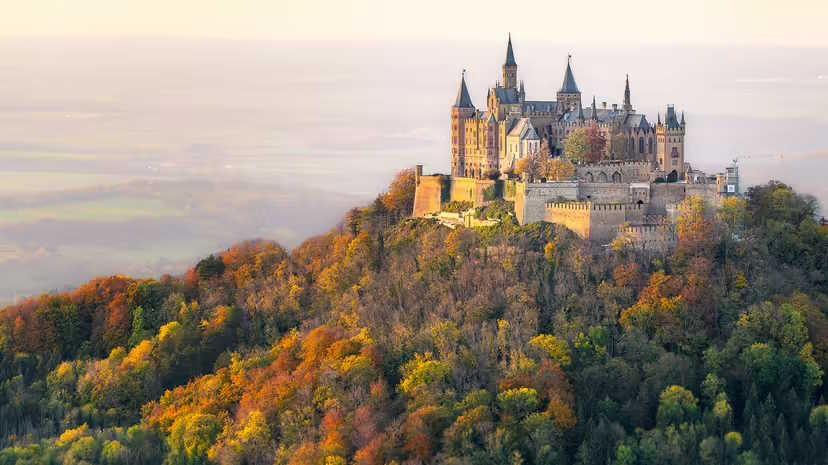
Hohenzollern Castle rises above the surrounding landscape in Baden-Württemberg. The present complex is the third castle on the mountain, rebuilt in the 19th century in a neo-Gothic style.
It is the ancestral seat associated with the Hohenzollern dynasty, whose branches included Prussian kings and German emperors. Its ramparts and towers express the family’s historical identity, while the displayed objects connect the building to Prussian royal history. The medieval-looking outline should not be mistaken for an entirely medieval structure.
Mespelbrunn: a moated Renaissance residence
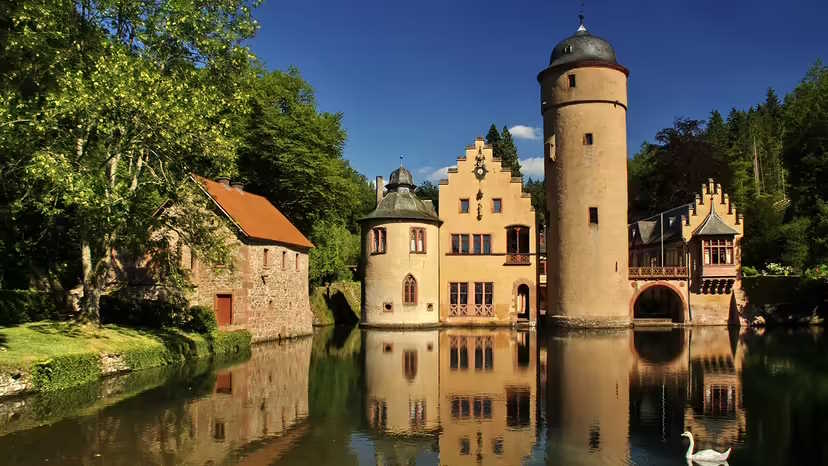
Mespelbrunn, in the Spessart region, offers a different setting again: a residence beside water rather than a monumental hilltop fortress. Its towers and Renaissance façades reflect the transformation of a defensive site into a more comfortable home.
It remains privately owned, so visitors should respect the boundary between public tour areas and private space. Avoid assuming it will be quiet simply because it is smaller than the best-known royal castles.
Choose by the experience you want
- Romantic royal architecture: Neuschwanstein or Hohenzollern.
- A layered family residence: Burg Eltz.
- Ruins and Renaissance façades: Heidelberg.
- A moated residence: Mespelbrunn.
Before arranging transport, check each castle’s official visitor information for opening dates, tour requirements, access routes and any room closures. A ticket to the grounds does not necessarily include every interior, and hilltop approaches may involve substantial walking.
For a wider comparison, browse these castles around the world. If the natural setting interests you as much as the buildings, this selection of unusual landscapes explains the processes behind several striking locations.






Reader Comments 0
Sign in with email or Google to join the discussion.