Table of Contents
This updated guide examines Address: Arp and the Working Principle in LAN and organizes the essential facts, background, and practical takeaways in clear American English.
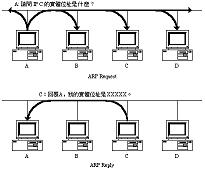
In fact, network cards (NICs) can only connect to each other according to the MAC address, fixed and unique addresses of the hardware. So we must have a mechanism to convert these types of addresses back and forth. From there we have the address resolution protocol: Address Resolution Protocol (ARP).
Working principle of ARP in a LAN
When a network device wants to know the MAC address of a network device that already knows the address at the network layer (IP, IPX.) it sends an ARP request including its MAC address and IP address. of the device it needs to know the MAC address across an entire broadcast domain. Each device receiving this request compares the IP address in the request with its network layer address. If the address is the same, the device must send it back to the device to send a packet ARP request (which contains its MAC address). In a simple network, for example, PC A wants to send the packet to PC B and it only knows the IP address of PC B. Then PC A will have to send an ARP broadcast to the entire network to ask "where What is the PC's MAC with this IP address? "When the PC B receives this broadcast, it compares the IP address in this packet with its IP address. Realizing that the address is your address, PC B will return a packet to PC A which contains the MAC address of B. Then PC A will begin transmitting packets to B.
ARP operating principle in network environment:
Theoperation of ARP in a more complex environment is that the two networks are tied together by a Router C. Machine A belongs to Network A that wants to send the packet to machine B of the B network. The router should then see machine A as a bridge or an intermediary (Agent) for data transmission. Previously, machine A will know the IP address of Router C (Gateway address) and know that to transmit packets to B must go through C. All such information will be contained in a table called a table routing (routing table). Routing table according to this mechanism is kept in each machine. The routing table contains information about the Gateway to access a certain network. The example in the above case in the table will indicate that to go to LAN B must go through port X of Router C. The routing table will contain the IP address of port X. The data transfer process follows these steps:
· Machine A sends an ARP request (broadcast) to find the MAC address of port X.
· Router C answers, give the machine A MAC address of port X.
· Machine A transmits the packet to the X port of the Router.
· The router receives the packet from machine A, and transmits the packet to the router's Y port. The packet contains the IP address of machine B. The router sends an ARP request to find the MAC address of machine B.
· Machine B will respond to the router knowing its MAC address. After receiving the MAC address of machine B, Router C sends the packet of A to B.
In fact, in addition to this routing table format, the proxyARP method is also used, including a device that performs address resolution for all other devices. Accordingly, the workstations do not need to hold the routing table. again Router C will perform the task, responding to all ARP requests of all machines.
FAQ
What is Address: Arp and the Working Principle in LAN about?
It provides a structured overview of address, explains the main context, and highlights practical takeaways for readers.
Why does this topic matter?
Understanding the main concepts helps readers evaluate the issue, avoid common mistakes, and make better-informed decisions.
How should readers use this information?
Use the guidance as a practical starting point, confirm details that may have changed, and follow current product, safety, or security recommendations.
Related Articles
 Structure and Working Principle of Electric Rice Cooker7 minutes read
 1 Minute Rule to Cure Lazy, What Do You Think5 minutes read
 Structure && Principle of Operation of Air Conditioner, Air6 minutes read
 Structure, Symbols and Operating Principles of Transformers6 minutes read
 Please Download the Talos Principle, a Cool 3d Graphics Puzzle3 minutes read
 Structure, Principle and Installation of 2-way Air8 minutes read
Reader Comments 0
Sign in with email or Google to join the discussion.