Table of Contents
This updated guide examines 12 Scripts for Autohotkey Make Life Easier and organizes the essential facts, background, and practical takeaways in clear American English.
TipsMake.com will share your favorite and most used AutoHotKey scripts, making your daily work easier.
Before starting, the article assumes that you already know how to install and configure AutoHotKey. If you are unsure of this section, please refer to the article: Create shortcuts with AutoHotkey to learn how to do this.
Besides, please note that the lines start with ';' are comments.
1. Google Search shortcut (Google search)
Google had the right idea when theCaps Lockkey variable was unpopular and rarely used as a dedicated search button. In the spirit of Chromebooks, you can turn theCaps Lockkey into a Google Search key.
The following script will automatically search Google when you highlight part of the text and pressCtrl+Shift+C:
; Google Search phần văn bản được highlight ^+c:: { Send, ^c Sleep 50 Run, http://www.google.com/search?q=%clipboard% Return }2. Auto correction
During Windows's existence, smartphones have grown so strongly that they now have touch screens and automatic error correction features. So why not automatically fix errors on Windows 10?
In Autohotkey's script repository, you can find autocorrected scripts, containing thousands of common spelling mistakes that most people can easily make, then automatically fix them when you write / create them..
You can access the link to download the script here. Just pressCtrl+Ato select everything in the script, then copy it to a Notepad file and save it as 'AutoCorrect.ahk'.
3. Reuse the function keys (Function key)
Most of us almost never use the function keys on the keyboard exceptF2(rename),F5(refresh) andF11(full screen in the browser). Using AutoHotKey, you can reuse the unused function keys, to do many different things, such as launching web pages, launching programs, etc. For example, you can use the function keys to launch your most used programs like Snagit, Sublime Text, Photoshop, Calculator, Thunderbird, etc.
To launch a program, just use the script below. Don't forget to replace the program path with your favorite program.
; Khởi chạy Sublime Text F7::Run "C:Program FilesSublime Text 2sublime_text.exe" return4. Open the website quickly
Just like launching your favorite programs, you can create your own custom shortcuts to launch desired web pages. For example, you can useCtrl+Shift+Tto launch TipsMake.com. Use the following script to launch your favorite website. Don't forget to replace the internet address with your favorite website.
; Start TipsMake.com ^+t::Run "www.tipsmake.com"; use ctrl+Shift+t returnLike the way above, you can create your own shortcuts using a combination of Ctrl (^), Shift (+), Alt (!) And Win (#) keys .
5. Open your favorite folder
Along with opening websites and programs, you can also open the most used folders with a simple shortcut. For example, most of us often access the Downloads folder and to make it easier, we can use a simple script like the one below. You can customize the script to change the shortcut and directory path according to your needs.
; Mở thư mục Downloads ^+d::Run "C:UsersVamsiDownloads"; ctrl+shift+d return6. Scroll to a folder in File Explorer
When in a folder, you often need to move up a folder. In previous versions of Windows, theBackspacekey did this work, and now theBackspacekey will take you back to the past. This is useful for many people, but others hate having to click on that little icon to move up a folder, so they use the script below to do the same by clicking on middle mouse button.
; Nhấn nút chuột giữa để di chuyển lên một thư mục trong Explorer #IfWinActive, ahk_class CabinetWClass ~MButton::Send!{Up} #IfWinActive returnIf you wish, you can also reconfigure the useless tilde (~) key on the keyboard to perform the same action.
; Nhấn ~ để di chuyển lên một thư mục trong Explorer #IfWinActive, ahk_class CabinetWClass `::Send!{Up} #IfWinActive return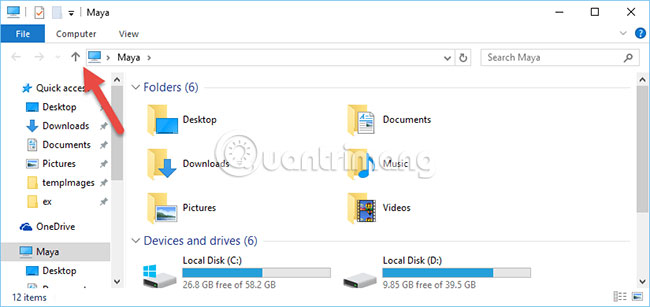
7. Adjust the volume
The keyboard does not have any multimedia keys and the lack of volume controls causes discomfort for many users. So you can use the following script to control the volume on your system.
; Nút âm lượng tùy chỉnh +NumpadAdd:: Send {Volume_Up};shift + numpad plus +NumpadSub:: Send {Volume_Down};shift + numpad minus break::Send {Volume_Mute}; Break key mutes return
8. Set the default status for the Lock keys
Using AutoHotKey, you can easily set the default or permanent status for Lock keys on your keyboard. For example, setCaps Lockto turn off orNum Lockto turn on andScroll Lockto turn off. This simple script is very useful and even if you accidentally press them, the lock status will not change.
; Trạng thái khóa mặc định SetNumlockState, AlwaysOn SetCapsLockState, AlwaysOff SetScrollLockState, AlwaysOff return9. Reconfigure Caps Lock
After turning offCaps Lock, you may want to reconfigure it to act as aShiftkey. To reconfigure theCaps Lockkey, use the script below.
; Caps Lock hoạt động như Shift Capslock::Shift return10. Empty the trash
You can use the script below to quickly empty the trash. This simple script helps you not to use the mouse to perform the same task.
; Làm rỗng thùng rác #Del::FileRecycleEmpty; win + del return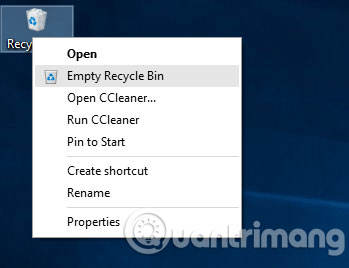
11. The window is always at the top
Sometimes you just want a window to stay at the top, whether you're working or focusing on another window. For example, when working on a spreadsheet, you can access the computer application regularly and want to put it on a spreadsheet for more convenience. Using AutoHotKey, you can easily do this with a single line of code.
; Luôn ở trên đầu cùng ^SPACE:: Winset, Alwaysontop,, A; ctrl + space ReturnThe original script was published by labnol.org.
12. Temporarily disable AutoHotKey
Shortcuts created with AutoHotKey can sometimes interfere with some programs. In those cases, you can temporarily disable AutoHotKey using the script below. Of course, if you don't want to use keyboard shortcuts, just right-click the AutoHotKey icon on the taskbar and select the 'Suspend Hotkeys' option.
; Tạm dừng AutoHotKey #ScrollLock::Suspend; Win + scrollLock return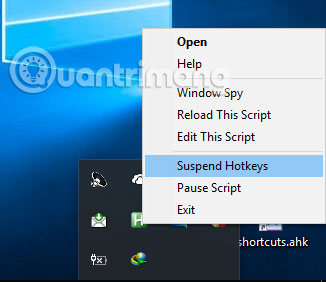
As you can see, all the above shared scripts are very basic but can make things easier. Besides easy things, you can perform all the complicated tasks like automatically emailing, managing the program, automating some Windows tasks, automatically correcting spelling mistakes, etc.
Hope these scripts will help you. If you are also using AutoHotKey, share your favorite scripts in the comment section below!
Good luck!
FAQ
What is 12 Scripts for Autohotkey Make Life Easier about?
It provides a structured overview of AutoHotKey, explains the main context, and highlights practical takeaways for readers.
Why does this topic matter?
Understanding the main concepts helps readers evaluate the issue, avoid common mistakes, and make better-informed decisions.
How should readers use this information?
Use the guidance as a practical starting point, confirm details that may have changed, and follow current product, safety, or security recommendations.
Related Articles
 10 AutoHotKey Scripts to Make Life Easier12 minutes read
 14 AutoHotkey Scripts You Can Use Every Day17 minutes read
 Work More Efficiently with the Free Autohotkey Tool13 minutes read
 7 Free Tools You Should Use Every Week to Make Your Online Life Easier8 minutes read
 35 Inventions That Make Your Life Easier6 minutes read
 How to Make the Script Executable Anywhere in Linux5 minutes read
Reader Comments 0
Sign in with email or Google to join the discussion.