Table of Contents
This guide provides a practical overview of 10 Strange and Interesting Facts About the Universe You May Not Have Heard, including its main features, benefits, limitations, and important considerations.
1. Why the neutron can spin at 600 rpm. The neutron star was born in a supernova explosion and is one of the few possible endings of star evolution.
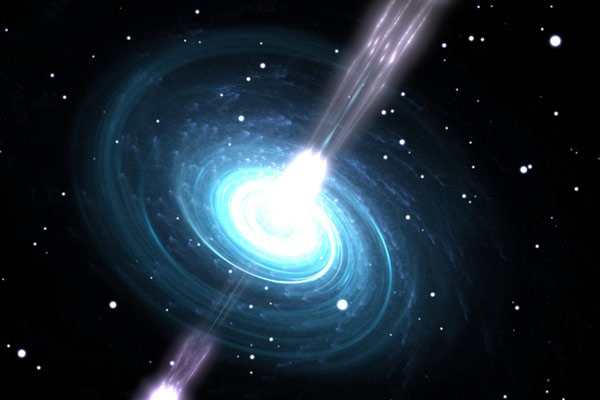
Influenced by a centripetal gravity, these massive stars collapse on their own cores, then spin extremely fast. After birth, neutron stars usually spin up to 60 revolutions per second but there are special cases, this speed can be increased to more than 600 revolutions / sec.
2. Contrary to Earth, there is no air in the vacuum of space, so sound waves cannot propagate. Therefore, there is always a strangely strange silence in outer space.
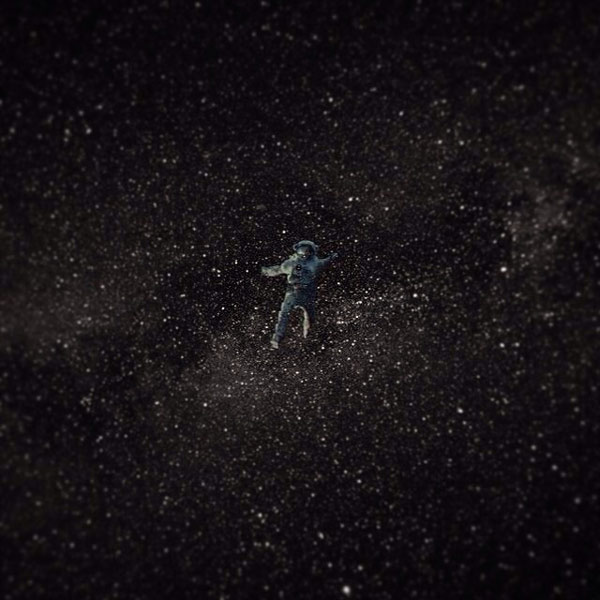
3. Exactly how many stars are in the universe? This is a question with no answers. According to NASA, the number of stars in this universe is immense, so many that it cannot be counted.
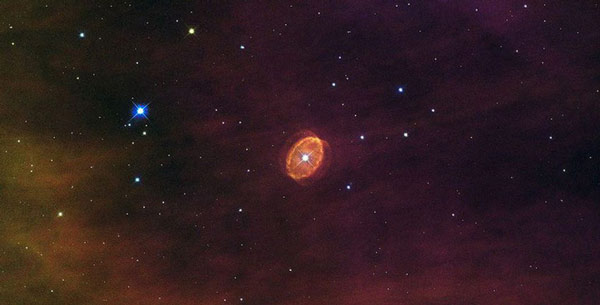
4. The footprint that astronauts leave on the Moon during the Apollo mission will probably last for at least 100 million more years. The reason is that in the universe there is no atmosphere, no wind or water to wash away or erase them.
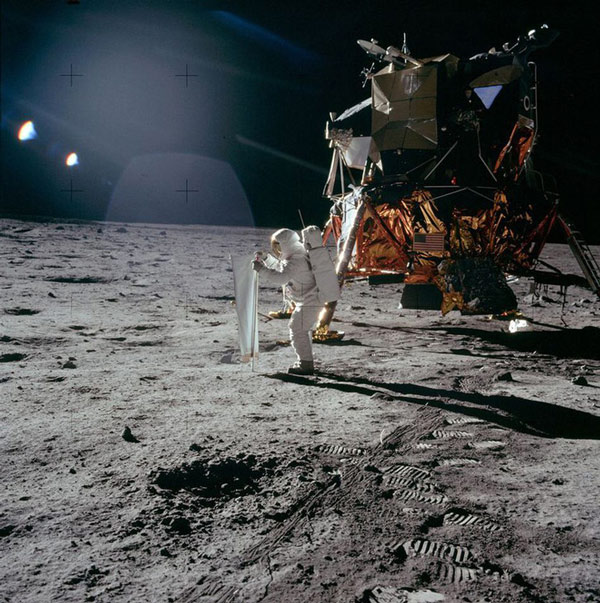
Perhaps the deposition of cosmic dust sucked onto the surface of the Moon will erase these traces but the process will take place very slowly.
5. The Sun accounts for 99% of the mass of the entire Solar System, which is why the star in the center of this Solar System dominates all the planets, sucking them around.
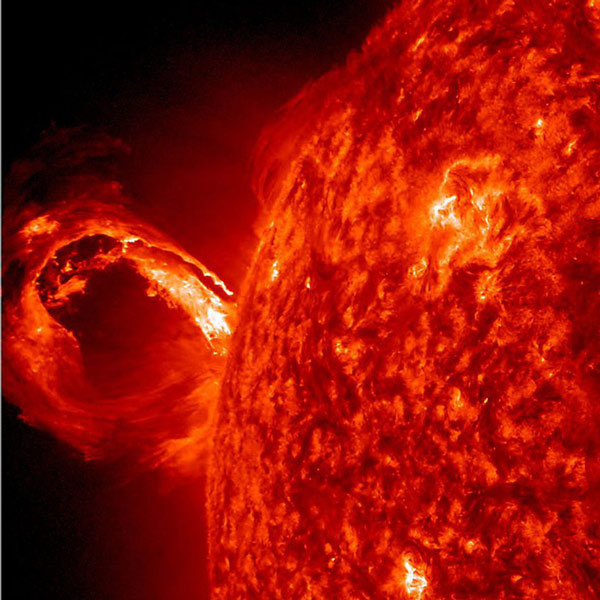
6. Every hour, the Sun shines down on Earth with more total energy than the entire planet's energy use throughout the year.
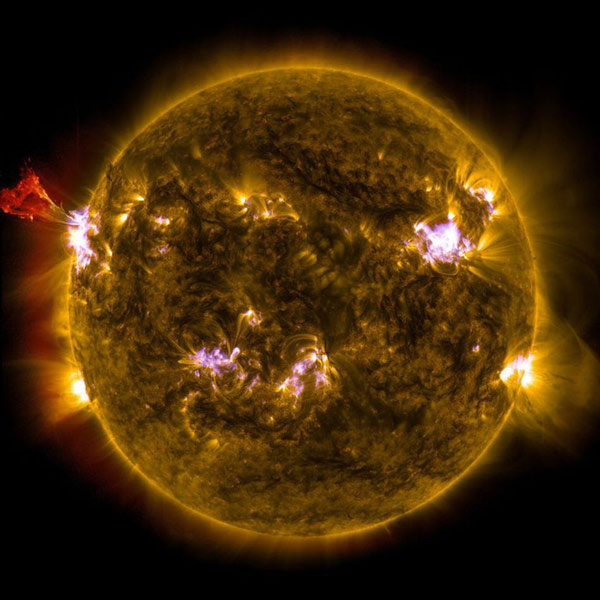
7. In space, if two metal pieces of the same element touch, they will stick together and stick together forever.
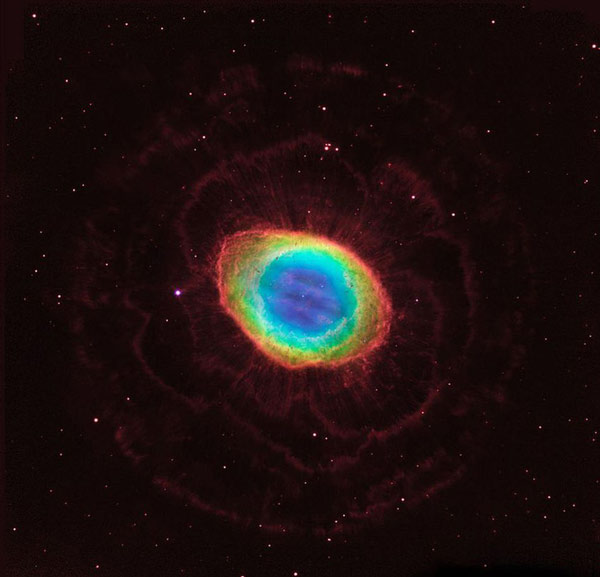
The reason is that the atoms on the two edges of the pure metal fragments are unsure where they belong, so they automatically associate with the nearby atoms, belong to the adjacent metal piece and attach to each other. This effect is called cold welding.
The Earth's atmosphere always has water and air molecules separating the two metal pieces, so there is never a cold welding reaction.
8. Ceres - the largest asteroid in our Solar System is a huge piece of space rock about 950km in diameter. The surface of Ceres is approximately the area of India or Argentina.
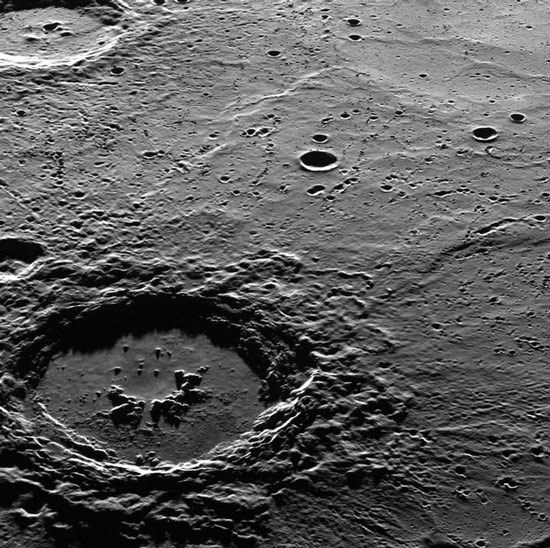
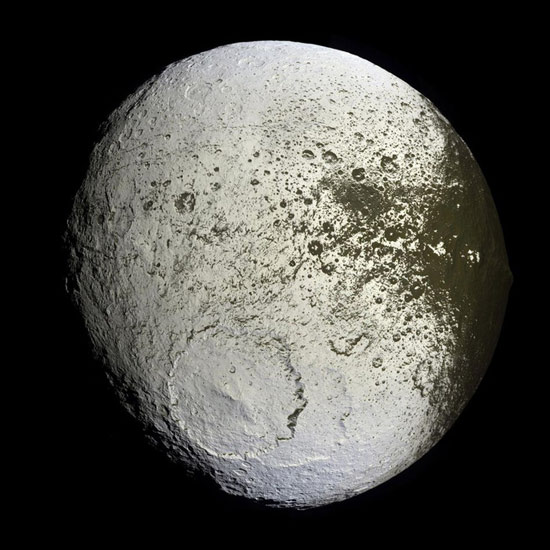
9. Iapetus, one of Saturn's moons has two distinct tones, with one side much darker than the other. Iapetus is the only Moon in the Solar System with this feature.
10. The location of the North Star will change over the next 13,000 years. At that time, Sao Bac Dau was no longer a North Star. Because the Earth's axis will gradually tilt to draw a cone, similar to the spinning top when it is about to fall, this motion is called "precession".
When this happens, the stellar position of the North Star from the Earth will shift, no longer standing still in the night sky in the northern hemisphere. At that time, we will have a new North Star.
FAQ
What should I know about 10 Strange and Interesting Facts About the Universe You May Not Have Heard?
Focus on the key features, requirements, limitations, and practical use cases explained in this guide.
How do I get the best results with 10 Strange and Interesting Facts About the Universe You May Not Have Heard?
Follow the recommended steps, use current software or information, confirm compatibility, and review settings before major changes.
Are there any risks or limitations?
Potential limitations depend on compatibility, data quality, cost, privacy, support, and how the product or method is used.
Related Articles
 10 Interesting Facts About the Earth You May Not Know12 minutes read
 40 Interesting Facts You Didn't Know About the Sun13 minutes read
 Strange Facts About Eels You May Not Know4 minutes read
 Top 19 Incredible Facts Not Everyone Knows: Interesting Facts11 minutes read
 14 Interesting Facts About the Universe Amaze You5 minutes read
 Interesting Facts About the Sun That You May Not Know15 minutes read
Reader Comments 0
Sign in with email or Google to join the discussion.