Table of Contents
The bright object next to the Moon changes from night to night and depends on your location. It may be Venus, Jupiter, Mars, Saturn, Mercury, or a bright star. The fastest reliable answer is to enter your location and time in a sky-map app, then match the object's direction and height above the horizon.
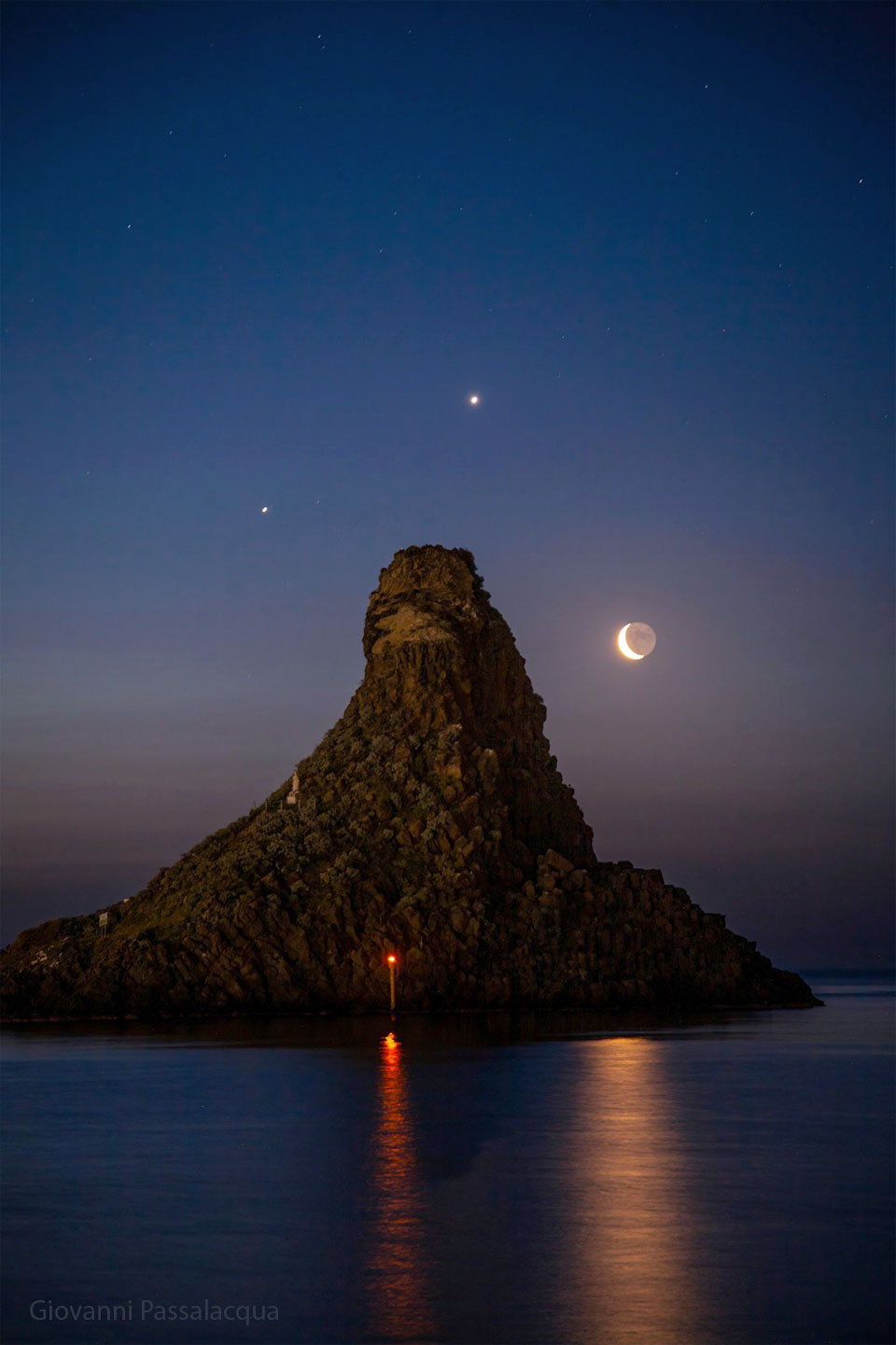
How to identify the object in two minutes
- Note the exact date, local time, and your city.
- Face the Moon and identify the direction with a compass: east, south, west, or a point between them.
- Open a location-aware sky map such as Stellarium Web and set it to the same time.
- Select the bright object shown closest to the Moon. Confirm its position relative to the Moon and horizon.
Do not rely on an article or social-media post written for a different country. A planet can be visible in one region while it is below the horizon, lost in daylight, or already set somewhere else.
Which planet is it likely to be?
| Object | Typical appearance | Useful clue |
|---|---|---|
| Venus | Extremely bright white point | Seen fairly low before sunrise or after sunset; never in the middle of the night |
| Jupiter | Very bright cream-white point | Can remain visible for much of the night; binoculars may show up to four nearby moons |
| Mars | Orange or reddish point | Brightness changes greatly as Earth and Mars move in their orbits |
| Saturn | Steady yellowish point | Less conspicuous than Venus or Jupiter; rings require a telescope |
| Mercury | Bright point low in twilight | Always stays relatively close to the Sun and can be difficult to spot |
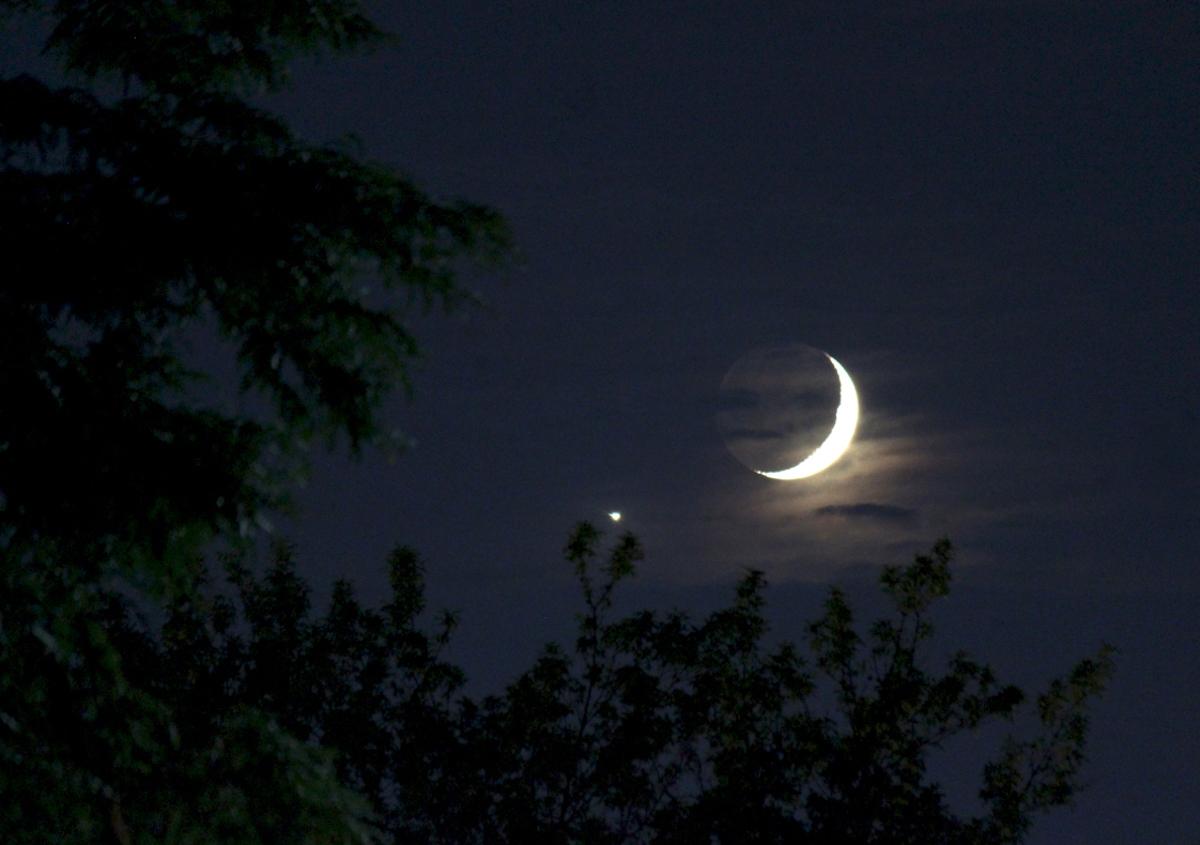
Color and brightness are only clues. Atmospheric haze, light pollution, and the object's height can change its appearance, so confirm the identification with a current chart.
It may be a star, not a planet
Bright stars such as Aldebaran, Antares, Pollux, Regulus, and Spica can also appear close to the Moon along its monthly path. Planets often twinkle less than stars because they present a small disk rather than a single point of light, but objects low on the horizon may flicker strongly. A sky map is more dependable than the “planets do not twinkle” rule.
Why the nearby object changes every night
The Moon moves eastward against the background stars by roughly 13 degrees per day, completing a circuit of the sky in about a month. Because the planets and Moon remain near the ecliptic—the path the Sun appears to trace—they regularly pass close together from our viewpoint.
This is an apparent meeting, often called a conjunction or close approach. The objects are still separated by enormous distances in space; they merely line up in nearly the same direction as seen from Earth.
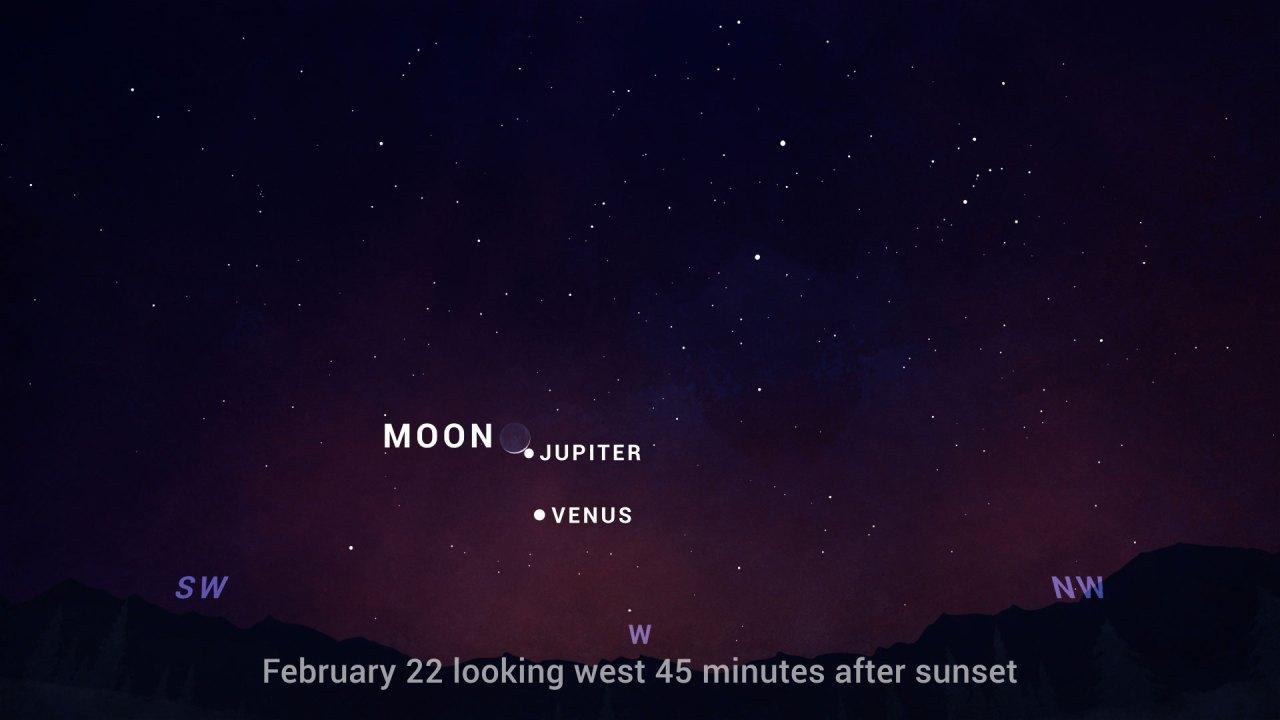
When and where to look
A waxing crescent is normally visible in the west after sunset, while a waning crescent appears in the east before sunrise. Other lunar phases remain visible for different portions of the night. Check local moonrise, moonset, sunrise, and sunset times before going out.
Choose an open viewpoint in the required direction. Buildings, trees, hills, haze, and clouds matter most when the Moon or planet is low. Never sweep the sky near the Sun with binoculars or a telescope; wait until the Sun is fully below the horizon or use equipment designed for safe solar observing.
Do you need a telescope?
No telescope is needed to see the Moon and a bright naked-eye planet. Binoculars can reveal lunar detail and sometimes Jupiter's four large Galilean moons. A small telescope can show Saturn's rings, the phases of Venus, or more detail on Jupiter, but use low magnification first to locate the target.
How to photograph the Moon and planet
- Stabilize the phone or camera on a tripod or solid surface.
- Turn off the flash and use a short self-timer to reduce shake.
- Tap or meter on the Moon, then lower exposure so the lunar disk is not a white blob.
- Use a wider composition to include the planet and a recognizable horizon.
- Avoid excessive digital zoom; crop afterward if necessary.
- Take several exposures because one setting rarely preserves both the bright Moon and the dimmer sky.
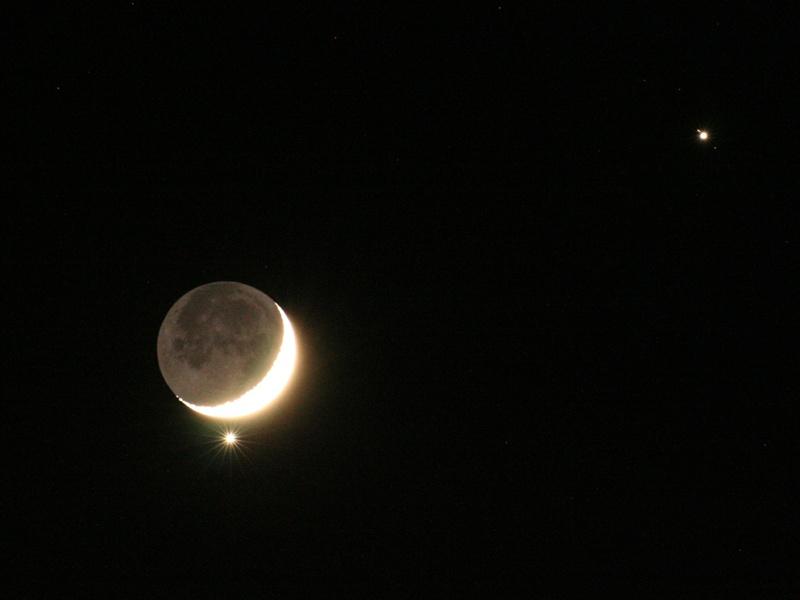
The key detail needed for an exact answer
To identify “the planet next to the Moon tonight,” supply your city, date, local time, and whether the object is above, below, left, or right of the Moon. Without those details, any fixed answer can become wrong within hours. A live sky map gives a more accurate result than a date-specific article left online after the event has passed.
Related Articles
 02h54 Tonight Will Appear Moonlight Moon Harvest - 8 New Years Once4 minutes read
 Discover Incredible Facts About the Moon3 minutes read
 The Extremely Rare Astronomical Phenomenon 'black Moon' Will Appear9 minutes read
 What Will the Earth Do if the Moon Suddenly Explodes4 minutes read
 Don't Miss the Biggest Super Moon View in 2017 in the Afternoon3 minutes read
 2 More Moons Found Around Jupiter3 minutes read
Reader Comments 0
Sign in with email or Google to join the discussion.