Table of Contents
Arginine may help reduce the acid-producing effects of dental plaque, according to a small study from Aarhus University. The researchers measured changes in biofilms grown in participants’ mouths. They did not demonstrate that the treatment prevented new cavities over time or establish safety for every age group.
How arginine can affect plaque acidity
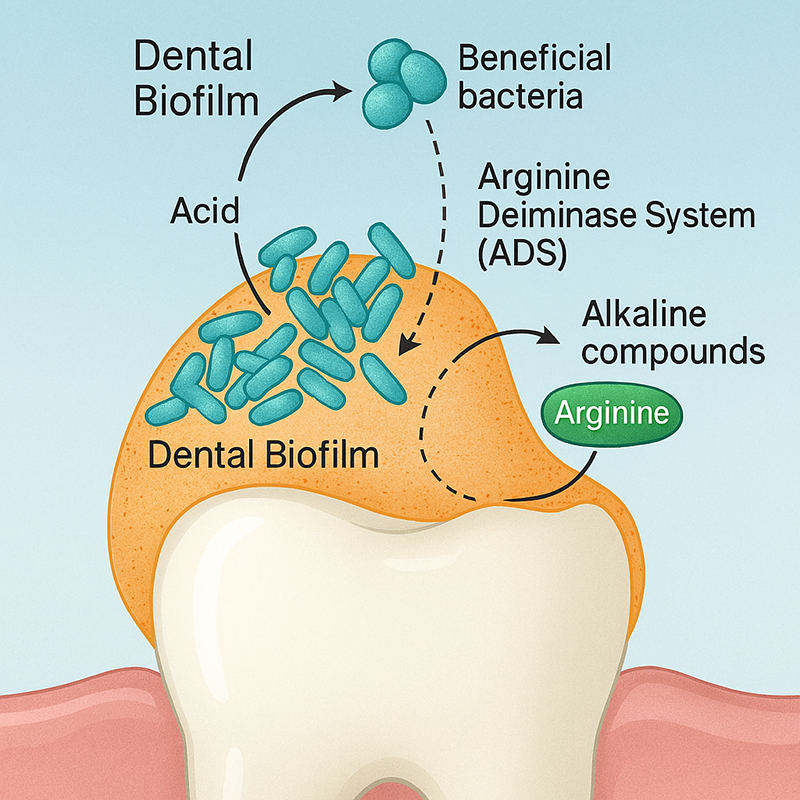
Plaque is a community of microbes attached to teeth within a surrounding matrix. Some bacteria break down dietary sugars and produce acids that can damage enamel. Other bacteria use an arginine deiminase system to convert arginine into alkaline products, helping counter acidification.
Arginine is an amino acid found naturally in the body, including saliva. Its natural occurrence does not by itself establish the effectiveness or safety of a toothpaste, mouthwash or supplement.
What the experiment measured
The study in the International Journal of Oral Science enrolled 12 adults with active tooth decay; 10 completed the protocol. Biofilms grew for four days on carriers mounted in mouth splints. The carriers were treated outside the mouth with sugar, followed by either arginine or a control solution.
The arginine-treated biofilms showed smaller acidity changes after sugar exposure, less carbohydrate matrix material and changes in the distribution of some matrix components. Responses varied between participants.
Microbial analysis found a reduction in one group of streptococci. Increases in several arginine-metabolizing groups were not statistically significant, so the findings do not establish a wholesale shift to a “healthier microbiome.”
What this means for everyday dental care
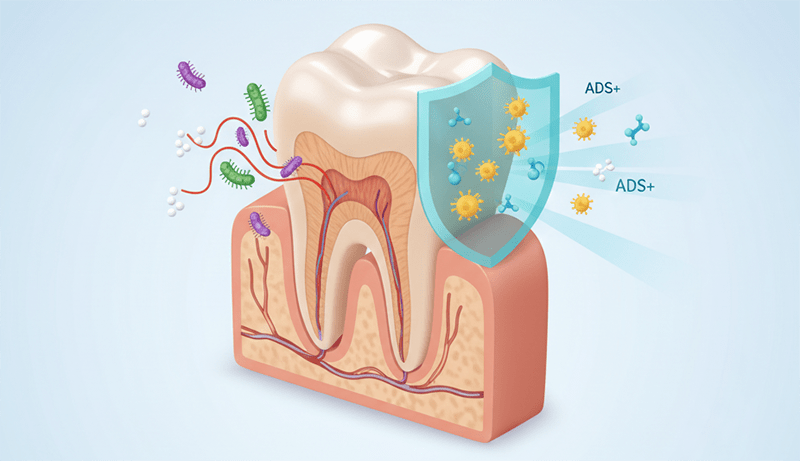
The experiment helps explain a possible anti-caries mechanism. Its short duration and small adult sample cannot establish long-term cavity prevention, compare all commercial formulations or support a blanket claim of safety for children.
Established care remains important. NHS guidance recommends fluoride toothpaste at least twice daily, cleaning between teeth, limiting sugary food and drinks, and dental check-ups at an interval advised by your dentist.
TipsMake has guides to toothbrushing technique and using dental floss. Ask your dental team whether an arginine-containing product is appropriate for your needs rather than substituting it for treatment of existing decay.
Read the original study for the treatment conditions, measurements and limitations.
Related Articles
 How does the process of tooth decay take place?
 Why are our teeth deep?
 The food is the culprit that causes bad breath tooth loss
 The dentist instructs how to brush teeth properly
 Close-up of the 'extreme' deep dental welding process of the Brazilian dentist
 Simple daily exercises to help reduce uric acid
Reader Comments 0
Sign in with email or Google to join the discussion.