Table of Contents
This guide provides a clear overview of desert railway, including the main concepts, practical steps, and common questions. Use it to understand the topic, compare the available options, and make a more informed decision.
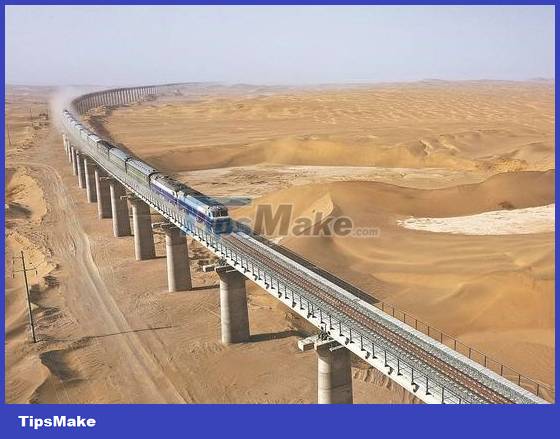
The Hoa Dien - Nhuoc Khuong railway line is located on the southern edge of the Taklimakan desert, the second largest shifting sand desert in the world, with an area slightly smaller than Germany.
Engineers faced huge challenges at the beginning of the construction of this railway because 65% of the length of this new railway, about 534km, passes through an area of sand and strong winds.
In the areas of flowing sand, engineers have built 5 viaducts with a total length of 49.7km for the train to run on, facilitating safe travel.
In addition, to protect the railway, engineers also used 50 million square meters of grass netting and planted 13 million trees that can withstand the desert environment.
To create the blueprint for this railway line through the sand desert, experts spent 2 tons of drawing paper.
For 7 months, from March to September every year, sandstorms cause flights to be canceled and highways closed. People living in the southern desert are almost isolated from the outside world. The completion of the Hoa Dien - Nhuoc Khuong railway will help people have uninterrupted access to traffic.
Conclusion
Understanding Desert Railway makes it easier to compare options, avoid common mistakes, and apply the information in this guide more effectively. Review the relevant requirements before making changes or choosing a solution.
FAQ
What is Desert Railway?
The Hoa Dien - Nhuoc Khuong railway line is located on the southern edge of the Taklimakan desert, the second largest shifting sand desert in the world, with an area slightly smaller than Germany.
Why is Desert Railway important?
Understanding Desert Railway helps you evaluate features, compatibility, performance, and potential limitations before you choose a product or follow a procedure.
What should you consider when using or choosing Desert Railway?
Consider your specific goal, compatibility requirements, available features, cost, security, and the practical recommendations described in this guide.
Related Articles
 The First Train and Model Station of Cat Linh - Ha Dong Railway4 minutes read
 The World's Tallest Railway Train Climbed the Ridge3 minutes read
 China Applies Military Hypersonic Technology to High-speed Trains Explained8 minutes read
 Stun with the Speed of Changing the Rails of a 177m Long Super Train2 minutes read
 Death Vortex - a Period of Foretold Death5 minutes read
 China Has Just Built the World's Largest Air Purifier to Solve the Problem of Dust4 minutes read
Reader Comments 0
Sign in with email or Google to join the discussion.