Table of Contents
Effective Perplexity prompts specify the decision or deliverable, define the scope, request appropriate sources, and describe the output format. The goal is not to use elaborate “prompt engineering” language; it is to remove ambiguity and make the answer easier to verify.
Start with a clear research question
Replace a broad topic such as electric cars with a question that identifies the audience, location, time range, and decision:
Compare the total five-year ownership costs of three compact electric cars available in India. Use current manufacturer pricing and government fee sources. State assumptions for annual distance, electricity price, insurance, and resale value. Present a table and flag any missing data.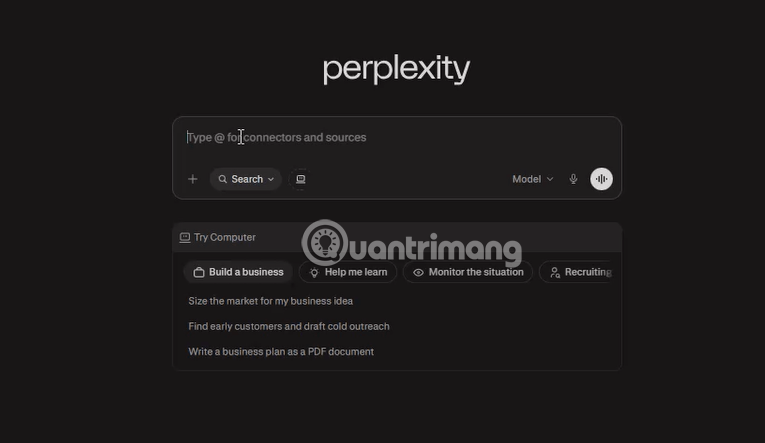
Use the CTFR structure
- Context: who you are, what prompted the question, and which constraints matter.
- Task: the specific analysis, comparison, explanation, or extraction required.
- Format: table, checklist, brief, timeline, code, or another useful structure.
- Requirements: date range, geography, source types, exclusions, length, and uncertainty handling.
You do not need to label every section. A natural prompt that contains these elements works just as well:
I manage a 20-person remote software team. Compare three password managers that support SSO and SCIM. Use current vendor documentation for features and pricing, note which prices require a quote, and include security limitations. Return a short recommendation followed by a comparison table with citations.Attach files only when they add necessary context
Use the file or tools control to upload a document, image, or dataset supported by your plan. Tell Perplexity exactly how to use it:
Using the attached contract, list each renewal, termination, and notice deadline. Quote no more than one short clause per item, cite the page, and separate explicit terms from your interpretation. Do not provide legal advice.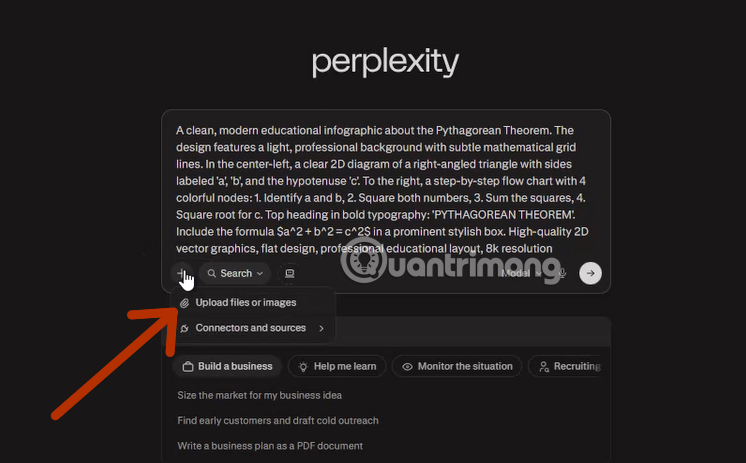
Do not upload confidential, personal, regulated, or copyrighted material unless your account's data controls and organizational policy permit it. Check retention and model-provider settings in enterprise workspaces.
Choose Search or Research based on the job
Use normal Search for a focused question or a quick fact check. Use Research when the task needs many sources, cross-checking, document analysis, calculations, or a structured report. Current Research mode can ask clarifying questions and show progress while it works.
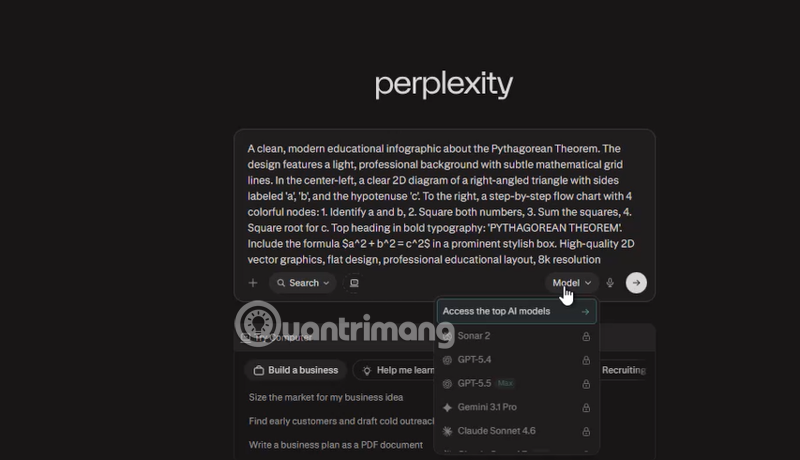
Model availability depends on the plan, region, mode, and workspace policy. For everyday Search, the automatic Best option is a reasonable default. Research selects its own models, so manually choosing a Search model is not always relevant.
Ask for source quality, not just more citations
A long citation list can still be weak. Specify the source hierarchy:
Explain the current eligibility rules. Prioritize the regulator's official guidance and legislation. Use reputable secondary analysis only to clarify ambiguous wording. Exclude unsourced summaries and note any conflict between sources.Open the sources and check that each citation supports the nearby claim. Verify dates, units, geography, and whether a search result describes a proposal or an enacted rule. For high-stakes medical, legal, financial, or safety decisions, use the answer as research assistance and consult an appropriate professional or authority.
Break complex work into stages
- Scope: ask for a research plan, key terms, and likely primary sources.
- Collect: gather evidence within the agreed date and geography.
- Analyze: compare sources, calculate values, and identify uncertainty.
- Deliver: produce the requested format with citations.
- Audit: ask for unsupported claims, missing sources, and assumptions.
A useful audit follow-up is: List every factual claim in the answer that is not directly supported by a cited source. Check whether any citation is outdated, secondary when a primary source exists, or about a different country.
Prompt templates
Product comparison
Compare [products] for [user/use case] in [country]. Evaluate [criteria]. Use current official specifications and pricing, then independent testing for performance. Separate facts from recommendations and present a table with citations.Technical troubleshooting
Diagnose [error] in [software/version/environment]. Start with the most likely causes, give reversible checks in order, and cite official documentation. Do not suggest destructive commands without explaining impact and backup steps.Literature or evidence review
Review evidence on [question] from [date range]. Prioritize peer-reviewed systematic reviews and primary studies. Describe study populations and limitations, distinguish correlation from causation, and identify where evidence is mixed.Current-event brief
Summarize what happened regarding [event]. Distinguish event time from publication time, build a dated timeline, use primary statements plus reporting from multiple independent outlets, and label claims that remain unverified.Common prompt problems
| Weak instruction | Better instruction |
|---|---|
| Tell me everything about X. | Answer the three questions that affect my decision about X. |
| Use reliable sources. | Prioritize official records and peer-reviewed research; explain any exceptions. |
| Give the latest information. | Use sources published or updated after [date], and state the cutoff. |
| Write an SEO article. | Create an evidence-based outline for [reader intent]; do not invent statistics or pad it with FAQs. |
| Be accurate. | Flag missing data, conflicting sources, and assumptions; do not fill gaps with estimates. |
Perplexity's features and model list change frequently. Its Research mode guide and current model page are better references than a fixed list in a prompt tutorial.
Related Articles
 A 'Universal' Prompt for AI Beginners5 minutes read
 Write Efficient Prompts Using the CREATE Formula (Applicable to All AI)6 minutes read
 How to Write Better AI Prompts: Task, Context, Format, and Role6 minutes read
 Tips for creating professional documents, slides,8 minutes read
 How to Create API Key Perplexity8 minutes read
 Guide to creating better AI images: 4 steps to writing8 minutes read
Reader Comments 0
Sign in with email or Google to join the discussion.