Table of Contents
The name of the storms in Vietnam is set according to its ordinal number during the year but in the world they are often named. In the Pacific Northwest and the South China Sea, the names of the storms are taken alternately from the list proposed by the countries in the region.
Key Facts About Storm
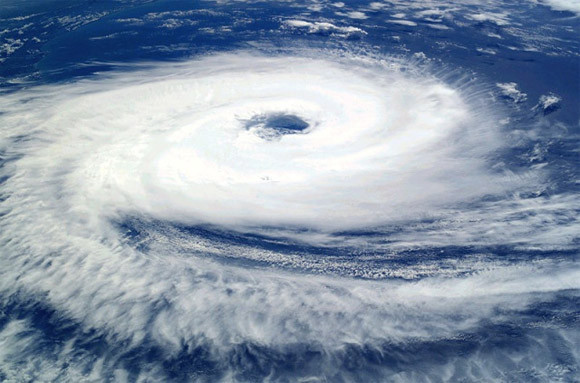 Ha Long (Halong) storm landed in Japan in August 2014.
There is a list of 140 special names for storms selected by countries in the region such as China, Japan, Vietnam and Cambodia. When there is a storm, the old names will not be selected and replaced by a new name. The number of names that can be used is unlimited for one calendar year.
Only tropical cyclones at storm level or above can be named and taken sequentially from top to bottom. For example, if the first storm of the year is called Cimaron, then the next storm will be named Jebi.
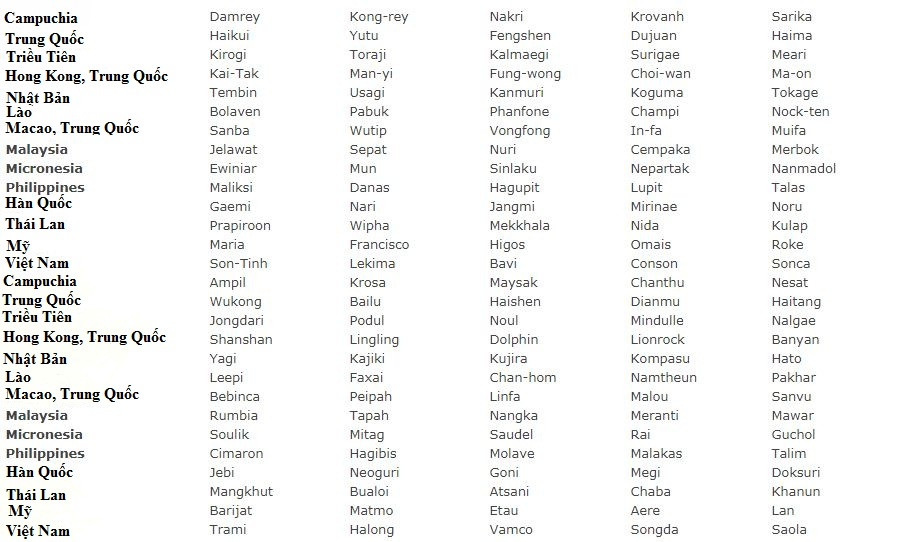 List of storm names in the Pacific Northwest and South China Sea.(Photo: WMO.)
The most recent storm was named Sonca, the next storm in the Pacific and South China Sea will be named Nesat.
Why Storm Matters
If in that year, the list of names of storms is used up, another list will be added with 10 names and given before the storm season begins.
The Philippines is also one of the countries that give names to international storms. But when a tropical cyclone entered the country's surveillance area, the Philippine Atmospheric, Geophysical and Astronomical Services Administration (PAGASA) will use its own list of storm names with 25 names to give to it.
A tropical cyclone in the Pacific Northwest with winds of about 73-148 km / h will be classified as a storm. The storms with winds of 149 km / h or more will be classified as super typhoons.
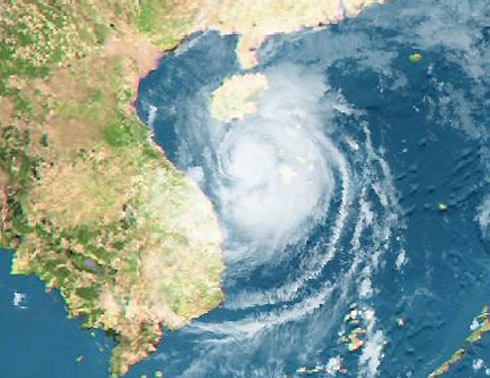 Son Tinh storm (Sontinh) formed in the East Sea in October 2012.
The purpose is to name tropical cyclone to make it easier to alert. Clearly, calling the storms by name is easy to remember, easy to use in exchanging information and attracting the attention of the community for storm warnings more than using terms and numbering.
The name of a storm will be removed from the list and replaced by another name when it causes too many human and property casualties. In the history of the names of famous storms were removed in this way Tracy (Darwin, 1974), Mitch (Honduras, 1998), Katrina (USA, 2005), Sandy (USA, 2012), Haiyan (Philippines, 2013).
10 names of the Vietnam Meteorological Administration are selected by the Storm Committee of the region including: Conson, Saola, Songda, Sontinh, Lekima, Sonca, Bavi, Tramy, Halong, Vamco.
FAQ
How to Name Storms in the Pacific?
In the Pacific Northwest and the South China Sea, the names of the storms are taken alternately from the list proposed by the countries in the region.
What makes storm notable?
When there is a storm, the old names will not be selected and replaced by a new name.
What are the key facts about storm?
Why Storm Matters If in that year, the list of names of storms is used up, another list will be added with 10 names and given before the storm season begins.
Related Articles
 Why Do Storms Around the World Often Have Women's Names?4 minutes read
 What Happens When Two Storms Clash: Twin Storms1 minutes read
 Stunned with Images of Three Major Storms in the Ocean Recorded by the ISS Space Station4 minutes read
 Ways Solar Storms Could Destroy Life on Earth: Explained6 minutes read
 Interesting Facts About the Pacific Ocean That Not Everyone Knows6 minutes read
 Sitting and Playing Games Under a Tree in Stormy Weather, 23 minutes read
Reader Comments 0
Sign in with email or Google to join the discussion.