Table of Contents
This terrifying creature can fly, hide and disappear and suck blood like "vampire" in novels and movies. This article explains the key facts and context behind devil bats.
It is a devil bat, one of the vertebrate animals that survives by specializing in sucking blood from others.
Evil bats are animals that live in colonies in numbers of thousands in dark caves in Mexico, Central America and South America.
Scary creatures live in cattle and human blood.
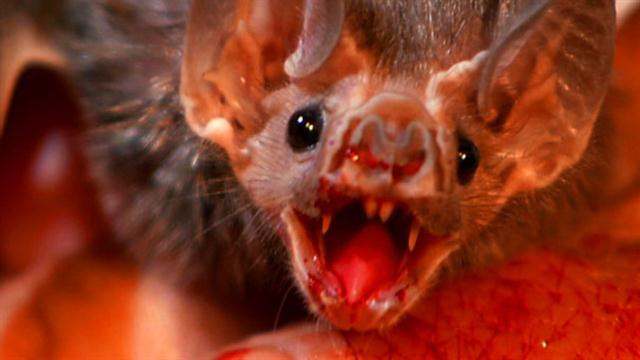
In the daytime they spend most of their time sleeping, when the night falls they begin their feeding journey. They move in flocks to form a frightening dark cloud in the night sky. Unlike other bats, fruits, insects are not their choice. Evil bat species often go to farms where there is a plentiful source of food for them: Animal blood .
Even if not careful, humans will become their victims. According to calculations,. A hundred evil bats will consume the blood of about 25 cows a year. .
Devil bats are extremely sensitive to low frequency sounds so they can easily detect prey, even they can detect humans from the sound of the breath they emit.
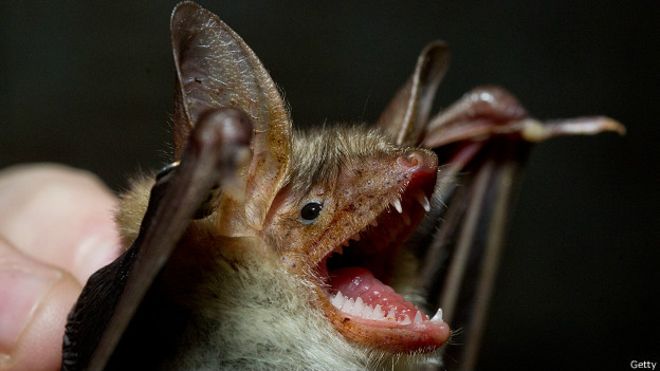
When they detect their prey, they will fly from the ground up with lightning speed. A bat can reach speeds of more than 1m / s. After clinging to the victim, they will use heat-sensing cells in the nose to find out exactly the venous hemorrhoids. Bats will push the prey's hair out, use the tongue to lick off the area and then use their sharp teeth to plug into the blood vessels.
In the drool of evil bats, there is a substance called draculin, which causes the vein of the prey to open and the blood does not freeze to help them suck blood easily.
Close-up of demon-sucking bats fresh blood.
The time they complete their "meal" takes about 30 minutes. The stomachs of the ultra-elastic elastic bat help them absorb more blood. After eating, the amount of bats in a bat can double, when they bulge like mosquitoes. With so much volume and size, evil bats can still leave quickly thanks to the very good ability of 2m / s.
Bats of evil bats can cause infections and infectious diseases for cattle and humans.
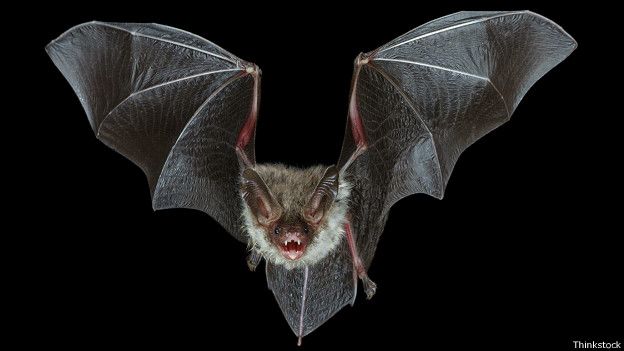
Food sharing habits
But not every bat can get "food", usually 1/3 of adult bats and 1/10 of young bats must starve. This is frightening for them because if evil bats don't eat for three consecutive nights, they will lose 1/4 of their body weight and then life will be threatened.
The spirit of solidarity and sharing has helped bats to not get food out of the danger of starvation. Every night, the bats lucky enough to have a "meal" will share blood with the hungry in the herd by vomiting the frozen "packages" of blood. A great community spirit in the natural world.
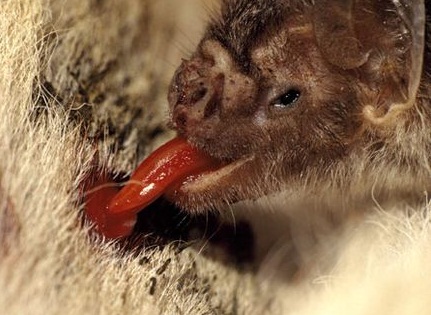
It is the person who specializes in sucking blood and is also sucked by others.
Even this evil bat is sucked into blood, and the "culprit" is a wingless blood fly called. Penicillidia . This fly specializes in parasitic life on demonic bats.
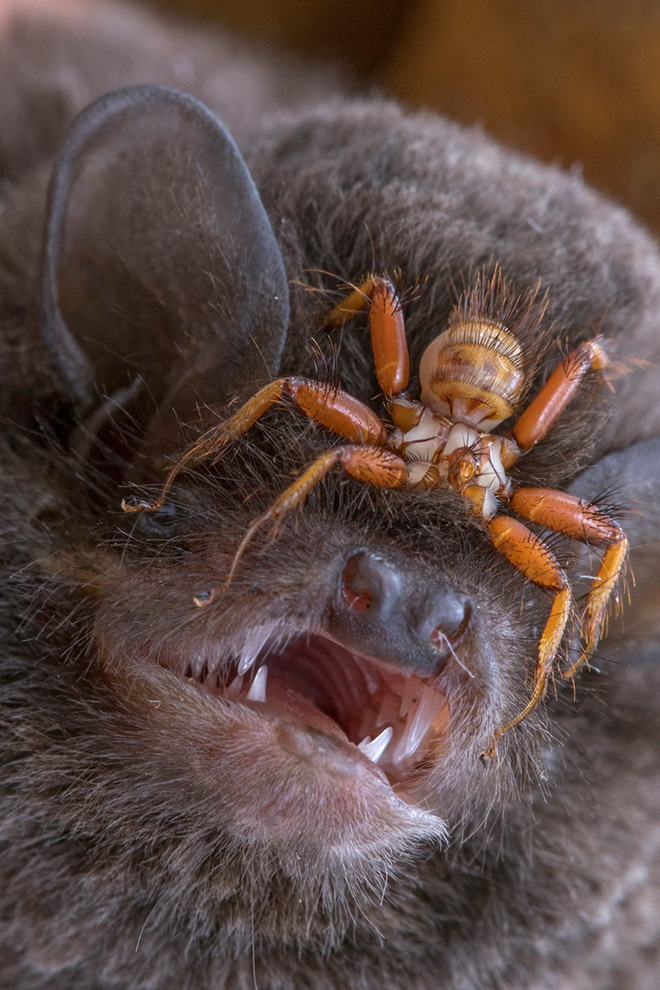 Evil bats are also sucked by the parasitic flies on their bodies.(Artwork: internet).
FAQ
How Real Is the Blood-sucking Monster on the Earth Scary?
A hundred evil bats will consume the blood of about 25 cows a year.
What makes devil bats notable?
Close-up of demon-sucking bats fresh blood.
What are the key facts about devil bats?
Bats of evil bats can cause infections and infectious diseases for cattle and humans.
Related Articles
 Scientists Are About to Teach Mosquitoes without Human Blood3 minutes read
 Loch Ness Lake Monster and the Most Controversial Evidence5 minutes read
 3 Observatories Catch Extremely Strange Radio Rays from a 12.6 Billion4 minutes read
 The Most Dangerous Insects in Asia: Complete Guide6 minutes read
 Why Is the Moon Red Like Blood When the Total Lunar Eclipse Occurs3 minutes read
 Astronomers Capture the Sun's Striking Face in Detail4 minutes read
Reader Comments 0
Sign in with email or Google to join the discussion.