Dominator 3, one of the most advanced storm chasers available today, looks more like a tank than a truck, can withstand winds of more than 516 km/h and is used for meteorological research.
Dominator 3 is the latest version of the Dominator series developed by meteorologist Reed Timmer.
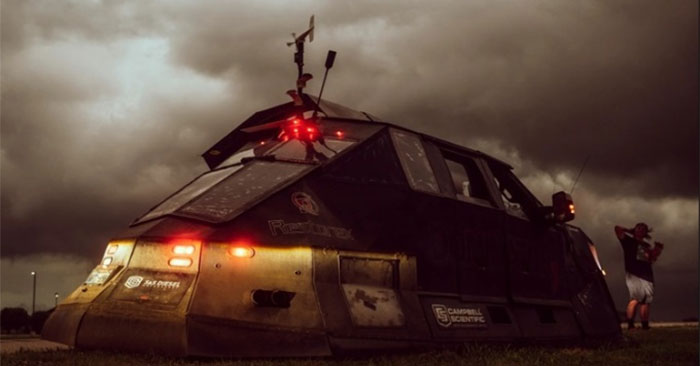
Dominator 3 is considered a technological wonder built on the Ford F340 Super Duty chassis. This "fortress on wheels" weighs more than 4,500 kg and can withstand winds of up to 516.6 km/h. To protect the safety of people in the vehicle in the harshest conditions, the vehicle is equipped with a series of design innovations including a 7.6 - 10 cm thick steel and polycarbonate shell, nearly 4 cm thick bulletproof glass, a hydraulic system that can lower the vehicle, and 360 kg gull-wing doors to protect the top. In addition, the vehicle also has 20 cm long spikes that can anchor the vehicle.
Dominator 3 is both a storm chaser and a mobile science laboratory. Inside the vehicle are anemometers, barometers, thermometers, hygrometers, rain gauges, and dew point sensors, allowing it to collect a wide range of data on every aspect of the storm. The data is analyzed in real time on-board and sent to research facilities, helping to improve weather models and severe weather warnings.
The Dominator 3's most important piece of equipment is a rocket launcher that deploys the "Dominator Skyfall" sensor directly into the vortex's vortex. The rocket launches through a manually operated firing system, using a stabilizer bar to set its flight path. Once it passes through the vortex's protective barrier, it releases its parachute-equipped sensor package. As it spins inside the vortex, the sensor collects pressure, humidity, and acceleration data, providing an unprecedented view of the storm's inner workings.
Hurricane hunters like Dominator 3, through close contact with tornadoes and severe storms, can provide information that cannot be obtained through remote observations, becoming an indispensable part of meteorological research, complementing data collected by meteorological stations and satellites.




Reader Comments 0
Sign in with email or Google to join the discussion.