Table of Contents
Security Flaw Discovered in Bluetooth Chip Used by a Billion Devices Worldwide is easier to approach with a clear overview and reliable steps. This guide organizes the essential information, highlights practical details, and explains what to check along the way.
Key Takeaways
- Review backdoor in ESP32.
- Explore potential risks.
- Follow the recommended steps in order to avoid common mistakes with security flaw discovered in bluetooth chip used by a billion devices worldwide.
Backdoor in ESP32
In a presentation at RootedCON, Tarlogic researchers explained that interest in Bluetooth security research has declined, but not because the protocol or its implementations have become more secure.
Instead, most of the attacks presented last year had no working tools, were incompatible with mainstream hardware, and used outdated or unmaintained tools that are largely incompatible with modern systems.
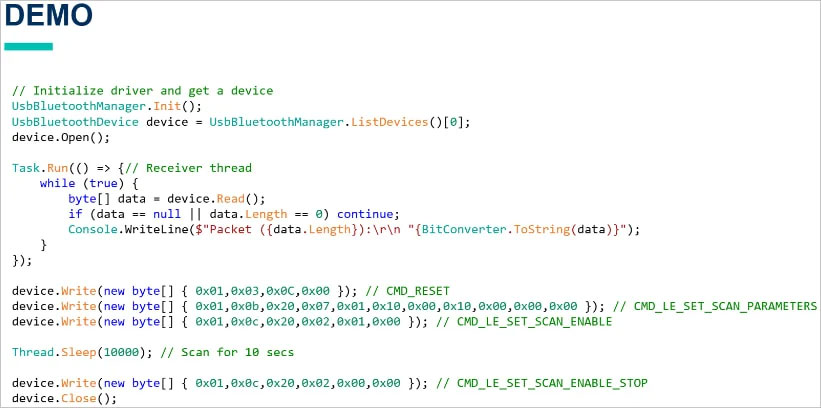
Tarlogic has developed a new C-based, hardware-independent and cross-platform USB Bluetooth driver that allows direct access to the hardware without relying on operating system specific APIs.
Armed with this new tool, which allows raw access to Bluetooth traffic, Tarlogic discovered hidden vendor-specific commands (Opcode 0x3F) in the ESP32 Bluetooth firmware, allowing low-level control of Bluetooth functions.
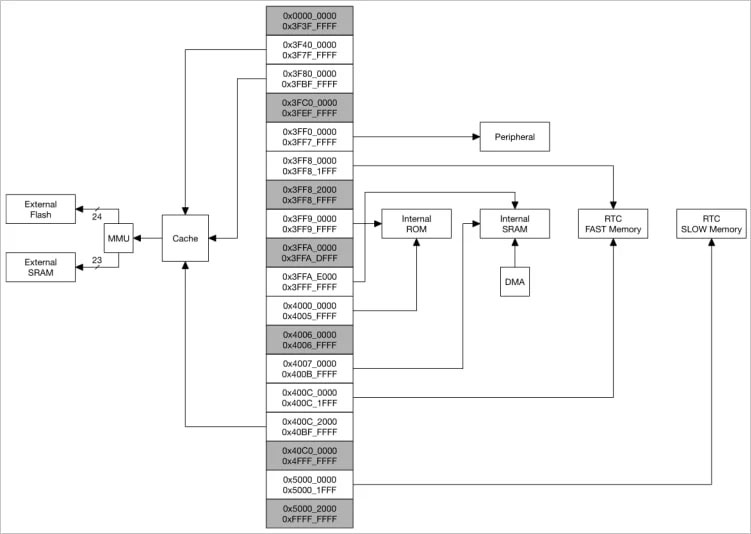
In total, they found 29 undocumented commands, collectively described as a 'backdoor,' that can be abused for memory manipulation (read/write RAM and Flash), MAC address spoofing (device spoofing), and LMP/LLCP packet injection. The issue is currently tracked under the identifier CVE-2025-27840.
Potential Risks
Risks arising from these commands include malicious deployment at the OEM level and supply chain attacks.
Depending on how the Bluetooth stack handles HCI commands on the device, remote backdoor exploitation may be possible via malicious firmware or a spoofed Bluetooth connection.
This is especially true if the attacker already has root access, installs malware, or pushes a malicious update to the device, opening up low-level access.
However, in general, having physical access to a device's USB or UART interface is much more dangerous and a more realistic attack scenario.
" In a scenario where you can compromise an IoT device running an ESP32 chip, you would be able to hide an APT (Advanced Persistent Threat) in the ESP memory and perform Bluetooth (or Wi-Fi) attacks against other devices, while also controlling the device over Wi-Fi/Bluetooth," the team explains. " Our discovery would allow full control of the ESP32 chip and maintain persistence in the chip through commands that allow modification of RAM and Flash. Additionally, with persistence in the chip, it would be possible to spread to other devices because ESP32 allows for advanced Bluetooth attacks. "
Final Thoughts
The most reliable way to handle security flaw discovered in bluetooth chip used by a billion devices worldwide is to follow the process in order, verify each important setting, and test the result before moving on. Use the guidance above as a practical reference, then adjust the details for your device, software version, or specific goal.
FAQ
What should I know first about Security Flaw Discovered in Bluetooth Chip Used by a Billion Devices Worldwide?
The ESP32 is an extremely popular low-cost chip from Chinese manufacturer Espressif, which is estimated to be used in over 1 billion devices worldwide by 2023, and contains an undocumented "backdoor" that can be exploited for attacks.
How do I get the best results with Security Flaw Discovered in Bluetooth Chip Used by a Billion Devices Worldwide?
Use current software or equipment, follow the steps in order, review the recommended settings, and test one change at a time so you can identify what improves the result.
What should I do if Security Flaw Discovered in Bluetooth Chip Used by a Billion Devices Worldwide doesn't work as expected?
Check compatibility, permissions, connectivity, and version-specific settings. Restart the relevant device or app, then repeat the process carefully before trying a more advanced fix.
Related Articles
 Overview of Vulnerabilities on Intel, AMD, ARM Chips: Meltdown and Specter5 minutes read
 A New Security Flaw Allowed to Impersonate Bluetooth Peripherals4 minutes read
 New Series of Bluetooth Vulnerabilities Discovered That4 minutes read
 iPhone and Android Smartphone Series Stick with Serious Bluetooth Security Error3 minutes read
 Flaw Cannot Be Patched: Complete Guide5 minutes read
 What Is Bluetooth? Useful Information About Bluetooth Technology15 minutes read
Reader Comments 0
Sign in with email or Google to join the discussion.