Table of Contents
This updated guide examines !! == and! ==== What Is the Difference in Javascript? and organizes the essential facts, background, and practical takeaways in clear American English.
Today's article will help readers learn about 2 ! = And ! == operators in JavaScript.
Operator! =
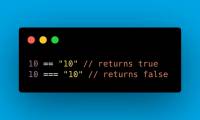
The inequality ( ! = ) Operator is the opposite of the equality ( == ) operator. It means 'Not Equal' and returns True , when equality returns False and vice versa.
Like the == operator, the ! = Operator will convert data types of values while comparing.
Example 1! = '1' will return False because the data type conversion took place and 1 and '1' are considered equal.
Operator! ==
The strict inequality ( ! == ) operator is the opposite of the strict equality operator ( === ). It means 'Strictly Not Equal' and returns True when strict equality returns False and vice versa.
Like the === operator, the ! == operator will not convert data types.
Example 1! == '1' will return True because 1 is an integer and '1' is a character and no data type conversion takes place.
Illustration:
Output:
 Example output
FAQ
What is !! == and! ==== What Is the Difference in Javascript about?
It provides a structured overview of JavaScript, explains the main context, and highlights practical takeaways for readers.
Why does this topic matter?
Understanding the main concepts helps readers evaluate the issue, avoid common mistakes, and make better-informed decisions.
How should readers use this information?
Use the guidance as a practical starting point, confirm details that may have changed, and follow current product, safety, or security recommendations.
Related Articles
 What Is the Difference Between Java and JavaScript?5 minutes read
 Syntax of JavaScript1 minutes read
 What Is JavaScript? Can the Internet Exist Without JavaScript?11 minutes read
 The Difference Between the ==== and ====== Operators in2 minutes read
 Javascript vs. Python: Key Differences7 minutes read
 How to Running Node JavaScript Code in n8n8 minutes read
Reader Comments 0
Sign in with email or Google to join the discussion.