Table of Contents
The best bed position is the one that lets you move around the room comfortably and rest without avoidable light, noise, or drafts. Start by testing the headboard against a clear wall, then check access to doors, windows, and storage. No single arrangement suits every bedroom.
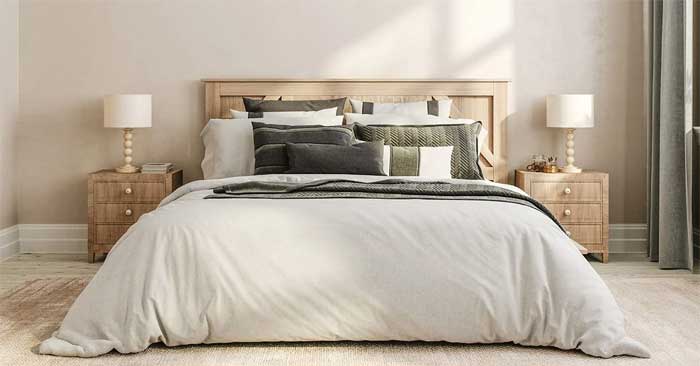
Why bed placement matters
The bed is usually the largest item in the bedroom, so its position shapes the space left for walking, dressing, and opening drawers. It also changes your exposure to window light, traffic through the doorway, and nearby heating or cooling outlets.
Layout alone does not guarantee better sleep. The NHLBI's sleep guidance recommends a quiet, cool, dark bedroom. Use placement to support those conditions rather than treating a compass direction or design rule as a medical recommendation.
Good starting points for a layout
A headboard against a clear wall
A wall without doors or windows is a useful first choice. Centering the bed can make space for bedside tables, but symmetry is optional. Check that both sleepers can get in and out easily and that nearby drawers open fully.
A view of the doorway
Some people prefer being able to see the entrance from bed. In feng shui, a position with a view of the door, without being directly in its line, is often called the command position. This is a design tradition and personal preference, not proof of a health benefit. It does not require turning the bed diagonally.
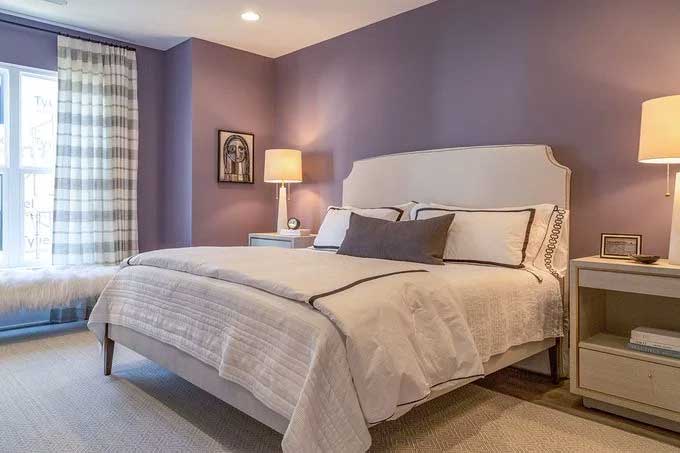
A position that fits your routine
Measure the bed frame, not just the mattress. Mark its footprint on the floor before moving furniture. Walk from the door to the bed, wardrobe, and window, and test all doors and drawers. In a small room, practical access may matter more than matching bedside tables. See arranging a small bedroom for more layout ideas.
Positions that need extra checks
Under a window
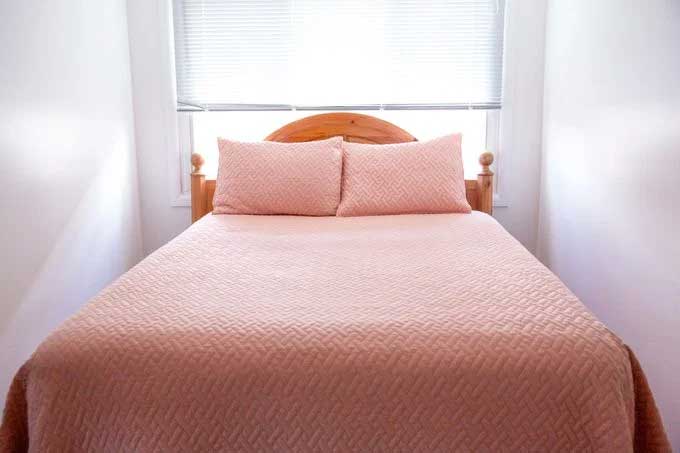
A window position can work when other walls are unavailable. Check for drafts, outside noise, morning light, and whether the headboard prevents the window from opening. Keep access clear and keep blind cords away from the bed. Choose window coverings and a headboard that suit the actual window rather than assuming a low headboard always solves the problem.
In line with the entrance
This is not automatically a bad position. It may expose the bed to hallway light or reduce privacy, but the main practical concern is whether it obstructs the walking route. Do not add a bench, screen, or bookcase if it makes that route cramped.
In a corner or at an angle
A corner can free floor space for a single sleeper, though making the bed and reaching the wall side can become harder. An angled bed may leave awkward unused space behind the headboard. Compare both arrangements with a straight wall placement before committing.
For an unusual room, use a simple floor plan and try two or three layouts. More ideas for narrow spaces may help, but keep the final choice tied to usable paths, storage access, and your own comfort.
Related Articles
 The meticulous coin-shaped works make the viewers look surprised
 Funny test: Select the location of the egg to reveal your strengths
 Where is the best place in the room for a smart speaker?
 YouTube starts using AI to turn ads into an unavoidable 'trap'
 TV picture settings to improve movies: mode, brightness and motion
 Damaged skin permanently because of laptop placement on lap
Reader Comments 0
Sign in with email or Google to join the discussion.