Table of Contents
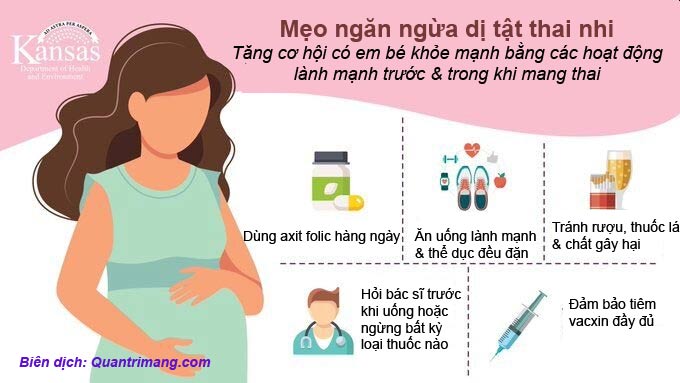
Taking folic acid before pregnancy, reviewing your medicines and vaccines with a clinician, and avoiding alcohol and tobacco during pregnancy can lower the risk of some birth defects. Birth defects can still occur even when you take these steps.

Start folic acid before pregnancy
CDC recommends 400 micrograms (mcg) of folic acid daily for anyone who could become pregnant. If you’re planning a pregnancy, start at least one month before trying. Folic acid helps prevent neural tube defects, which affect the developing brain or spine early in pregnancy. Check the supplement label for the amount of folic acid per serving. Ask your clinician if you need a different dose, especially if you’ve had a pregnancy affected by a neural tube defect.
Bring a medication list to a preconception visit
List your prescriptions, over-the-counter medicines, vitamins, and herbal supplements. Your clinician can review which ones to continue and whether any changes should happen before pregnancy. Check with them before starting or stopping a medicine. Mention any personal or family history of birth defects so they can advise you about genetic counseling if appropriate.
Review your vaccines
Bring your vaccination record if you have it. Ask which vaccines you need before pregnancy and which are recommended during pregnancy. The timing depends on the vaccine and your health history.
Plan care for ongoing health conditions
If you have diabetes or another chronic condition, ask your care team what to address before trying to conceive and how your care may change during pregnancy. A preconception visit is also a chance to discuss weight goals that fit your health and circumstances.
Avoid alcohol and nicotine during pregnancy
There’s no known safe amount of alcohol during pregnancy. Avoid smoking and vaping, and ask your care team about support if quitting is difficult. If you take opioids or are concerned about substance use, talk with your clinician promptly so you can make a safe care plan.

If you’re already pregnant, bring these questions to your next prenatal visit. See the CDC guidance on reducing birth defect risk for more information.
Related Articles
 Intelligent robot implants to treat rare birth defects in the esophagus
 Is it really effective to lose belly fat with a hot pack after birth?
 Vitamin B12 deficiency during pregnancy increases the risk of premature birth
 Instructions for registering birth certificates online
 Birth control pills may increase your risk of breast cancer
 10 ways to reduce your risk of cancer from mobile phones
Reader Comments 0
Sign in with email or Google to join the discussion.