Table of Contents
AI voice agents can answer routine phone calls, look up order information, qualify leads, schedule appointments, and route complex conversations to a human. For e-commerce teams, the right platform can extend support coverage without forcing every customer into chat or email.
There is no single best choice for every store. A Shopify brand handling delivery-status calls has different needs from an enterprise retailer with a contact center, strict compliance requirements, and several back-end systems. This guide compares eight current platforms by their strongest use case, implementation style, and tradeoffs.
AI voice agents for e-commerce at a glance
| Platform | Best fit | Implementation | Main consideration |
|---|---|---|---|
| Ringly | Shopify support calls | Commerce-focused setup | Narrower than a general voice platform |
| Haptik | Enterprise customer experience | Configurable agent platform | Usually requires a structured rollout |
| Plivo | Custom telephony workflows | APIs, SDKs, or no-code studio | More design and integration responsibility |
| Retell AI | Automated phone operations | Voice-agent platform | Production testing remains essential |
| Synthflow AI | Enterprise voice automation | Visual flow and deployment tools | Best evaluated through a scoped pilot |
| Bland AI | Security-sensitive phone workflows | Managed platform with building tools | Review governance against your exact obligations |
| Vapi | Developer-led voice products | Programmable platform | Needs engineering ownership |
| Talkdesk | Established contact centers | Broader CX suite | Can be more platform than a small store needs |
How we evaluated these platforms
The shortlist favors products with a clearly presented voice-agent offering and a plausible e-commerce use case. We looked for call handling, integrations, human escalation, deployment controls, analytics, and an implementation path that a buyer can verify. Product capabilities and prices change, so confirm requirements and current terms with each vendor before signing a contract.
If you primarily need generated narration rather than live phone automation, see TipsMake's comparison of AI voice generators by use case. Teams building a broader agent stack may also want this guide to AI agent-building frameworks and tools.
1. Ringly: best for Shopify-focused phone support
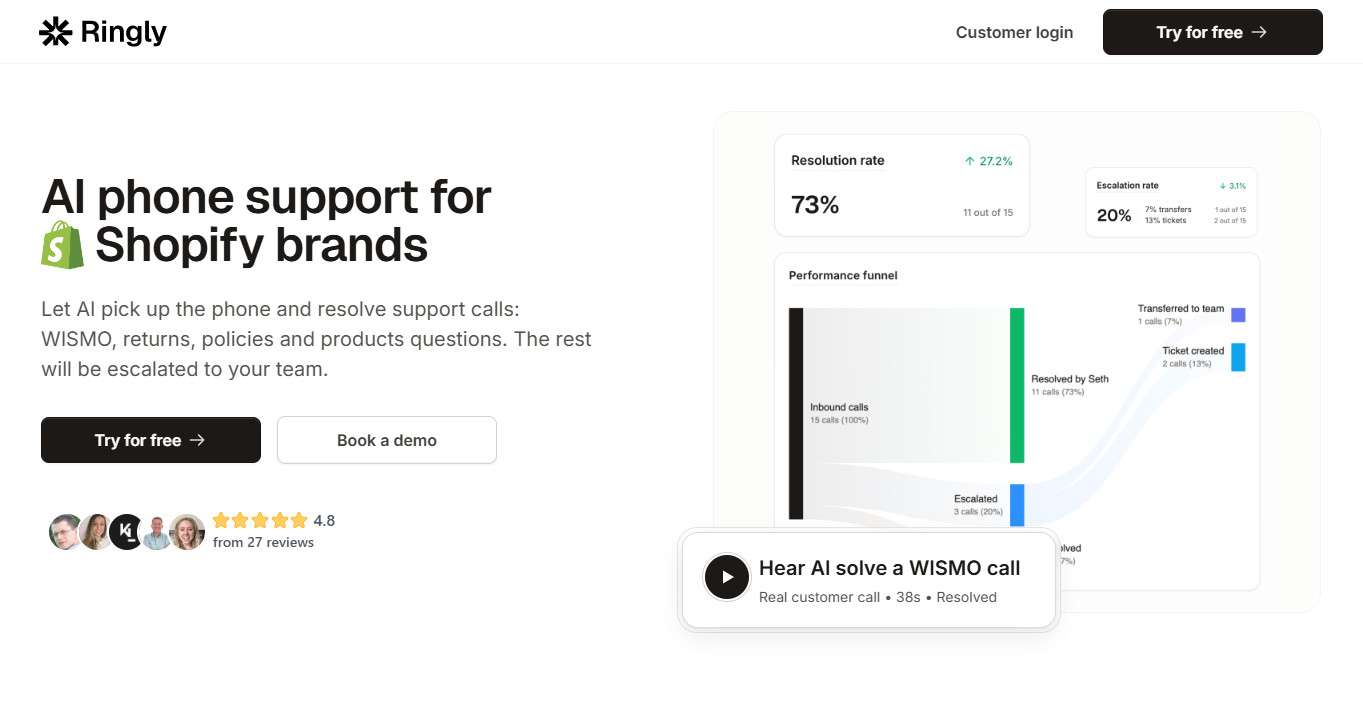
Ringly positions its service specifically for Shopify brands. Its site highlights common retail calls such as order status, returns, product questions, inventory, and store policies, with escalation rules for conversations the agent cannot resolve.
Why consider it: The commerce-specific scope can shorten setup for a Shopify store whose highest-volume calls are repetitive support questions.
What to verify: Check compatibility with your help desk, order-management workflow, countries, languages, existing phone number, and escalation process. Brands outside Shopify may find a more general platform easier to adapt.
2. Haptik: best for enterprise customer journeys
Haptik presents conversational agents for voice, customer support, sales, booking, and lead qualification. That broader scope suits larger retailers that want coordinated experiences across several customer journeys rather than a single call script.
Why consider it: It covers multiple enterprise customer-experience scenarios and can support a phased automation program.
What to verify: Ask for a demonstration using your real catalog, policies, accents, and escalation rules. Clarify who owns integration, conversation design, testing, and ongoing optimization.
3. Plivo: best for flexible telephony architecture
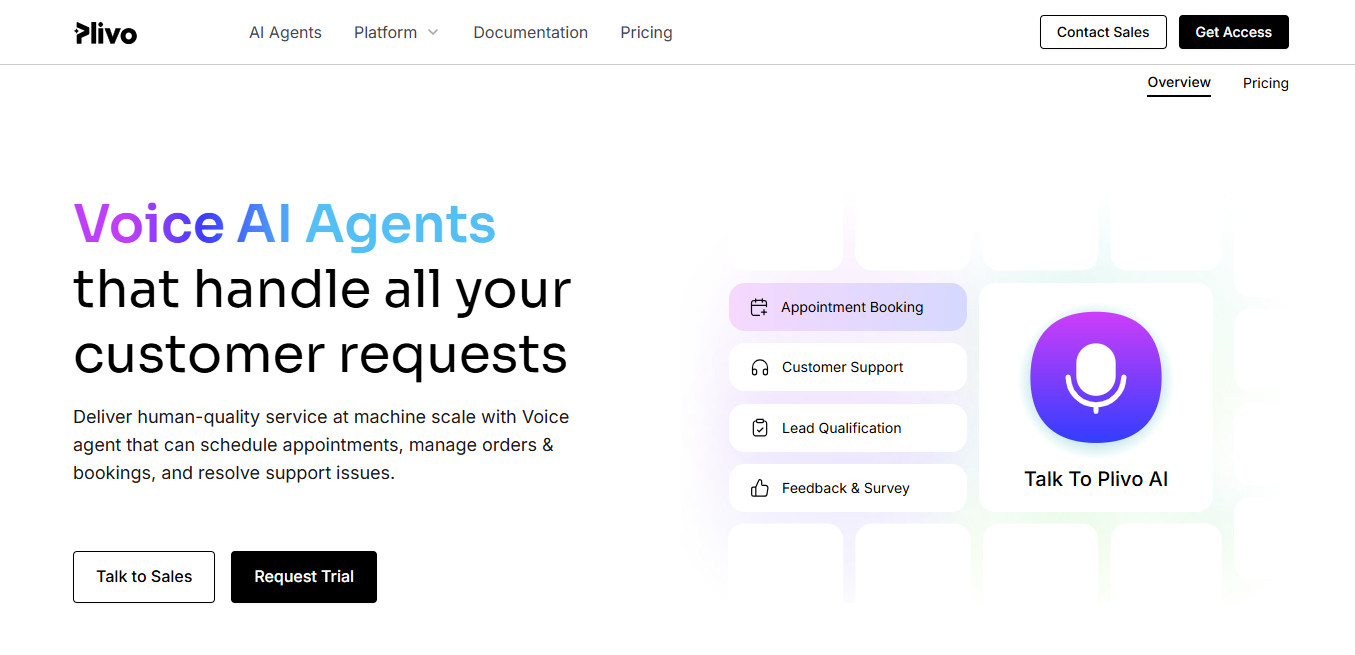
Plivo offers two routes: programmable APIs and SDKs for developers, or a studio that can start from a natural-language prompt. It also supports teams that want to bring parts of their own speech, language-model, or telephony stack.
Why consider it: It gives technical teams more control over how calls connect to internal services.
What to verify: Calculate total engineering effort as well as usage charges. Test latency, tool-call failures, regional number coverage, call transfer, and behavior when an order system is unavailable.
4. Retell AI: best for focused call-center automation
Retell AI focuses on building, deploying, and managing agents for phone workflows. Its examples include customer service, appointment setting, reception, lead qualification, surveys, and collections.
Why consider it: The product is centered on operational phone conversations rather than voice generation alone.
What to verify: Run tests with background noise, interruptions, ambiguous order numbers, policy exceptions, and adversarial prompts. Confirm how transcripts, recordings, and customer data are retained.
5. Synthflow AI: best for structured enterprise deployment
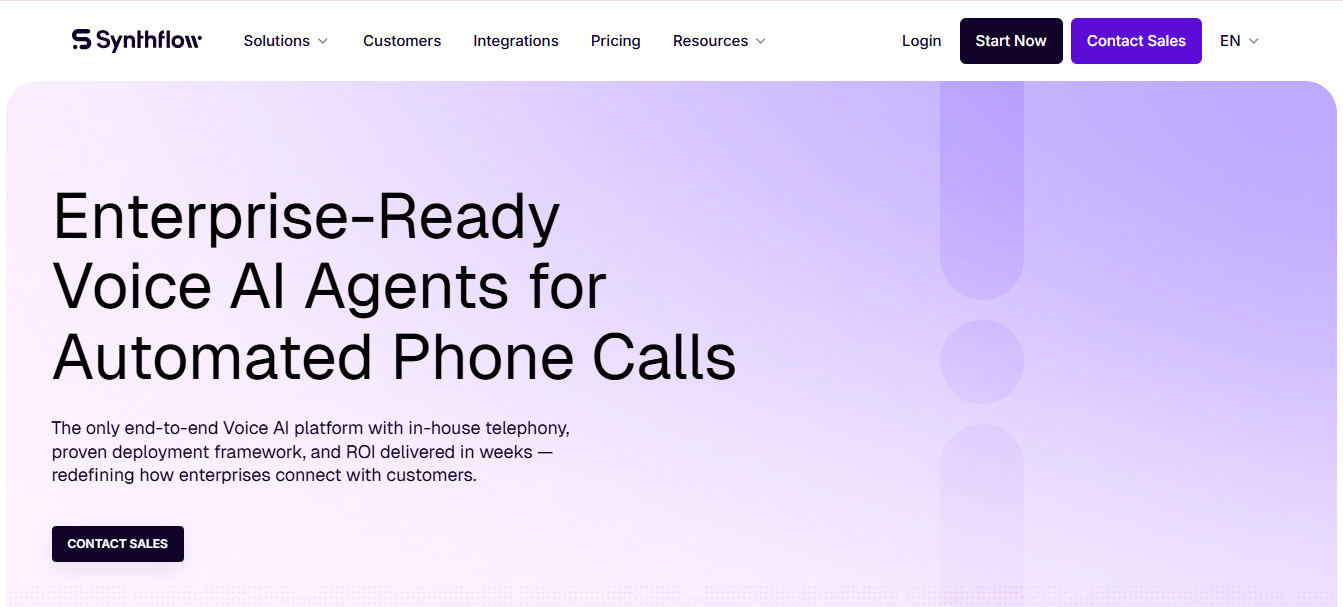
Synthflow AI describes an end-to-end platform for automated phone calls, with visual flow design, telephony, testing, launch, and continuous improvement. That approach may appeal to product and operations teams that want less custom code.
Why consider it: Visual workflow tools can make call logic easier for non-developers to inspect and refine.
What to verify: Prototype the hardest branch of your workflow, not only the happy path. Check API actions, transfer reliability, supported languages, observability, and export options.
6. Bland AI: best for governance-heavy workflows
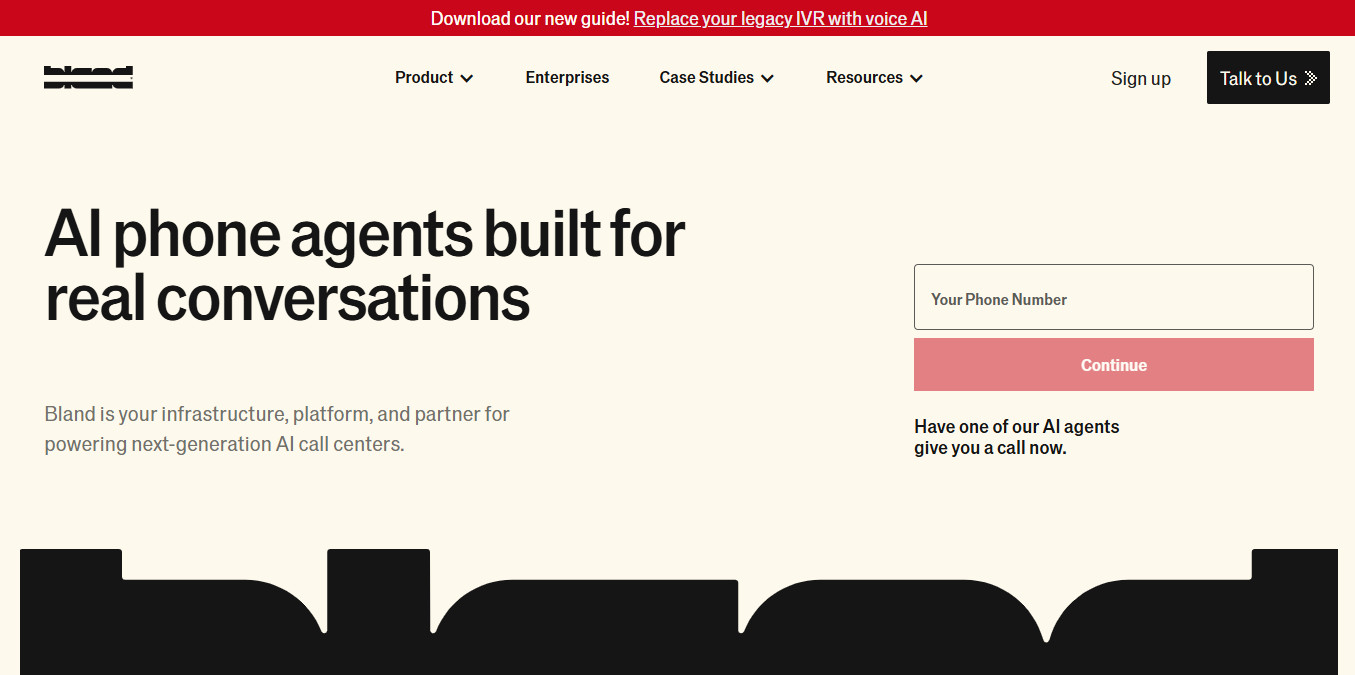
Bland AI currently emphasizes voice automation for regulated industries and security-sensitive calls. Retailers working with financial services, insurance, health-related products, or logistics may find that positioning relevant.
Why consider it: Security and infrastructure are prominent parts of the vendor's current product message.
What to verify: Marketing claims are not a substitute for your own legal and security review. Request documentation for hosting, subprocessors, data location, access controls, retention, audit logs, and incident response.
7. Vapi: best for developer-led voice products
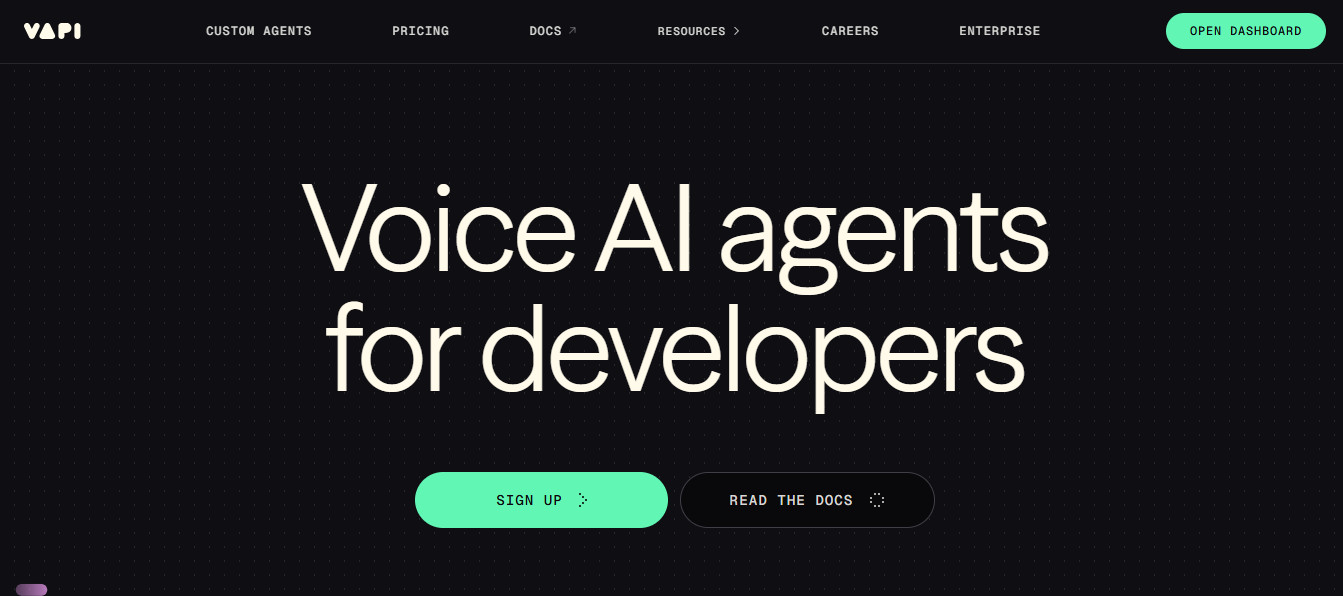
Vapi is a programmable platform for building and deploying voice agents. It highlights use cases such as customer support, lead qualification, and appointment scheduling, making it a candidate for retailers that want voice embedded in a custom application or workflow.
Why consider it: Developers can shape the agent around existing systems instead of adapting the business to a fixed script.
What to verify: Define who owns prompts, models, tools, phone providers, monitoring, and incident response. A flexible stack can create more operational responsibility.
8. Talkdesk: best for an established contact center
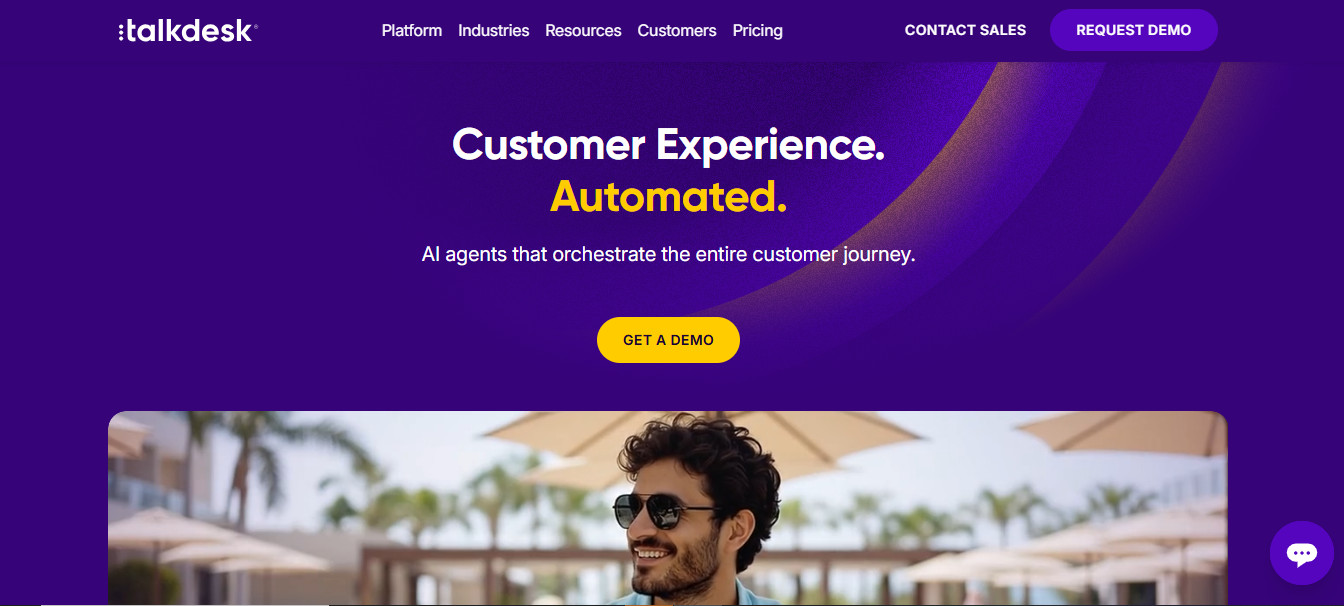
Talkdesk is a broad contact-center platform with AI, omnichannel engagement, analytics, workforce tools, quality management, and integrations. It is most relevant when voice automation must sit inside a larger customer-service operation.
Why consider it: Enterprises can evaluate voice agents alongside the routing, supervision, reporting, and agent-assistance capabilities they already need.
What to verify: Small stores should compare the suite's scope and implementation cost with a focused voice-agent product. Larger teams should validate integration depth and migration requirements.
Why Air AI is not in the recommended shortlist
The earlier version of this guide listed “Air AI” as an outbound sales agent. At the time of this review, the air.ai domain presented a different enterprise-readiness business, so the original product identity could not be verified confidently. Treat similarly named products carefully: confirm the legal vendor, official domain, current documentation, and support contacts before sharing data or payment information.
How to choose an e-commerce voice agent
- Start with one measurable call type. Order status, return eligibility, store hours, or appointment booking is easier to test than a general-purpose assistant.
- Demand reliable human handoff. Customers need a clear escape route when the agent is uncertain, the issue is sensitive, or a system fails.
- Test commerce context. The agent should respect inventory, shipping, refund, promotion, and identity-verification rules instead of inventing answers.
- Review consent and privacy. Determine when call recording or AI disclosure is required in every jurisdiction where you operate, and collect only necessary data.
- Measure outcomes, not just containment. Track resolution, repeat contacts, transfers, task completion, customer satisfaction, errors, and revenue impact.
- Model the full cost. Include telephony, speech services, language models, integrations, support, monitoring, and staff time—not only a headline per-minute rate.
A safe pilot plan
- Choose a narrow, high-volume workflow and write the approved policy source the agent may use.
- Connect a sandbox or read-only system before granting any write access to orders or customer accounts.
- Create test cases for accents, silence, interruptions, fraud attempts, angry callers, missing data, and outages.
- Require confirmation before consequential actions such as canceling an order, changing an address, or issuing a refund.
- Launch to a small traffic segment with live monitoring and immediate human takeover.
- Expand only after the agent meets documented accuracy, safety, and customer-experience thresholds.
Frequently asked questions
Can an AI voice agent connect to Shopify?
Some platforms offer a direct Shopify integration, while others connect through APIs, middleware, or a customer-service platform. Verify exactly which objects and actions are supported; “integration” may mean anything from order lookup to a fully managed workflow.
Should a voice agent replace a human support team?
No. It is better used for bounded, repeatable tasks with a reliable handoff path. Humans should handle exceptions, sensitive cases, complaints, and decisions that require judgment.
What is the best platform for a small store?
A focused product such as Ringly may be easier for a Shopify-specific support use case. A developer platform such as Plivo or Vapi makes more sense when the store has engineering resources and a custom workflow. Test with real calls before committing.
Bottom line
Ringly is the most commerce-specific option in this list, while Haptik and Talkdesk target broader enterprise customer experience. Plivo and Vapi favor custom builds; Retell, Synthflow, and Bland focus on operational voice automation with different emphases. The best choice is the platform that handles your narrowest high-value workflow reliably, transfers gracefully, protects customer data, and proves its value in a controlled pilot.

![[Infographic] E-commerce Spread Globally](/data/thumbs_200x120/[infographic]-ecommerce-spread-globally_thumbs_200x120_elGhwkxGo.jpg)




Reader Comments 0
Sign in with email or Google to join the discussion.