Table of Contents
Chess is played by two people on an 8-by-8 board. White moves first, then the players alternate one move at a time. The goal is to checkmate the opposing king: place it under attack so that no legal move can remove the threat. You do not capture the king.
Set up the chessboard
Place the board so that each player has a light-colored square in the lower-right corner. The files are labeled a through h, and the ranks are numbered 1 through 8.
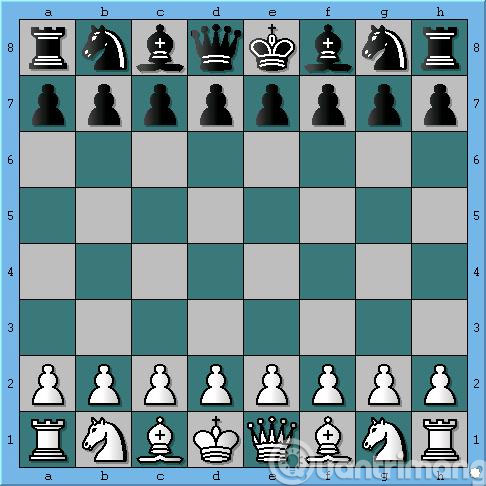
Each player starts with 16 pieces: one king, one queen, two rooks, two bishops, two knights, and eight pawns. On the back rank, place the pieces from left to right as rook, knight, bishop, queen, king, bishop, knight, rook. The queen begins on a square that matches her color: White's queen on a light square and Black's queen on a dark square. Put the pawns on the rank in front.
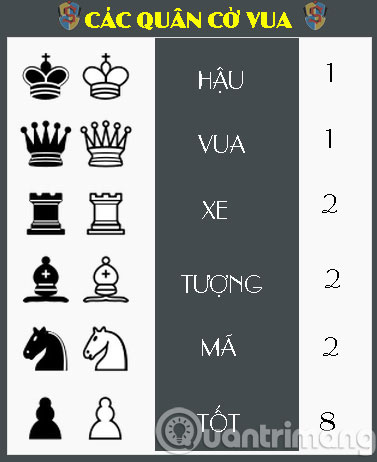
How each chess piece moves
Pawn
A pawn moves one square straight forward into an empty square. From its starting square, it may move two squares if both squares are empty. A pawn captures one square diagonally forward; it cannot capture a piece directly ahead. White pawns move toward rank 8, while Black pawns move toward rank 1.
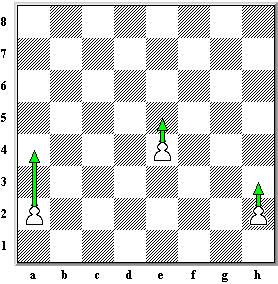
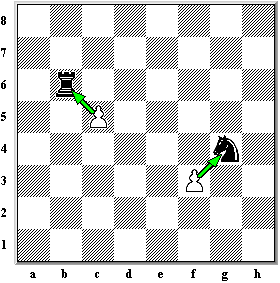
The diagrams show a pawn's forward moves and diagonal captures.
Rook
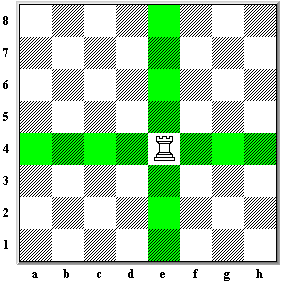
A rook moves any number of unobstructed squares horizontally or vertically. It cannot jump over another piece.
Knight
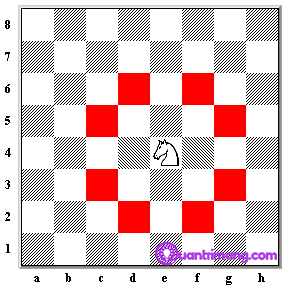
A knight moves in an L shape: two squares in one horizontal or vertical direction, then one square perpendicular to that. It is the only piece that can jump over other pieces. A knight always finishes on a square of the opposite color from where it started.
Bishop
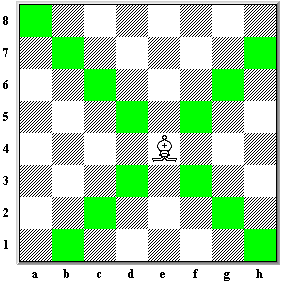
A bishop moves any number of unobstructed squares diagonally. Because it always stays on the same square color, each player begins with one light-squared bishop and one dark-squared bishop.
Queen
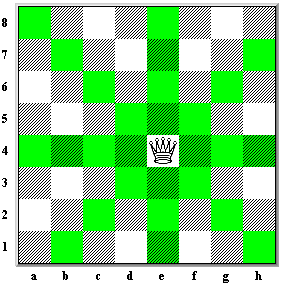
The queen combines the rook's and bishop's movement: any number of unobstructed squares horizontally, vertically, or diagonally. It is powerful but should not be exposed carelessly early in the game.
King
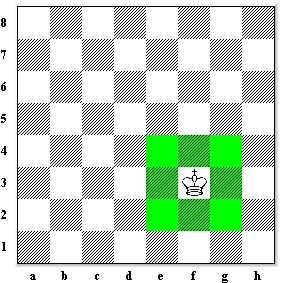
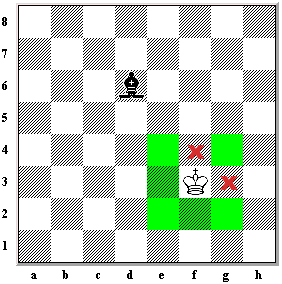
The king normally moves one square in any direction. It may not move onto a square attacked by an opposing piece. The king also participates in castling when the required conditions are met.
Capturing and legal moves
A piece captures by moving to a square occupied by an opposing piece; the captured piece is removed. Except for the knight, pieces cannot jump over occupied squares. You cannot move onto a square occupied by your own piece, and you cannot make a move that leaves your king in check.
Check, checkmate, and stalemate
- Check: The king is under attack. The player must respond by moving the king, capturing the attacking piece, or blocking the attack when blocking is possible.
- Checkmate: The king is in check and no legal response removes the threat. The attacking player wins immediately.
- Stalemate: The player to move is not in check but has no legal move. The game is a draw.
A game can also be drawn by agreement, insufficient mating material, repeated positions, or move-count rules. Formal events use precise rules and may require a claim in some situations.
Three special chess moves
Castling
Castling moves the king two squares toward a rook, then places that rook on the square the king crossed. It is legal only if the king and that rook have not moved, the squares between them are empty, the king is not in check, and the king does not cross or finish on an attacked square.
Pawn promotion
When a pawn reaches the farthest rank, it must be promoted to a queen, rook, bishop, or knight of the same color. A player may have more than one queen as a result of promotion.
En passant
If an opposing pawn advances two squares from its starting position and lands beside your pawn, your pawn may capture it as though it had moved only one square. This option is available only on the immediately following move.
A simple plan for your first games
- Move one or two central pawns so your pieces have room.
- Develop knights and bishops toward useful central squares.
- Castle early when it is safe, connecting the rooks and protecting the king.
- Before every move, ask what your opponent is attacking and whether any piece is undefended.
- Look for checks, captures, and threats, but calculate the opponent's best reply before committing.
Common beginner mistakes
- Moving the same piece repeatedly while the rest remain undeveloped
- Bringing the queen out too early and losing time when it is attacked
- Taking a piece without checking whether the capturing piece will be lost
- Ignoring the opponent's threat because you are focused only on your own plan
- Leaving the king in the center when castling is available and safe
How to practice effectively
Start with untimed games so you can verify legal moves and think before acting. After each game, find the first move where you lost a piece or missed a serious threat. Practice basic checkmates with a king and queen or king and rook, then solve short tactics involving forks, pins, and discovered attacks. Opening principles matter more to a beginner than memorizing long sequences of moves.
Related Articles
 Basic Chinese Chess Play: How to Identify and Move Each Piece10 minutes read
 Guide to Playing Chinese Chess for Beginners9 minutes read
 Basic Knowledge in Chess3 minutes read
 Simple Way to Play Chess on Facebook Messenger4 minutes read
 Chess Checker Rate: Chess Occurrence Rate Mobile Union Chess3 minutes read
 Linux Terminal: Complete Guide7 minutes read
Reader Comments 0
Sign in with email or Google to join the discussion.