Table of Contents
This guide provides a clear overview of facial skin, including what Dead Skin is, Why Should You Exfoliate. Use it to understand the topic, compare the available options, and make a more informed decision.
 Exfoliate properly
What Is Dead Skin?
Exfoliating the skin is the process of removing dead cells from the outer layer of the skin using an exfoliant, which can be a chemical or physical exfoliant. There are a few ways to physically exfoliate. The first involves using a skin care tool, such as a sponge, towel or brush, etc. on your skin to replace and remove dead skin cells. Another method involves the use of liquids, gels or scrubs with particles such as Microbeads or sugar to smooth and revitalize the skin. With chemical exfoliation, Alpha Hydroxy Acids (AHAs), Beta Hydroxy Acids (BHAs) or Enzymes are used to loosen the glue-like substances that hold dead skin cells together so they are easily removed.
Why Should You Exfoliate?
Your skin is constantly repairing and replacing itself. Because of this, there are always layers of dead skin all over your body. Exfoliating helps rid your body of leftover dead skin cells, revealing healthier, brighter skin immediately afterward.
While brighter skin is definitely an advantage, exfoliation can actually help improve the health of your skin. If your skin isn't getting rid of dead cells, your skin care products may not penetrate deep into the skin and reduce their effectiveness. By removing the top layer of skin, it makes your skin treatment easier and more effective.
If you have acne-prone skin, exfoliation can help clear clogged pores that often lead to breakouts. It can also help fade acne scars faster by accelerating skin cell renewal and stimulating collagen production.
How to Exfoliate the Face
 Exfoliate the face
When using a physical exfoliator, start by washing your face with a regular cleanser. Take a small amount of cleanser and apply it to your face in a circular motion, avoiding the eye area. Gently massage into skin according to the instructions on the cleanser, usually 30 seconds to a minute. Then, rinse with warm water and gently pat your skin with a clean towel. Next you can use a moisturizing mask, serum or moisturizer.
When using chemical exfoliation, wash your face with a regular cleanser. If your chemical exfoliant comes with a pre-moistened cloth or pad, apply it evenly to your entire face, neck, upper chest, and even the top of your desk. your hand. Allow a few minutes for the chemical exfoliant to be fully absorbed into the skin before moving on to the next step in your routine, be it a serum or cream.
Do the same for exfoliating products in the form of Gels or Serums. Some chemical exfoliants, commonly known as peels, are used similarly to a mask and are required to be washed off after a few minutes. Always check the instructions on your products to make sure you use them correctly.
- Keep in mind that excessive physical exfoliation or with exfoliating products that have an overly rough surface will leave cuts in the skin. These cuts are called micro-tears. Micro-tear marks will be an easy place for bacteria to enter leading to acne and infection during exfoliation.
- Therefore, you need to minimize micro-tear on the skin. If you have inflammatory acne, rosacea, or hypersensitive skin, ask your dermatologist to determine which exfoliant to use and how often.
How to Exfoliate Your Feet
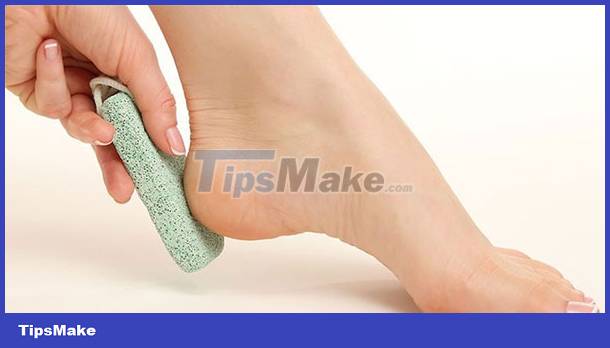 Exfoliate your feet with a stone or sponge
The bottoms of your feet tend to be where the roughest spots are on your body, so they require extra care when exfoliating. Exfoliating your feet with a stone or sponge can be an effective way to help smooth out your rough heels. However, your feet can also be exfoliated with chemical products. The usual usage is to soak your feet in the product for an hour to let your feet absorb the chemicals contained in the product. Over the next few days, your feet will begin to shed a layer of skin, revealing baby-soft feet.
Conclusion
Understanding Facial Skin makes it easier to compare options, avoid common mistakes, and apply the information in this guide more effectively. Review the relevant requirements before making changes or choosing a solution.
FAQ
What is Facial Skin?
This guide provides a clear overview of facial skin, including what Dead Skin is, Why Should You Exfoliate.
Why is Facial Skin important?
Understanding Facial Skin helps you evaluate features, compatibility, performance, and potential limitations before you choose a product or follow a procedure.
What should you consider when using or choosing Facial Skin?
Consider your specific goal, compatibility requirements, available features, cost, security, and the practical recommendations described in this guide.
Related Articles
 How to Exfoliate Good Lips, the Simplest: Remove Exfoliating Lips4 minutes read
 The Dentist Instructs How to Brush Teeth Properly2 minutes read
 How to Take Vitamin E Properly4 minutes read
 Top 3 Ways to Properly Hold a Mouse to Protect Your Wrist: What to Know10 minutes read
 How to Print Cad Drawings Properly4 minutes read
 How to Power Off iPhone Properly3 minutes read
Reader Comments 0
Sign in with email or Google to join the discussion.